
Reviewed · WALKING TOURS
Darwin Walking Tour: World War II Reflections
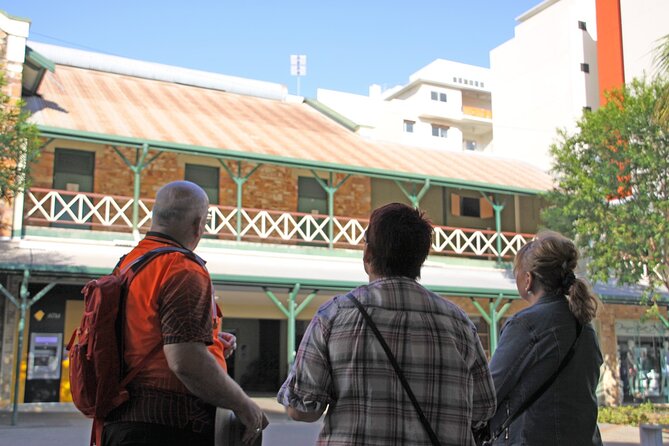
Darwin’s streets remember 1942. This guided walking tour turns World War II into something you can see and picture, as you follow WWII clues through Darwin’s historic quarter. You’ll hear what happened the day the war reached mainland Australia, and why the city’s buildings still matter.
I especially like the small-group feel and the way the guide keeps the walking pace easy while making frequent stops. I also like that the tour focuses on specific, named places, so you’re not stuck with vague generalities about the bombing day.
One consideration is the weather. It runs in all weather, so you’ll want to dress for sun and rain, and bring water, because it is still a steady walk for around 2 to 2.5 hours.
In This Review
- Key takeaways before you go
- Why Darwin WWII feels close on foot
- The 8:30 am start and the pace you can manage
- Stop 1: The Vic Hotel, where downtime mattered in wartime
- Stop 2: Brown’s Mart Theatre and the HMAS Melville connection
- Stop 3: The Administrator of the Northern Territory, from early Darwin to naval command
- Stop 4: Parliament House, stepping inside a bombing memorial
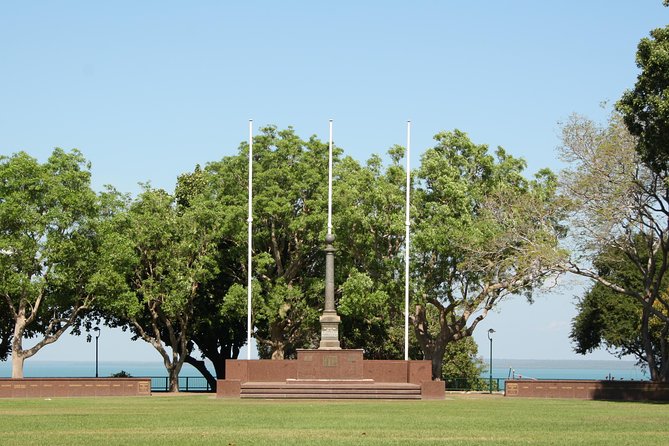
- Stop 5: Darwin Cenotaph and the harbour, ending with the first air raid
- What makes this tour worth the $42.32 price
- The little details that make it easier in real life
- Who this tour suits best
- Quick FAQ
- FAQ
- How long is the Darwin Walking Tour: World War II Reflections?
- Where do I meet the guide, and where does the tour end?
- What’s included in the tour price?
- What should I bring with me?
- Does the tour run in bad weather?
- How big is the group?
- Should you book this WWII walking tour?
Key takeaways before you go
- You get a WWII-focused walk through Darwin’s central district, with hidden references to the war in everyday streets and gardens
- Historic stops connect civilian life to military operations, from entertainment venues to command buildings
- Many heritage stops include free entry, so you can look inside key sites rather than just pass by
- A maximum of 10 travelers keeps the group manageable and makes Q and A easier
- The ending at the Darwin Cenotaph ties the harbour to 19 February 1942, giving you a clear emotional endpoint
Why Darwin WWII feels close on foot
World War II is often taught as dates and headlines. In Darwin, the story sits in plain sight, tucked into architecture and street corners you can reach with your own two feet. This tour is designed around that idea, using the city itself as the map.
The backbone of the experience is the day in 1942 when the war reached mainland Australia and Darwin was bombed. Your guide then threads that moment through the places you pass, so the buildings stop being just old and start being meaningful.
If you like history that you can point to, this works. You’ll walk between landmarks tied to wartime life, including both the civilian side and the military side of the story.
More walking tours in Darwin:
- Darwin Heritage Walk
★ 4.5 · 101 reviews - Darwin: Small Group 2-Hour Heritage Walk
★ 4.9 · 28 reviews - Walk the Darwin Botanic Gardens
★ 5.0 · 11 reviews
The 8:30 am start and the pace you can manage
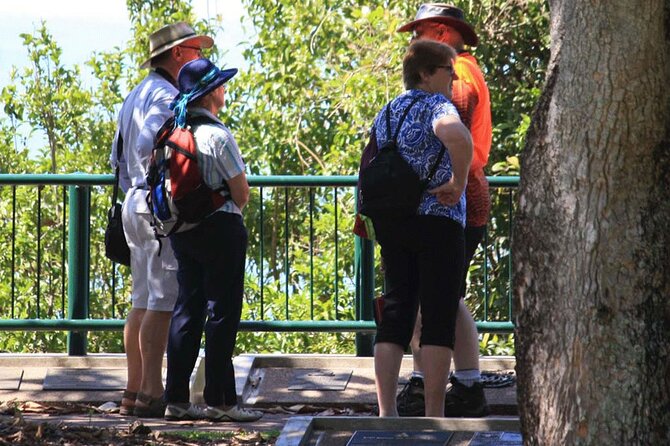
The tour starts at 8:30 am at the corner of John McDouall Stuart, The Mall, and Knuckey St in Darwin City. It ends at the Darwin Cenotaph War Memorial in Bicentennial Park on the Esplanade, so you finish in a place built for reflection.
Expect about 2 to 2.5 hours of guided walking. The walking is described as manageable, and you’ll have stops along the way rather than a long, nonstop slog. If you’ve got moderate physical fitness, this should feel realistic, especially with breaks built into the route.
The group size is capped at 10 travelers. That matters because you’re not just listening over chatter. You can ask questions and get straight answers, and your guide can keep the pace comfortable.
Stop 1: The Vic Hotel, where downtime mattered in wartime
Your first major stop is The Vic Hotel, a grand Darwin social landmark with a long run history. During WWII, it worked as an entertainment hub for both Australian and American service personnel.
This is one of the tour’s smartest choices, because it reminds you that war is not only buildings and bombs. It is also morale, routines, and the human need for a break. Looking at the Vic Hotel in that context makes it feel less like a static landmark and more like a living piece of the wartime city.
Admission at this stop is listed as free. So you can spend time looking at the building without worrying that you’ll lose time or money at the door.
Stop 2: Brown’s Mart Theatre and the HMAS Melville connection
Next you’ll head to Brown’s Mart Theatre. This building existed before WWII and sat at the heart of Darwin’s community, but during the war it became part of the Navy base HMAS Melville.
That change of use is the kind of detail I love on city walks. The same structure can serve completely different needs depending on the moment. Here, it connects community space to naval preparation and Australia’s defence planning.
Again, this stop includes free admission. It’s a good place to slow down and notice the layers, because you can feel the shift from pre-war town life to wartime command and preparation.
A few more Darwin trips to compare
- Litchfield National Park and Jumping Crocodile Cruise
★ 5.0 · 2,119 reviews - Adelaide River Cruises – Jumping Crocodile Experience
★ 5.0 · 997 reviews - Sunset 3-Hour Cruise from Darwin with Dinner and Sparkling Wine
★ 5.0 · 980 reviews - From Darwin: Litchfield Park Tour & Jumping Crocodile Cruise
★ 4.9 · 829 reviews
Stop 3: The Administrator of the Northern Territory, from early Darwin to naval command
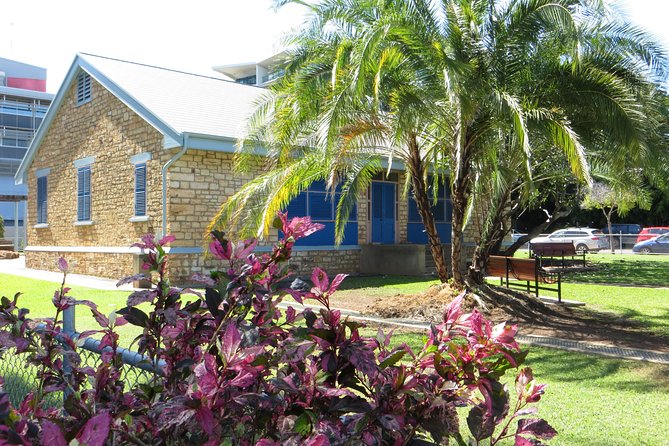
You then move to the Administrator of the Northern Territory buildings, another set of restored structures tied to early Darwin life. Today, they’re used for the Administrator’s offices, but during WWII they served as naval command.
That dual use is powerful because it forces a comparison across time. You’re standing in buildings that held authority and decisions during the war, and today they hold civic administration. It’s a clean way to understand continuity, not just disruption.
The tour treats the area as more than a photo stop. Your guide helps you connect what you’re seeing to how people lived and worked, first in the early years of Darwin and later under wartime pressure.
Stop 4: Parliament House, stepping inside a bombing memorial
One of the most affecting stops is Parliament House. The building stands as a memorial to civilian post office staff who lost their lives at this site during the bombing of Darwin in 1942.
What makes this stop particularly practical is that you can step inside. You’ll see where a bomb fell and learn about the rebuilt Post Office that followed. That shift from tragedy to rebuilding gives the story a spine, so it does not stay trapped in one horrifying moment.
Admission is listed as free at this point too, which helps keep the tour from feeling like a string of ticketed interruptions. It stays focused on story and place.
Stop 5: Darwin Cenotaph and the harbour, ending with the first air raid

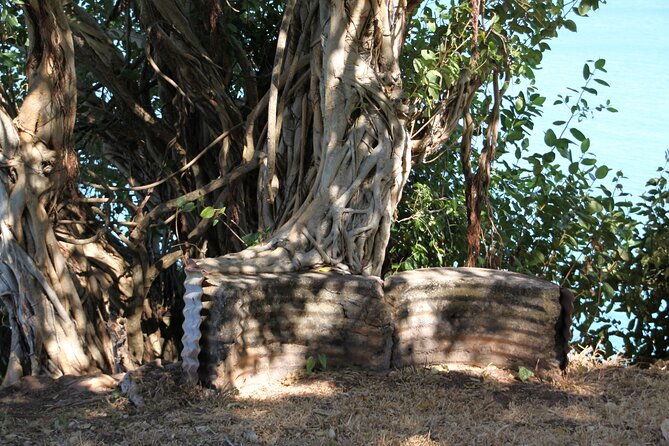
The tour finishes at the Darwin Cenotaph in Bicentennial Park. This memorial honors Northern Territorians who served during the war, and it also overlooks the harbour.
That harbour view is tied directly to the first air raid on 19 February 1942, when many died near the water. Your guide also mentions the site’s wartime role, including the 14th Anti-Air presence at the location during the raids.
This ending works well because it gives you a clear visual connection between the raid and the place you’re standing. If you want quiet time at the end, this is the kind of location that makes it easy.
Once you’re done, you can choose to continue along Bicentennial Park paths and look at nearby memorials, or grab a drink at a nearby cafe.
What makes this tour worth the $42.32 price
At $42.32 per person, this is not a bargain-priced “wander and learn” activity. But value is not only about low cost. It’s about what you get for your time, and here you get a focused WWII guide plus multiple free-entry stops.
You’re paying for a local guide’s explanations in a small group, not for a cheap audio script. And the tour runs for roughly 2 to 2.5 hours, which is a solid chunk of morning time for Darwin City, especially if you want WWII context before you go exploring on your own.
The free admissions listed at key stops also help the math. You’re not paying extra to enter the places that anchor the story.
Finally, the tour adds an orientation element. By the time you reach the Cenotaph, you’ll have a mental map of where things are and how the city’s older buildings relate to today’s layout. That can save you time later when you want to revisit areas independently.
The little details that make it easier in real life
This tour runs in all weather conditions. That means you should take the practical packing list seriously: bring sunscreen, a hat, drinking water, and a camera if you like photos.
The footwear guidance is also specific: wear good enclosed, non-slip walking shoes. Darwin weather can be slippery, and a walking tour is not the time to wear anything you wouldn’t trust on a wet sidewalk.
One detail I appreciate from the way the tour is described and how people talk about it is that the walking pace is comfortable. It’s also shade-conscious, which matters a lot in Darwin when the sun is out and you’re spending concentrated time outdoors.
If you’re traveling with kids, note that children must be accompanied by an adult. This isn’t positioned as a stroller-style walk.
Who this tour suits best
This is a great fit if you care about WWII, especially the part that unfolded on Australian soil. It’s also good if you like local stories, not just big-picture facts. The tour emphasizes lesser-known wartime details and connects them to buildings you can actually see.
It’s also ideal when you want a guided start to Darwin. The route is within the central district, so you can treat it like a foundation. Afterward, you’ll know where to return for slower browsing.
If you’re not into WWII at all, you might find the subject heavy. But the tour is designed as a walk with clear stops and a human pace, so it still feels like a city experience, not a lecture.
Quick FAQ
FAQ
How long is the Darwin Walking Tour: World War II Reflections?
The tour runs for about 2 hours to 2 hours 30 minutes.
Where do I meet the guide, and where does the tour end?
You start at John McDouall Stuart Corner, The Mall & Knuckey St, Darwin City NT 0800, Australia, and you finish at the Darwin Cenotaph War Memorial, Bicentennial Park, Esplanade, Darwin City NT 0800.
What’s included in the tour price?
The tour includes a local guide and spoken commentary. Admission tickets at the listed stops are free.
What should I bring with me?
Bring a camera, sunscreen, a hat, and drinking water. Closed, non-slip walking shoes are recommended.
Does the tour run in bad weather?
Yes, it operates in all weather conditions. You should dress appropriately for the conditions.
How big is the group?
The tour has a maximum of 10 travelers, and it requires at least 2 people to operate.
Should you book this WWII walking tour?
If you want a meaningful way to understand Darwin’s 1942 bombing day, this tour is a smart choice. It turns the city into a set of clear, named stops like The Vic Hotel, Brown’s Mart Theatre, Parliament House, and the Darwin Cenotaph, so the story sticks.
Book it if you like walking at a comfortable pace, asking questions, and learning through places instead of slides. Skip it only if WWII themes don’t interest you, or if you prefer very long scenic stops instead of a structured route with multiple heritage sites.
Newest Darwin reviews on the site
- Tiwi Islands Cultural Experience from Darwin Including Ferry★ 4.0 · 97 reviews
- Bombing of Darwin World War II Tour with Harbour Cruise★ 4.5 · 219 reviews
- 1-Hour Thunderball WWII Adventure Jet Skiing in Darwin★ 5.0 · 70 reviews
- Walk the Darwin Botanic Gardens★ 5.0 · 11 reviews
- Darwin Combo: The Bombing of Darwin Experience & Darwin Harbour Cruise★ 4.5 · 123 reviews
- Royal Flying Doctor Service Tourist Facility: Two Iconic Territory Stories★ 5.0 · 256 reviews
- Litchfield National Park Waterfalls & Wildlife Adventure Tour★ 5.0 · 30 reviews
- ETHICAL ADVENTURES – 1 Day premium Litchfield tour, small group★ 5.0 · 178 reviews
Walking Tours, compared.

Sydney Opera House Official Guided Walking Tour
Read our review →
Blue Mountains Tour with Waterfall Walk & Lunch
Read our review →
Ultimate Melbourne Walking Tour: History, Laneways & Culture
Read our review →

Great Ocean Road Tour Plus Koalas, Forest Walk and Morning Tea
Read our review →
Blue Mountains Small Group Tour with Waterfall Walk & Fresh Lunch
Read our review →
Maria Island Cruise and Guided Walk Day Tour with Lunch and Drinks
Read our review →Browse the lists this tour appears in