
Reviewed · HISTORICAL TOURS
Darwin: Small Group 2-Hour Heritage Walk
Darwin changes fast, and this walk slows it down. Starting under the John McDouall Stuart statue in Raintree Park, you get a relaxed, local-led route that mixes WWII and Cyclone Tracy stories with the city you see today. I like that the pace is gentle and photos are actually doable, and I love how the guide connects street corners to what happened there. One thing to consider, though: it is a walking tour with limited chances to sit, so you’ll want a decent level of fitness and good sun protection.
The small group size keeps it conversational, capped at 10 participants, and you get spoken commentary in English. The tour also hits spots that are tricky or impossible on a bus, so it feels less like a drive-by and more like learning the city’s “why” on foot. You’ll finish near Knuckey Street and the Esplanade, with a better sense of where to wander next.
In This Review
- Key highlights
- Getting Your Bearings at Raintree Park and the John McDouall Stuart Statue
- How a 2-Hour Heritage Walk Feels in Darwin Heat
- The Story Thread: WWII Bombings, Cyclone Tracy, and a City That Rebuilt
- Stop by Stop: Courthouse, Police Station, and Brown’s Mart
- Palmerston Town Hall Ruins and the Meaning of Reconstruction
- The Government Precinct: Government House, Parliament House, and the Supreme Court
- Why Small Group Helps You See More Than the Main Sights
- Practical Packing Tips for This 2-Hour Darwin Walk
- Price and Value: Is $41 Worth It?
- Who Should Book This Tour, and Who Might Skip It
- Should You Book? My Take on Darwin: Small Group 2-Hour Heritage Walk
- FAQ
- Where is the meeting point for the tour?
- How long is the Darwin heritage walk?
- How many people are in the group?
- Is hotel pickup included?
- What should I bring in Darwin’s weather?
- Is the tour suitable for children?
Key highlights
- Meet under the John McDouall Stuart statue and start with an immediate sense of place in Raintree Park
- Small group of up to 10 with a friendly guide and a relaxed 2-hour pace
- WWII bombings and Cyclone Tracy context tied to buildings you can still see and visit
- Reconstructed heritage landmarks like the old courthouse and police station, plus Brown’s Mart
- Government precinct stops including Parliament House, Government House, and the Supreme Court of the Northern Territory
- Photo-friendly Darwin details such as public artwork, tropical plants, and possible wildlife sightings
Getting Your Bearings at Raintree Park and the John McDouall Stuart Statue
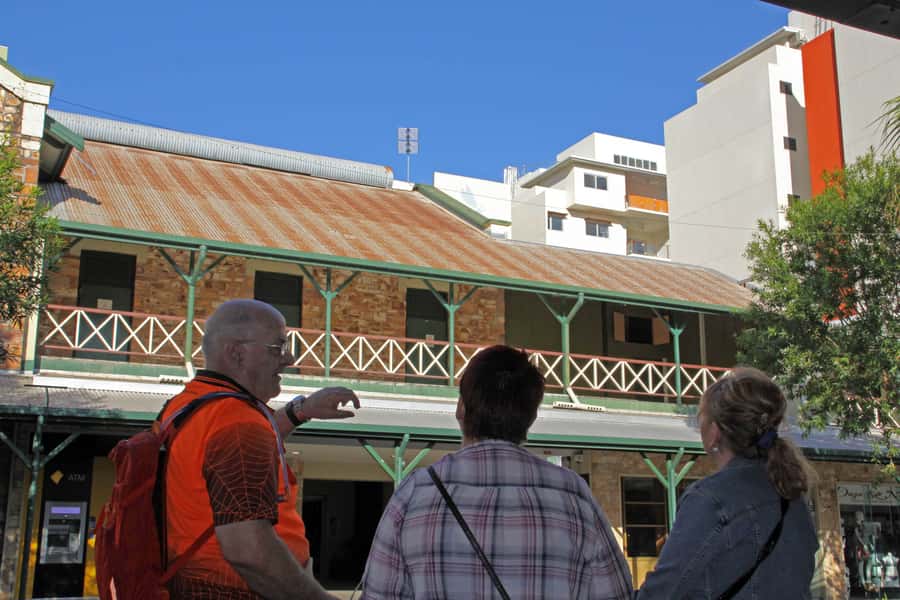
If you only have a day (or even a few hours) in Darwin, you want a quick way to understand how the city got to where it is now. This tour starts exactly where that story begins to make sense. The meeting point is under the John McDouall Stuart statue in Raintree Park, and your guide wears a bright orange shirt so you can find them fast.
From the first minutes, the tone is practical and human. This isn’t a lecture where you just follow along, it is a guided stroll built around what Darwiners notice in their everyday lives. The advantage of starting with pioneers on foot is that you don’t just get names and dates. You get spatial memory, how places relate to each other, and which corners feel like “old Darwin” and which ones reflect modern change.
Also, you’ll learn the right mindset for Darwin in general: expect sun, plan for hydration, and keep your camera handy. The guide’s approach, especially with sun-aware reminders from John, is a big reason this works well for first-time visitors.
A few more Darwin trips to compare
- Ultimate Melbourne Walking Tour: History, Laneways & Culture
★ 5.0 · 1,451 reviews - Puffing Billy Railway: Heritage Steam Train Journey
★ 4.6 · 1,195 reviews - Morning World Heritage Cruise on the Gordon River from Strahan
★ 5.0 · 1,193 reviews
How a 2-Hour Heritage Walk Feels in Darwin Heat
Two hours can sound short, but on foot it is enough time to cover meaningful ground without turning it into a punishment march. The tour is designed as a leisurely-paced walk, and reviews highlight that John keeps it at a sensible speed. That matters in Darwin because the heat can make “easy” distances feel hard.
There is also a realism built into the format. The tour requires a level of fitness, and the description notes that there are not many places where you can stop and sit. So while the pace is relaxed, you should assume you’ll be on your feet for most of the time. Bring water, sunscreen, and a sun hat, and use the walk as your chance to see small details you’d miss from a vehicle.
One more practical note: no bare feet, no pets (assistance dogs allowed), and smoking isn’t allowed. If you’re traveling with family or you’re planning around a tight schedule, double-check that your group fits the tour’s conditions, because it is not listed as suitable for children under 10 or for people with low fitness.
The Story Thread: WWII Bombings, Cyclone Tracy, and a City That Rebuilt
Darwin’s modern identity comes from survival. This tour weaves that theme into the architecture and heritage you’ll pass. You’ll hear tales connected to World War II bombings and the devastating impact of Cyclone Tracy, and then the conversation shifts to what followed: reconstruction, rebuilding, and how the city’s story grew into a multicultural place.
The value here is not just hearing what happened. It is understanding why certain buildings matter, and why Darwin looks the way it does. Rebuilt sites do not simply add charm, they act like public memory. When you see reconstructed landmarks, the scale of the story hits differently than it does from a sign alone.
Cyclone Tracy in particular reshaped Darwin’s future. The tour framing helps you connect that “reset” to the way people live now, including what kinds of streetscapes, institutions, and public spaces people built afterward. If you like historical context that stays connected to the present, this tour hits that sweet spot.
Stop by Stop: Courthouse, Police Station, and Brown’s Mart
One of the smartest choices on this route is that you get to see heritage buildings that are specifically called out as being painstakingly reconstructed. That means you are not only observing ruins or passing memorials, you’re seeing how Darwin preserved key landmarks after major disruptions.
You’ll visit the old courthouse and police station, both part of the city’s institutional core. In practical terms, these stops help you understand Darwin’s governance and law-and-order story, and they give you a visual timeline of how the city functioned. The backdrop matters too, because you’re walking through a tropical city, not a museum room. That mix of everyday streets and restored buildings is exactly why a walking format matters.
Next comes Brown’s Mart theater, another highlight. A theater doesn’t just represent entertainment. It represents community life, local culture, and the idea that public gatherings continued even as Darwin’s circumstances changed over time. Watching how the guide ties that back to history makes this stop feel more alive, not just scenic.
This is also where the photo value pays off. You’ll have time to capture public artworks, architecture, and historic buildings, and the walk naturally slows down at the moments that deserve a picture. The “hidden treasures” theme is real, not because the route is mysterious, but because the guide points out the details you’d otherwise skip.
More walking tours in Darwin:
- Sydney Opera House Official Guided Walking Tour
★ 4.5 · 3,770 reviews - From Sydney: Blue Mountains Tour with Waterfall Walk & Lunch
★ 4.8 · 2,400 reviews - Sydney The Rocks Guided Walking Tour
★ 5.0 · 1,546 reviews - Sydney: The Rocks 90-Minute History Walking Tour
★ 4.7 · 1,092 reviews
Palmerston Town Hall Ruins and the Meaning of Reconstruction
Darwin’s heritage is not only about intact old structures. It’s also about what was damaged, what was lost, and what was restored. The tour includes the Palmerston Town Hall ruins, and that stop adds an important tone shift to the walk.
Ruins can feel bleak if you only look at them as debris. Here, the guide’s commentary makes the ruins part of Darwin’s story of endurance. You get a sense of how communities process hardship, then keep building. Even if you are not a history buff, this kind of stop helps you understand why Darwin’s past is visible in the present, rather than being separated into a distant chapter.
If you tend to get bored on tours that just recite facts, this stop can be a relief. It is a place where the physical evidence does some of the work. Then the guide adds the context so you know what you’re actually looking at.
The Government Precinct: Government House, Parliament House, and the Supreme Court
As the walk moves into the government precinct, the tour becomes more about how Darwin works as a city today. You’ll see Government House, Parliament House, and the Supreme Court of the Northern Territory on your route through modern streets.
These stops are valuable for first-timers because they answer a question people often have: what is the Northern Territory’s everyday administrative center like? On a bus tour, you might notice a building and keep going. Here, you’re on foot, so you can actually take in the relationship between institutions, open spaces, and the surrounding streets.
You also get a clearer sense of how the city’s identity blended history with modern governance. The guide’s stories around reconstruction and resilience bring those buildings into focus. They aren’t just official backdrops. They become markers of continuity, showing that the institutions and public life of Darwin kept evolving even after major shocks.
Why Small Group Helps You See More Than the Main Sights
This is a small-group experience, limited to 10 participants, and that limit shows. When a tour stays small, you get better pacing, better questions, and a more personal sense of attention from the guide. In at least one case, a tiny group meant the walk felt like a private tour, and John was still able to keep it engaging while watching the group’s comfort and hydration.
The tour also specifically aims for spots that “cannot be accessed on a bus tour.” That matters because it reduces the feeling of checklist sightseeing. You’re not just watching buildings from a window. You’re walking the streets that connect them.
If you’re the kind of traveler who likes to ask follow-up questions while you’re walking, this format is a good match. If you want a strict, timed museum-style tour, you might find this more conversational than you expect, but that conversational style is also where you get the small details and local perspective.
Practical Packing Tips for This 2-Hour Darwin Walk
Darwin sunshine is not a minor detail, it is the main character. The tour’s own guidance is straightforward, and it is smart.
Bring:
- A sun hat
- Camera
- Sunscreen
- Water
- Hand sanitizer or tissues
And remember:
- You’ll be walking, and there are limited places to stop and sit
- The tour is English commentary only
- Smoking isn’t allowed on the tour
My advice is to treat this like an outdoors walk even if you’re mostly in the city. If you show up hydrated and protected, you’ll enjoy the tour more because the history lands better when you are comfortable.
Price and Value: Is $41 Worth It?
At $41 per person for a 2-hour guided walking tour, the value is strongest for three reasons.
First, you’re paying for local storytelling that connects past events to the buildings you can actually see. That is where walking tours justify themselves. You’re not buying access to a vehicle, you’re buying interpretation.
Second, the small group size and route choices matter. A bus tour can pass by key landmarks, but it can’t always deliver the same closeness, and it often misses quieter photo moments. If you want places you can’t easily access by bus, this is built for that.
Third, the tour works well for limited time in Darwin. Two hours gives you an orientation that makes later exploring easier. When you understand the WWII and Cyclone Tracy context in the same breath as what you’re seeing now, you’ll have a better time the rest of the day.
Who Should Book This Tour, and Who Might Skip It
This heritage walk is a great fit if:
- You’re in Darwin for the first time and want context fast
- You enjoy history when it’s tied to places you can stand in front of
- You want a small group with a friendly, talk-friendly guide named John
- You want photo time with architecture, artwork, and tropical streetscape details
It might be a poor fit if:
- You have mobility limits or struggle with walking for the majority of the 2 hours
- You’re traveling with children under 10
- You need frequent sit-down rest stops, because the tour notes there are not many places to pause
Should You Book? My Take on Darwin: Small Group 2-Hour Heritage Walk
If your main goal is to get oriented and understand Darwin beyond the obvious sights, I think this is an easy booking choice. The guide’s storytelling focus on WWII bombings, Cyclone Tracy, and the city’s reconstruction makes the walk feel meaningful, not just pretty.
Add in the sensible walking pace, the small group limit, and the chance to see reconstructed landmarks like the old courthouse and police station and Brown’s Mart theater, and you get a solid “first Darwin” experience. For $41, it’s also a price that makes sense even when you’re trying to budget a short trip.
If you’re comfortable walking in warm weather, bring your sun gear, and don’t mind that there aren’t lots of benches along the route, this is one of the best ways to start your Darwin day with clarity.
FAQ
Where is the meeting point for the tour?
You meet under the John McDouall Stuart statue. The guide will be wearing a bright orange shirt.
How long is the Darwin heritage walk?
The tour lasts 2 hours.
How many people are in the group?
The tour is a small group limited to 10 participants.
Is hotel pickup included?
No. Hotel pickup and drop-off are not included.
What should I bring in Darwin’s weather?
Bring a sun hat, camera, sunscreen, water, and hand sanitizer or tissues.
Is the tour suitable for children?
It is not suitable for children under 10, and it requires a level of fitness because there are not many places to stop and rest.
Newest Darwin reviews on the site
- LookAbout Darwin Wetlands Wildlife Premium Tour Max 6 Guests★ 4.9 · 72 reviews
- Litchfield National Park: Full-Day & Lunch from Darwin★ 4.6 · 205 reviews
- From Darwin: Litchfield National Park Small-Group Day Trip★ 4.7 · 131 reviews
- Litchfield & Berry Springs, Premium tour, 10 guests & lunch★ 4.5 · 18 reviews
- Darwin: Premium Litchfield Regional Small Group Day Tour★ 4.6 · 61 reviews
- Katherine Gorge & Edith Falls Full-Day Tour from Darwin★ 4.6 · 250 reviews
- Darwin: Adelaide River Half-Day Jumping Crocs Cruise★ 4.3 · 130 reviews
- Darwin: Kakadu & Nourlangie Day Trip Plus Billabong Cruise★ 4.3 · 166 reviews
Historical Tours, compared.
Ultimate Melbourne Walking Tour: History, Laneways & Culture
Read our review →
Puffing Billy Railway: Heritage Steam Train Journey
Read our review →
Morning World Heritage Cruise on the Gordon River from Strahan
Read our review →
Strahan: World Heritage Cruise on Gordon River with Lunch
Read our review →

Experience History onboard The Mary Valley Rattler
Read our review →
Snorkel & Dive the Reef: Sustainable, Scientific & Cultural Tour
Read our review →
Derwent River Historic Harbour Cruise From Hobart
Read our review →Browse the lists this tour appears in