
Reviewed · WILDLIFE
Tasmania: Wilderness and Wildlife Guided 6-Day Tour
Tasmania changes fast when you leave the cities. This six-day, small-group tour strings together coast, mountains, and wildlife in a way that feels efficient, not rushed. You get the major highlights, plus time for optional walks that match your energy level.
What I like most is the balance of signature scenery with real wildlife encounters. Walking sections are guided (but optional), so you can still do the hikes without feeling locked into one pace.
One consideration: this is an active trip. If you have back issues or mobility limits, or you dislike daily walking, you may want a more restful itinerary.
In This Review
- Key things that make this Tasmania tour work
- Small-group Tasmania by coach, with pickup that actually helps
- Day 1: Hobart to Strahan, tall trees, Russell Falls, and Lake St Clair
- Day 2: Henty Sand Dunes, ancient rainforest, and Ocean Beach air
- Day 3: Cradle Mountain World Heritage, Dove Lake, and wombat spotting at Ronny Creek
- Day 4: Launceston Cataract Gorge, Bay of Fires sands, and Bicheno penguin time
- Day 5: Freycinet National Park, Hazards at Honeymoon Bay, and Wineglass Bay viewpoints
- Day 6: Bonorong wildlife sanctuary, Richmond village stroll, and Wellington Park (kunanyi)
- How the walks are paced, and who this tour suits best
- Wildlife and local stories, powered by guides who know the terrain
- Price and value: what $831 per person is buying
- What to bring for coast days and alpine days
- The bottom line: should you book it?
- FAQ
- What’s included in the tour price?
- What is not included?
- What accommodation options are available?
- Are the hikes optional, and how hard are they?
- How does pickup work in Hobart?
- What’s the cancellation policy?
Key things that make this Tasmania tour work
- Flexible hike choices each day, from short easy loops to longer circuits like Dove Lake
- Wildlife focused, including a dedicated stop at Bonorong (with Tasmanian devils on the agenda)
- No car needed, but you still get out of the bus and onto trails most days
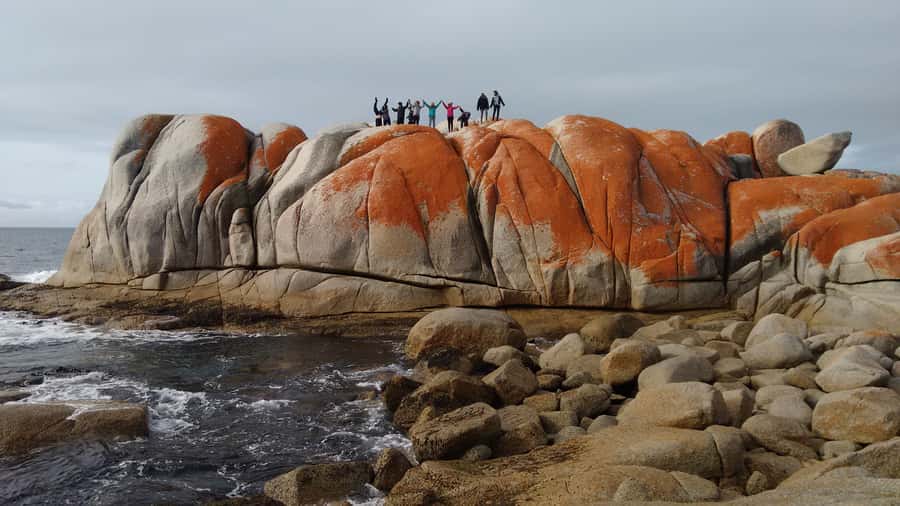
- East and West Coast contrasts, from Bay of Fires beaches to West Coast rainforest and dunes
- Big stops in one loop, including Cradle Mountain and Freycinet National Park
- Local guide energy, with guides bringing stories and animal spotting tips beyond the basics
Small-group Tasmania by coach, with pickup that actually helps
I like tours that remove friction. Here, pickup is offered from selected Hobart city locations, and it is optional. Your pickup time depends on where you are staying, and it is not available from Airbnbs and private residences, so plan around the nearest centrally located hotel or hostel.
You will move by coach between key regions, which is part of the value. It saves you from renting a car, dealing with parking, and making decisions when the day is already full of walks and viewpoints. A few people note the bus can be a bit old, but that is mostly about comfort, not the schedule.
The group is described as small, and that matters on a day-to-day basis. Smaller groups tend to make it easier to coordinate stops for toilets, short trail segments, and animal spotting without losing time to chaos.
More Wildlife Tours in Hobart
- Day Tour in Mt. Field, Mt. Wellington, Bonorong Wildlife Sanctuary and Richmond
★ 5.0 · 735 reviews - From Hobart: Mt. Field, Mt. Wellington and Wildlife Day Tour
★ 4.8 · 261 reviews - Bonorong Wildlife Sanctuary Half-Day Tour from Hobart
★ 4.5 · 158 reviews
Day 1: Hobart to Strahan, tall trees, Russell Falls, and Lake St Clair
Your first day sets the tone: forests, waterfalls, and dramatic “Tasmania feels bigger than you expect” driving. You start moving from Hobart into Mount Field National Park, where you can walk to Russell Falls. This is a short walk, about 25 minutes return and 1.4 km, with a mostly flat surface and no steep sections, so it is a good warm-up.
Then you pass through or near other major nature stops, including Lake St Clair. It is highlighted as Australia’s deepest freshwater lake, so even if you do not do a long hike there, you get a sense of the region right away. The route also includes a drive through Franklin-Gordon National Park, known for pristine rainforest and mountain scenery.
You will also see Queenstown, an old mining town, before reaching Strahan, a harborside village. That contrast is fun: mining-era grit in the middle of lush wilderness, then the sea air once you arrive. You stay overnight in Strahan, which makes day 2’s West Coast work better.
Day 2: Henty Sand Dunes, ancient rainforest, and Ocean Beach air
If you want a day that feels like you left the map behind, day 2 does that. You start with the huge Henty Sand Dunes, a landscape of rolling sand where wind and weather shape everything. After that, you join a guided nature walk in ancient rainforest.
The guide element is important here because you get more than just walking in green space. You are getting commentary throughout the activity, and that is where the local detail shows up, especially for plants, animals, and how the terrain got that way.
You have an optional choice later for the Gordon River cruise, but it is not included and is at your own expense. If you hate paying for add-ons, you can still enjoy the core day around Strahan and the coast.
The day ends with Ocean Beach, framed as some of the freshest air you can breathe. Strahan to Ocean Beach is also a nice way to settle your legs after the rainforest walking.
Day 3: Cradle Mountain World Heritage, Dove Lake, and wombat spotting at Ronny Creek
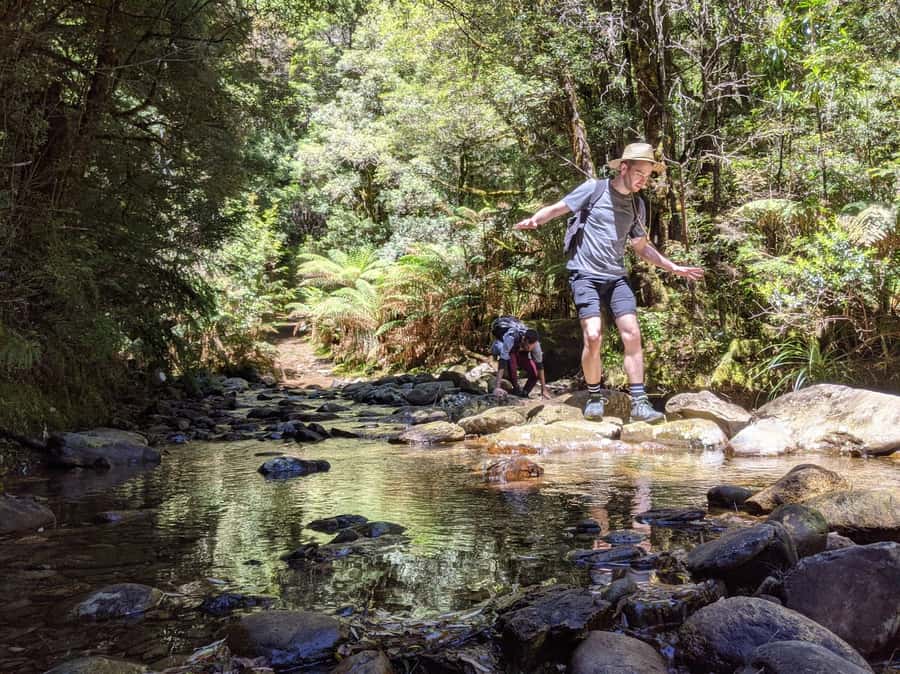
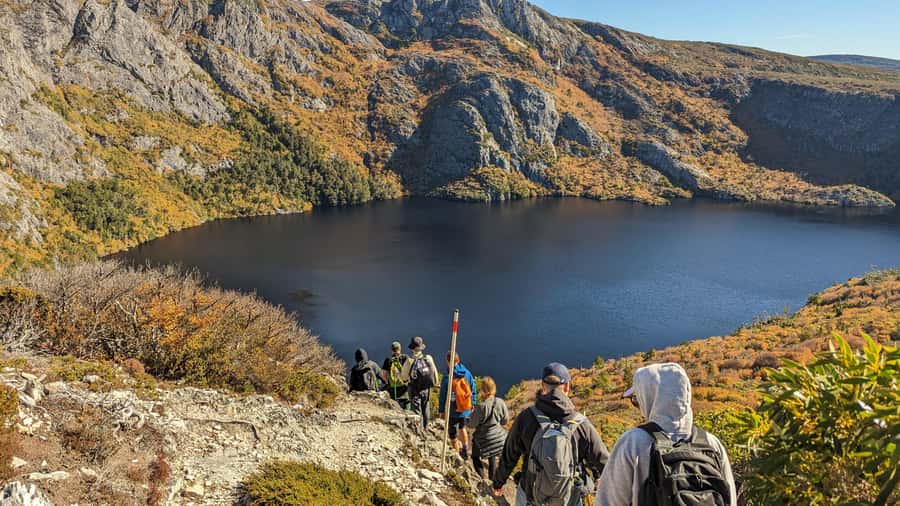
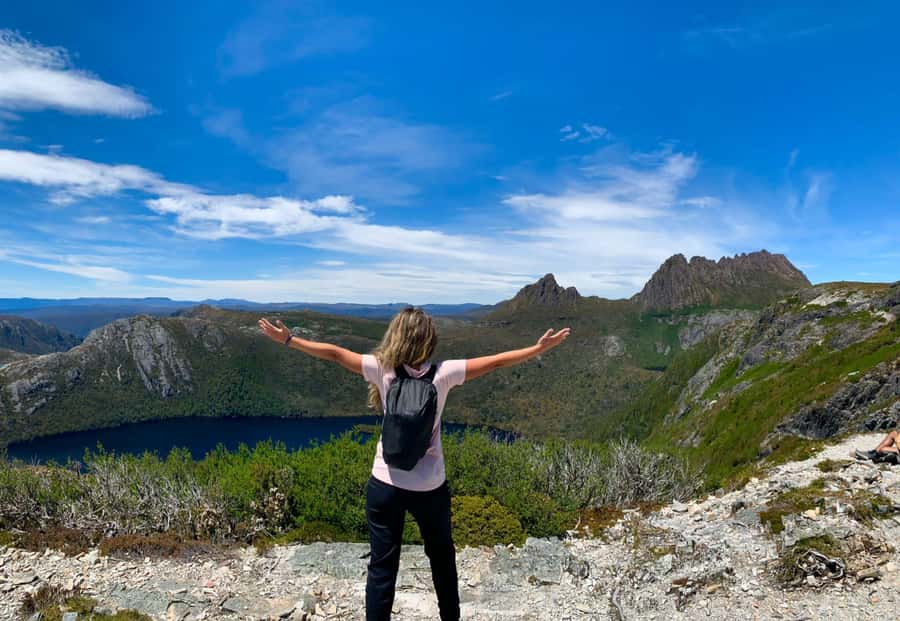
Cradle Mountain National Park is the big alpine moment, and the tour gives you real walk options. You are in World Heritage territory, and you can choose a route based on fitness.
If you want one of Australia’s best short walks, the Dove Lake circuit is the go-to. It is listed as a 2 to 3 hour, 6 km circuit, with rougher track sections and many steps, plus short uphill bits. If you feel good on uneven ground and do not mind stairs, it is a memorable hike.
For a higher challenge, the scenic climb to Marion’s Lookout is offered. And right in the mix, you get wildlife spotting time at Ronny Creek, where you can look for wombats. I love hikes that include a “watch for this” moment, because it turns a trail into an experience you are actively participating in.
After the highlands, the day softens. You stop in Sheffield, the Town of Murals, then continue to Launceston for overnight. The murals are a nice reset after alpine views, and it also makes the driving day feel less like a transfer.
A few more Hobart trips to compare
- Port Arthur Full-day Guided Tour with Harbour Cruise and Tasman National Park
★ 4.5 · 585 reviews - Southwest Tasmania Wilderness Experience: Fly Cruise and Walk Including Lunch
★ 5.0 · 233 reviews - Hobart: Wineglass Bay & Freycinet National Park Active Tour
★ 4.7 · 228 reviews - From Hobart: Mt. Field National Park and Russell Falls
★ 4.6 · 41 reviews
Day 4: Launceston Cataract Gorge, Bay of Fires sands, and Bicheno penguin time
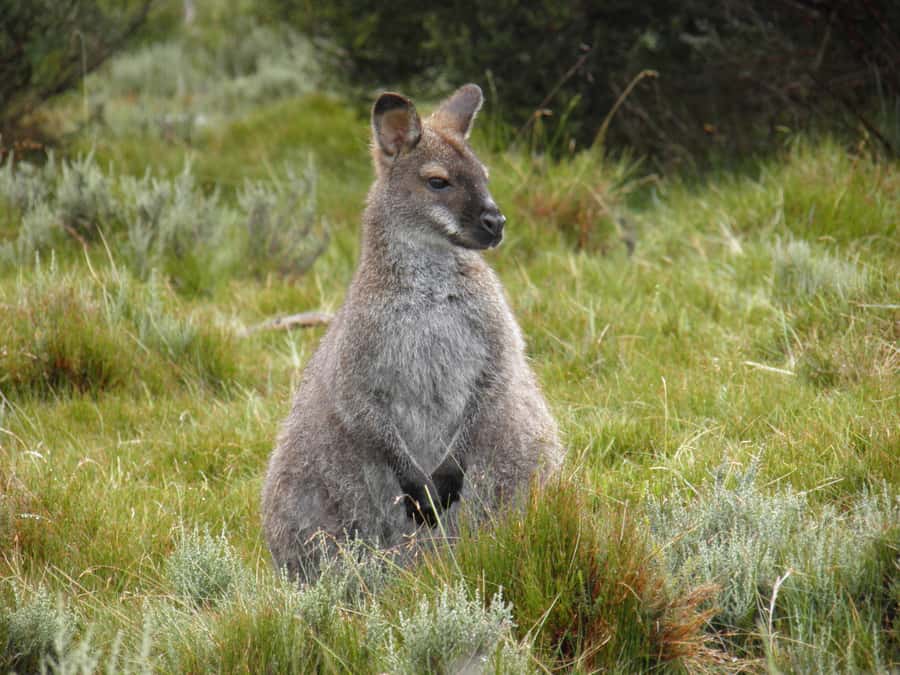
Day 4 starts with a classic Tasmanian nature spot: Cataract Gorge. You will look for local wallabies around the area, and that wildlife-friendly rhythm continues. It is a good way to get moving without immediately jumping into a long alpine hike again.
From there, you head toward the East Coast for breathtaking scenery. Lunch is in St Helens, which is practical and keeps the day from feeling like a constant grab-and-go sprint.
Then comes Bay of Fires, where the focus is on white sands and time at the beach. You stay in Bicheno, a picturesque fishing village, and penguins can be seen emerging from the sea. That “in the evening, look this way” detail can be a highlight for people who did not realize Tasmania has coastal wildlife viewing on tap.
The big value of this day is that it mixes easy wildlife moments (wallabies, penguin sightings) with coast walking. It feels like you get multiple “types” of Tasmania in one stretch.
Day 5: Freycinet National Park, Hazards at Honeymoon Bay, and Wineglass Bay viewpoints
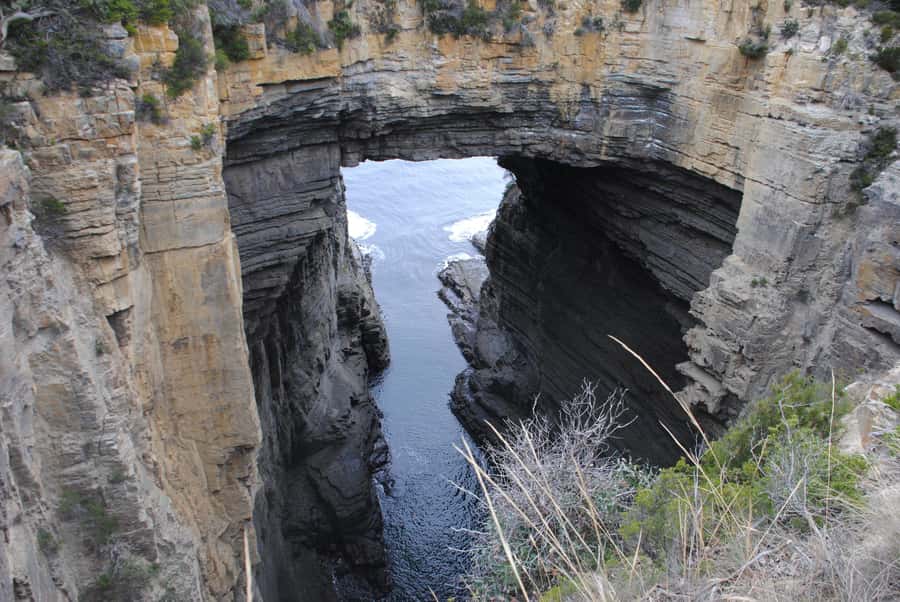
Freycinet National Park is where Tasmania’s coastline becomes the main character. This day is built around beaches, coves, forests, and lookouts, with several route choices depending on how hard you want to work.
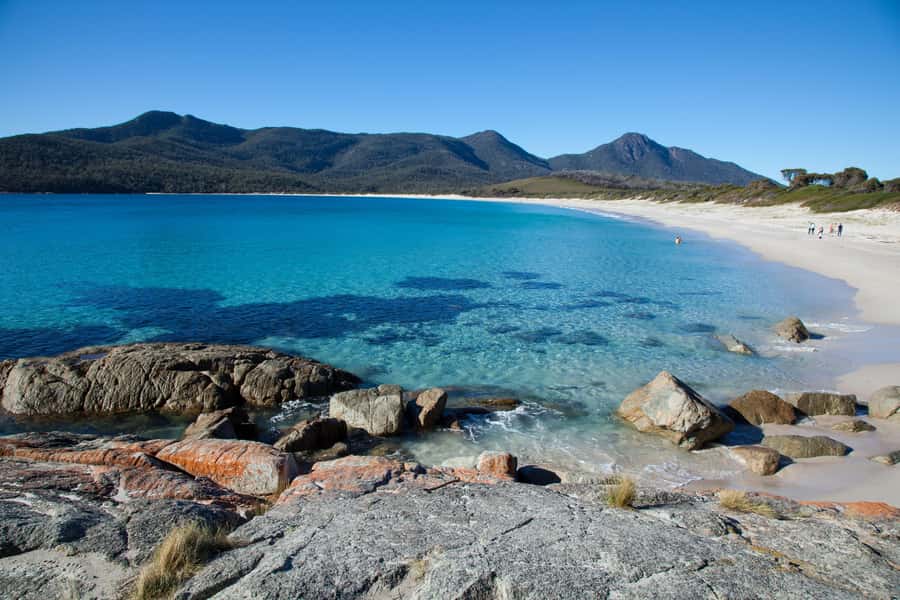
You start by seeing the pink granite Hazards mountain range from Honeymoon Bay. It is a vivid visual anchor for the day, and it also sets up the rest of the viewpoints.
From there, you can choose between a challenging climb to the summit of Mt Amos or a less punishing option that still delivers the goods. The alternative described is walking to a lookout for the curved white sands of Wineglass Bay, then continuing to the beach below. That option is a smart compromise if you want dramatic scenery but do not want a summit day.
Later, you take in ocean and mountain views from Cape Tourville. You end by returning to Hobart via the Great Eastern Drive, which keeps the final day feeling like it links scenery, rather than just moving you back.
Day 6: Bonorong wildlife sanctuary, Richmond village stroll, and Wellington Park (kunanyi)
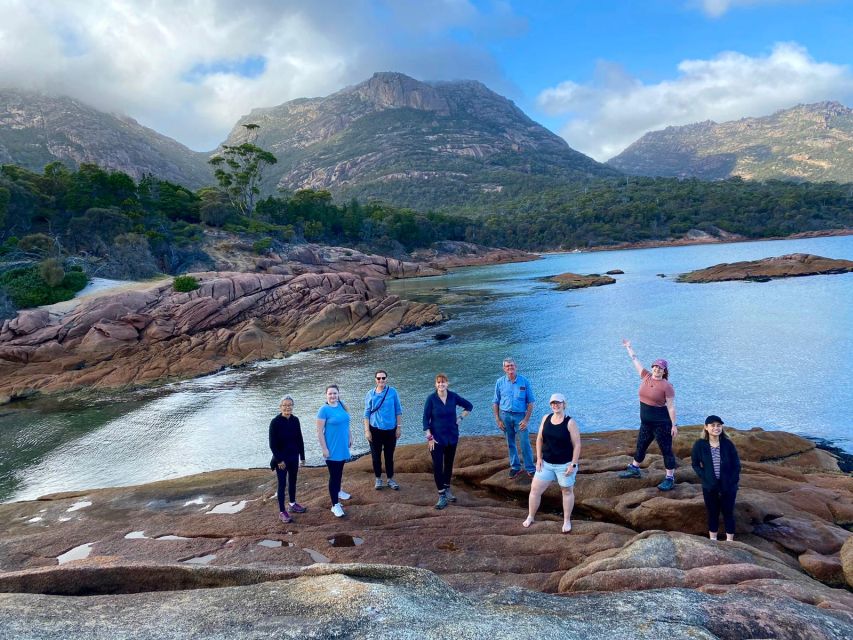
The final day is the most wildlife-forward. You begin at Bonorong Wildlife Sanctuary, described as Tasmania’s best-known conservation and wildlife sanctuary. This is where you meet a variety of species, including quolls, birds, wombats, kangaroos, and Tasmanian devils.
This kind of stop is valuable because it reduces your “will we see animals?” uncertainty. In the wild, you can always strike out. At Bonorong, you still need to be observant, but you are not relying on perfect timing.
After wildlife, you swap to a cultural walk in Richmond. You will enjoy walking around the colonial village of Richmond, then return to Hobart via the scenic Coal River Valley.
You finish at Wellington Park, known locally as The Mountain, and also by its palawa name, kunanyi. Your guide provides an experience that covers fern glades, eucalyptus forests, dramatic rock columns, and boulder fields. There are superb walking tracks to lookouts, and this is a fitting last taste of Tasmania’s “big nature” in a condensed time.
How the walks are paced, and who this tour suits best
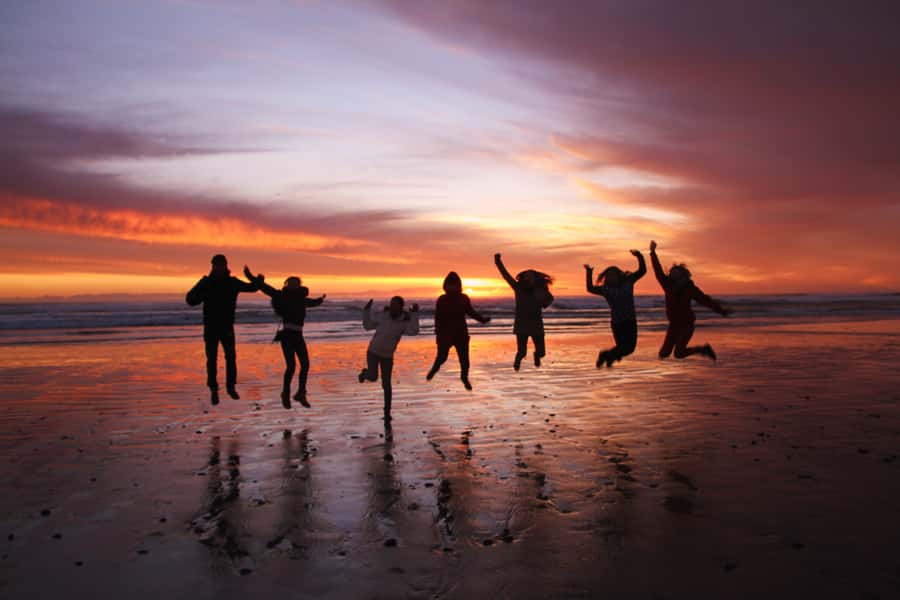
This is an active tour with short walks every day. Most walks are classified as easy to moderate, and all walks are optional. That optionality matters because you can keep up without feeling forced to do the hardest option if you are tired, sore, or just not in the mood that day.
Still, you should be honest about your body. It is not suitable for children under 8, people with back problems, or people with mobility impairments. Even with optional routes, you will likely be stepping onto uneven ground at times, and some tracks include many steps (like Dove Lake).
In practice, you want comfortable shoes you trust. The tour also asks for warm clothing, even if you expect sun. Tasmania’s weather can swing, especially when you transition between coasts and alpine regions.
Wildlife and local stories, powered by guides who know the terrain
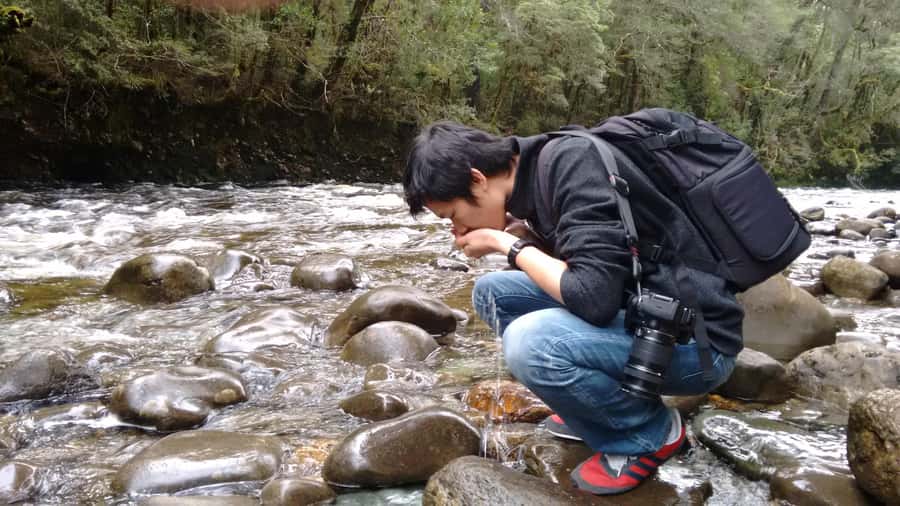
The strongest recurring theme here is that the guide is not just “pointing at a view.” The trip is described with commentary throughout, and the guide can make a big difference, especially for wildlife and trail interpretation.
Some examples from guide feedback you can use as a clue: Phil is noted for local knowledge and stories, Keygan is praised for being very knowledgeable and helping people appreciate animals, scenery, and history, and Brendan and Hayden are described as passionate and highly competent with patience and animal focus. In plain terms, you get more than route information. You get context, and you learn how to look.
If you like spotting wombats, wallabies, or devils, this kind of guidance is where the extra value sits. You also get flexibility in hike choices, which keeps the day from turning into a group bottleneck.
Price and value: what $831 per person is buying
At $831 per person for 6 days, the value mostly comes from packaging. You are not paying separately for national park entry fees, guided walk support, a live English-speaking guide, and the bulk of transport between regions. You also get 5 nights of accommodation included.
Food and drinks are not included, so budget for meals on your own. The Gordon River cruise is optional and also at your own expense. If you add those, the trip cost rises, but you still have the option to keep it simple.
I think the best way to judge this price is by comparing what you would do without a tour. If you rented a car, paid for park entries, bought admission for wildlife stops, and coordinated multiple long days of driving, the total can climb quickly. Here, you trade freedom for structure, and for many people, that is a great trade.
One small caution: accommodation style is mixed. You will choose between hostel or motel options, which can change the “comfort feel” from person to person. Motels mean private rooms with ensuite facilities. Hostels mean same-gender dorm rooms (or private options) with shared same-gender bathrooms.
What to bring for coast days and alpine days
I like that the tour gives you a practical packing list. It signals what the day will actually feel like.
Bring:
- Comfortable shoes and, ideally, hiking shoes for rougher track days
- Warm clothing and a jacket, plus long pants
- Sunglasses, sunscreen, and a sun hat
- A reusable water bottle and water
- Swimwear and a towel (the East Coast beach time makes this useful)
- A camera
- A hiking-ready day bag, since you will be on foot daily
Also, plan for luggage limits. You can bring up to 20 kg, stored in a trailer on travel days. That pushes you toward packing light and smart.
The bottom line: should you book it?
Book this tour if you want Tasmania highlights without renting a car, and you are happy to walk daily with options. You will get major hits like Cradle Mountain and Freycinet National Park, plus wildlife time at Bonorong and coastal moments on the East Coast.
Skip it if you need a fully low-activity holiday. The walking is optional, but the trip is still active, and it is explicitly not suitable for children under 8, people with back problems, or those with mobility impairments.
If your ideal Tasmania trip is a mix of coast, mountains, and animals, this one is a strong, efficient route.
FAQ
What’s included in the tour price?
The tour includes Hobart city pick-ups and drop-offs at selected locations, 5 nights accommodation, commentary throughout the activity, guided walks (with the option to walk without a guide), national park entrance fees, and entry fee to Bonorong Wildlife Sanctuary.
What is not included?
Food and drinks are not included. The Gordon River Cruise is optional and available at your own expense.
What accommodation options are available?
You can choose hostel or motel accommodation options. Motels offer private rooms with ensuite facilities. Hostels offer same-gender dorm rooms, or private twin, double, or single rooms, with shared same-gender bathrooms. If you book twin or double options, a minimum of 2 persons is required.
Are the hikes optional, and how hard are they?
Guided walks are offered each day, and you can choose to walk without a guide. The trip includes short walks every day, mostly rated easy to moderate. Russell Falls is an example easy walk (about 25 minutes return, 1.4 km), while the Dove Lake circuit is an example moderate walk (2 to 3 hours, 6 km) with rough surfaces and many steps.
How does pickup work in Hobart?
Pickup is optional from centrally located hotels or hostels in Hobart. Pickup time is provided once your pickup location is confirmed. Pickup is not available from Airbnbs and private residences, but you can contact the local operator for the nearest convenient pickup location.
What’s the cancellation policy?
You can cancel up to 14 days in advance for a full refund.
More Wildlife in Hobart
- Hobart: Admission Ticket to Bonorong Wildlife Sanctuary
★ 4.7 · 126 reviews - Hobart: Mt Wellington, Richmond, & Bonorong Wildlife Tour
★ 4.6 · 59 reviews - From Melbourne: Great Ocean Road, 12 Apostles, Wildlife Tour
★ 4.7 · 6,020 reviews - Penguin Parade, & Wildlife Encounters Eco Tour from Melbourne
★ 5.0 · 3,774 reviews
Newest Hobart reviews on the site
- Hobart: Full-Day Tasmania Gourmet Seafood Cruise★ 4.9 · 11 reviews
- Tasmania: 7-Day West to East Tour★ 4.8 · 115 reviews
- Tasman Peninsula Day Trip with Cruise & Devils from Hobart★ 4.9 · 226 reviews
- From Hobart: 5-Day Tasmania West & East Coast Tour★ 4.9 · 369 reviews
- Tasman Peninsula Full-Day Sea Kayak Excursion★ 5.0 · 8 reviews
- Signature Wine Tour – Hobart & SE Tasmania★ 4.9 · 48 reviews
- Shore Excursion: Hobart Wanderer★ 4.6 · 16 reviews
- Mt Wellington Ultimate Afternoon Tour★ 4.6 · 8 reviews
Wildlife, compared.
Penguin Parade, & Wildlife Encounters Eco Tour from Melbourne
Read our review →
Blue Mountain Small Group Scenic World, Wildlife, Waterfall
Read our review →
Melbourne Great Ocean Rd Reverse Tour London Bridge Wildlife
Read our review →
Solar Whisper Daintree River Crocodile and Wildlife Cruise
Read our review →
Blue Mountains: Three Sisters, Scenic World and Wildlife park
Read our review →
Exclusive Blue Mountains Wildlife and Bushwalk Tour From Sydney
Read our review →
Browse the lists this tour appears in