
Reviewed · WALKING TOURS
Sydney Walking Tour including The Rocks (small group)
History walks, and Sydney feels alive. In about 2.5 hours you cover The Rocks and central landmarks with stories that run from Indigenous wisdom to convict-era life, led by guides who keep things moving and easy to follow. I love the way the stops connect real places to real events, so you leave with a mental map instead of a list.
The walk is also a smart value. Many stops are marked as free admission, so your $32.28 mostly pays for guiding time and local context, not entry fees. I also like the small group size, up to 16 people, which means questions and conversations actually happen. One possible drawback, this is still a city walk, and on a hot day you will feel it, so pack sun protection and wear shoes you trust.
In This Review
- Key points worth knowing before you go
- Meeting at Hyde Park, then walking into Sydney’s layers
- Hyde Park basics: statues, ANZAC, and why this park matters
- St. Mary’s Cathedral and the European-style skyline in the middle of Australia
- Hyde Park Barracks: convict and immigrant history in one UNESCO site
- Queen’s Square: legal power and the buildings that look important for a reason
- Rum Hospital (Sydney Eye Hospital): a strange deal that shaped a real place
- Macquarie Street: power, Parliament, and the long view of government
- Royal Botanic Garden: a walk with an Aboriginal cultural connection
- Old Government Stables to the Sydney Conservatorium of Music
- The Edge of the Trees: art that marks a hard meeting of cultures
- Macquarie Place Park: the first public space feeling
- Customs House: trade stories at the edge of the harbor economy
- The Rocks itself: cobblestones, convict-era memories, and a living neighborhood
- A quick tip on this section
- Suez Canal to Nurses Walk: the underworld and the women who worked through it
- Playfair Street, Argyle Street, George Street: three ways to read the same neighborhood
- Campbells Cove: harbor views and an easy finish near Circular Quay
- Price and value: $32.28 for 2.5 hours, not a museum ticket day
- Pacing and practical tips for your best experience
- Who should book this Sydney and The Rocks small-group walk
- Should you book it? My honest take
- FAQ
- Where do we meet and where does the tour end?
- What time does the tour start and how long is it?
- How many people are in the group?
- Do I get a mobile ticket?
- Are there admission fees for the stops?
- What walking level should I expect?
- Are service animals allowed?
- Can I cancel for a full refund?
Key points worth knowing before you go
- Up to 16 people, so the guide can keep you together and answer questions
- 2.5 hours of key sites, from Hyde Park down to The Rocks
- Mostly free stops, with your money focused on narration and routing
- Built-in variety, cathedrals, convict sites, legal buildings, and a harbor finish
- Harbor payoff at the end, with views near Circular Quay and Campbells Cove
- Practical pacing, and the walk is often described as manageable, even when it is sunny
Meeting at Hyde Park, then walking into Sydney’s layers
You start at the Archibald Memorial Fountain in Hyde Park North, on Elizabeth Street. It is a great way to begin, because Hyde Park puts you in the middle of the city but still gives you breathing room before the history starts stacking up.
This is a small-group tour, with a maximum of 16 people. That matters in Sydney, because the city can feel big and spread out, and a large group can turn a walk into a line you sprint to catch up with. With this setup, you get a real guide, not just a headset and a vague route.
The tour runs about 2 hours 30 minutes and ends at Campbells Cove near Circular Quay. That ending is handy. You finish right where you can hop on transport, grab lunch, or wander toward the Opera House and Harbour Bridge area without needing another plan.
More Walking Tours in Sydney
- Sydney Opera House Official Guided Walking Tour
★ 4.5 · 3,770 reviews - From Sydney: Blue Mountains Tour with Waterfall Walk & Lunch
★ 4.8 · 2,400 reviews - Sydney The Rocks Guided Walking Tour
★ 5.0 · 1,546 reviews
Hyde Park basics: statues, ANZAC, and why this park matters
Stop 1 is Hyde Park, Sydney’s old green heart. Even if you have walked through before, you get a sharper sense of what you are looking at, including the park’s long-running role as a public space and the nearby ANZAC Memorial energy that Sydney carries.
This first stop also helps with an underrated part of any walking tour, timing. When you begin in shade and open space, you can settle in before the denser neighborhoods and tighter lanes of The Rocks. On hot mornings, that mental start matters.
St. Mary’s Cathedral and the European-style skyline in the middle of Australia
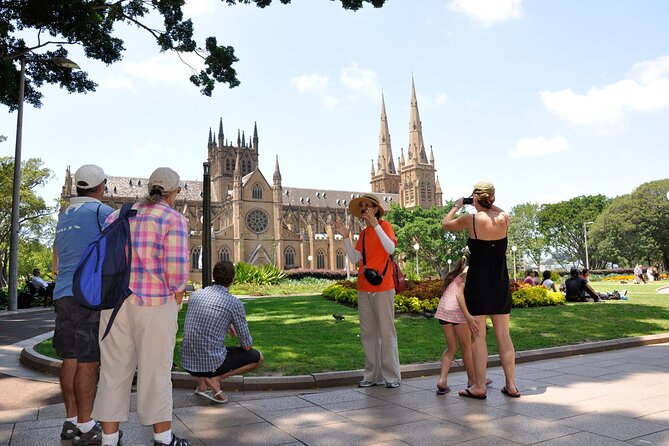
Stop 2 is St. Mary’s Cathedral, a Gothic standout. It is the kind of building you notice from a distance, but on the tour you learn how it fits into Sydney’s Catholic story and why its architecture feels familiar if you have seen major churches in Europe.
If you are the type who likes to look up while you walk, this stop gives you permission to slow down for a moment. It also sets up a theme you will keep seeing, how different cultural influences shaped the city block by block.
Hyde Park Barracks: convict and immigrant history in one UNESCO site
Stop 3 is Hyde Park Barracks, a UNESCO World Heritage site. Here the story shifts. You learn how the buildings were used as a convict prison and later served as an immigration depot, which explains why Sydney’s early development is so tied to forced migration and tough conditions.
Even in short time, this stop gives you context for the rest of the route. It is hard to understand The Rocks as a historic district without knowing that early Sydney was built under pressure.
Same part of the map, a completely different day:
- Sydney: Opera House Guided Tour with Entrance Ticket
★ 4.8 · 8,312 reviews - All Inclusive Blue Mountain,Scenic World,Lunch,Koalas,ferry
★ 5.0 · 7,832 reviews - From Sydney: Blue Mountains Full-Day Trip
★ 4.5 · 4,471 reviews - Blue Mountains Small-Group Tour from Sydney with Scenic World,Sydney Zoo & Ferry
★ 5.0 · 3,709 reviews
Queen’s Square: legal power and the buildings that look important for a reason
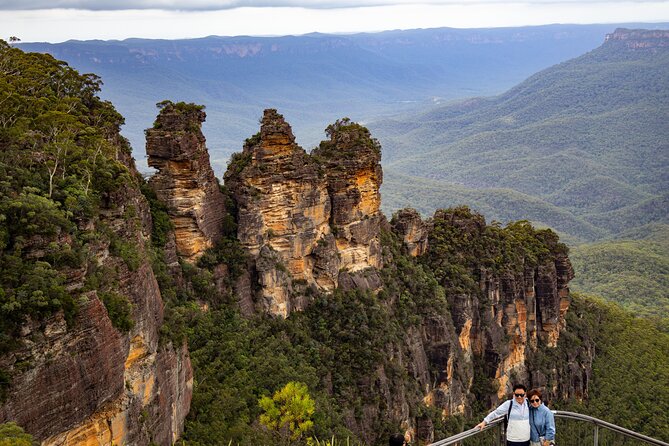
Stop 4 is Queen’s Square, surrounded by major institutions like the Supreme Court and the Law Courts Building. This is where the tour connects architecture to authority, and you start seeing Sydney as a place that was designed not just to live in, but to govern from.
Because the stop is short, your goal here is to clock the vibe and make mental notes. If you want deeper time later, this is one of those areas you can revisit on your own and feel like you already know what you are seeing.
Rum Hospital (Sydney Eye Hospital): a strange deal that shaped a real place
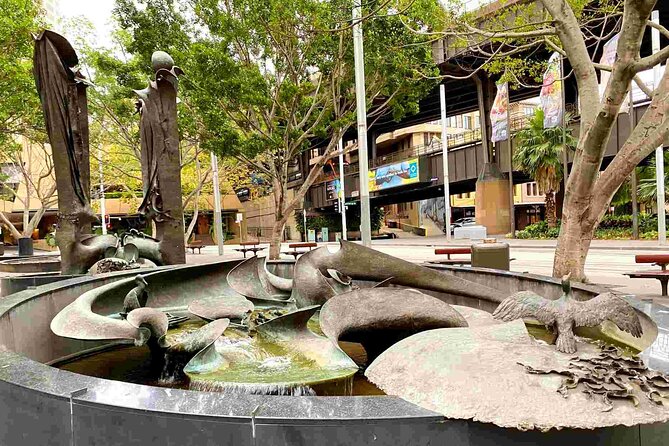
Stop 5 is Sydney Eye Hospital, also known as the Rum Hospital. The reason this place gets attention is the origin story, involving a deal connected to rum.
It is one of those facts that sounds almost too quirky to be true, but it helps explain how early Sydney found ways to finance public needs. You also get a sense of how hospitals and specialized care fit into a growing colony.
Macquarie Street: power, Parliament, and the long view of government
Stop 6 is Macquarie Street, a classic Sydney corridor for big civic buildings. This stretch links the tour’s early themes, governance and public life, to what you see today near Parliament House and other heritage structures.
If you like city planning, this part helps you connect the dots. If you just want a photo, you still get something useful: you learn why the street feels like a spine through the city.
Royal Botanic Garden: a walk with an Aboriginal cultural connection
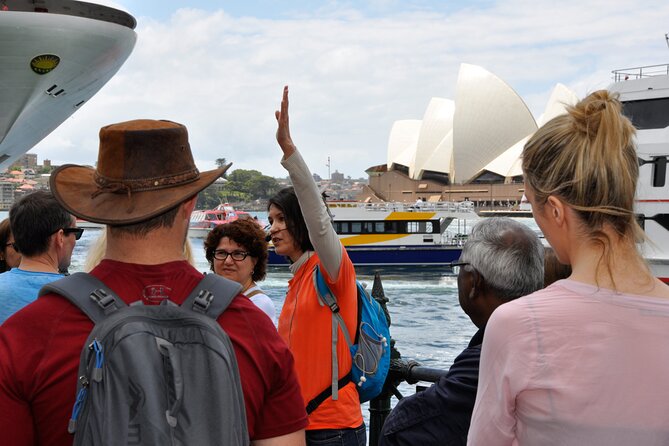
Stop 7 is Royal Botanic Garden Sydney. Here you see a different side of Sydney, not just buildings and courts, but the setting that shaped how people lived outdoors.
The tour highlights the garden’s plant richness and its connection to Aboriginal culture. Even if you do not have a botany interest, it is worth paying attention. You learn how the garden functions as more than scenery.
Old Government Stables to the Sydney Conservatorium of Music
Stop 8 is Sydney Conservatorium of Music, housed in the Old Government Stables. This is a great example of adaptive reuse, where old structures stay useful instead of disappearing.
It also adds balance to the walk. After convict, legal, and trade stories, you get something about arts and the continued use of heritage buildings in the modern city.
The Edge of the Trees: art that marks a hard meeting of cultures
Stop 9 is The Edge of the Trees, an artwork that reflects the intersection of Aboriginal and European cultures. This is one of the stops where the tour can feel emotionally heavier, but also more meaningful, because it is not just naming history, it is pointing at how history keeps shaping the present.
Expect a moment of standing still and listening, not just walking past. You can treat this stop like a pause button before you move into more built-up historic corners.
Macquarie Place Park: the first public space feeling
Stop 10 is Macquarie Place Park, a small area with a big historical role. The tour frames it as the city’s first public space, and it mentions artifacts tied to what Sydney was like earlier on.
Because it is a park, it also gives you a chance to catch your breath. If you needed water or a quick wipe of sweat, this is the kind of stop where you can do it without falling behind.
Customs House: trade stories at the edge of the harbor economy
Stop 11 is Customs House, and this is where the tour starts turning toward commerce and the ships that fed early Sydney. You learn how it was the heart of trade, overseeing arrivals of ships and goods.
This stop links directly to The Rocks. If Hyde Park Barracks gives you the hardship story, Customs House helps you understand the daily engines that brought people and supplies into town.
The Rocks itself: cobblestones, convict-era memories, and a living neighborhood
Stop 12 is The Rocks, with about 20 minutes here. This is the centerpiece stretch of the walk, where sandstone streets and convict-era connections become easy to picture.
The Rocks is described as a living museum. That phrase is not just marketing. The lane layouts and old buildings make the stories feel grounded, not abstract. This is where you begin to see why people come back to the area again and again.
A quick tip on this section
Take the extra seconds to look up at stonework and doorways. The tour spends time on streets like Suez Canal and lanes like Nurses Walk after this, so you want your brain ready to connect details.
Suez Canal to Nurses Walk: the underworld and the women who worked through it
Stop 13 is Suez Canal, a narrow laneway associated with criminals and the darker side of early The Rocks life. It is one of those places where the street width itself adds drama to the story.
Stop 14 is Nurses Walk, tied to early nursing life. You learn that it connects to the challenges faced by pioneering women, which adds another layer beyond the convict and trade themes.
Playfair Street, Argyle Street, George Street: three ways to read the same neighborhood
Stop 15 is Playfair Street, a charm-heavy lane that helps you slow down and really absorb the historic feel. Stop 16 is Argyle Street, which the tour frames as a commercial hub across centuries and still a lively street today.
Stop 17 is George Street, another major road where past and present sit side by side. The point here is not to memorize names. It is to understand how the neighborhood kept changing while keeping its core character.
If you are thinking where to return later, note which lane makes you want to take your time. This section gives you several candidates for a self-guided stroll after the tour ends.
Campbells Cove: harbor views and an easy finish near Circular Quay
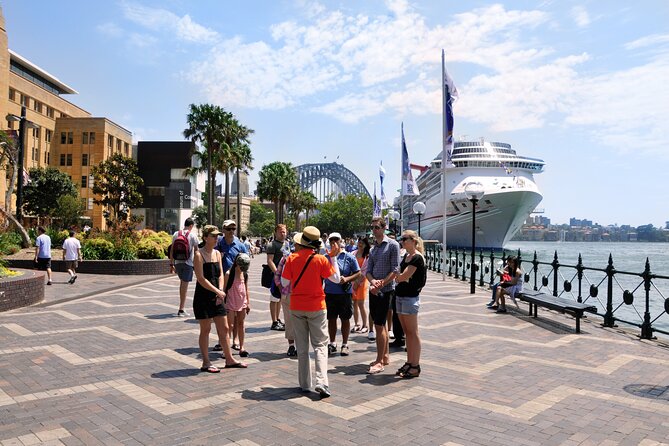
Stop 18 is Campbells Cove. This is your end-of-walk payoff, with views toward the Opera House and Harbour Bridge area. It is also a smart final stop because it puts you close to Circular Quay, public transport, and plenty of places to eat.
Some people mention a surprise view at the end, and that tracks with how many walking routes fail to deliver a real final moment. Here you do get one. Even if you have seen the Bridge before, the angle from this part of the harbor area can feel new.
Price and value: $32.28 for 2.5 hours, not a museum ticket day
At $32.28 per person for about 2 hours 30 minutes, the value comes from three things.
First, you are paying for an organized route that moves from Hyde Park into The Rocks without you having to plan step-by-step. Second, many stops are free, so you are not losing time and budget on entry lines. Third, small-group format, capped at 16, improves the whole experience, because you are not just collecting facts, you are getting context.
If you were to DIY this walk, you could do it. But you would spend more time figuring out what to notice, and you would likely miss the meaning behind places like the Rum Hospital backstory or the cultural message of The Edge of the Trees. This tour is essentially buying your attention back, in the best way.
Pacing and practical tips for your best experience
This tour is built for moderate physical fitness, and it is a real walk. In practice, you should plan for steady walking time plus short stops at each location.
A few practical things help a lot. Wear comfortable shoes, because you are on streets and pavements most of the way. If the weather is hot, bring sunblock and a hat. Guides on this route also tend to manage shade when they can, but you should not rely on luck.
One more tip: treat it as a first-day kind of tour. You cover a lot of territory in a short time, and it sets you up to know where you want to return for longer hangs later.
Who should book this Sydney and The Rocks small-group walk
This is a strong fit if you:
- Want a first-time orientation to Sydney and The Rocks
- Like history tied to real streets, not just big landmarks
- Prefer asking questions to standing in a crowd
- Are okay with a two-and-a-half-hour walk through mixed urban areas
You might want to rethink if you:
- Have limited stamina for sustained walking
- Need a slow pace with very frequent breaks
- Expect long time inside buildings, because most stops are short and street-based
Should you book it? My honest take
Yes, you should book this tour if you want a high-value history-and-streets introduction to Sydney in one morning. The small group size, the free-entry nature of most stops, and the practical ending near Campbells Cove make it an easy choice.
If you are going for maximum comfort, just plan ahead with water and sun protection. Then you can focus on what this tour does best, turning ordinary streets into a clear story of how Sydney became itself.
FAQ
Where do we meet and where does the tour end?
You meet at the Archibald Memorial Fountain, Hyde Park North, 110 Elizabeth St, Sydney NSW 2000. The tour ends at Campbells Cove, 4 Circular Quay W, The Rocks NSW 2000.
What time does the tour start and how long is it?
The tour starts at 10:30 am and runs for about 2 hours 30 minutes.
How many people are in the group?
This is a small-group tour with a maximum of 16 travelers.
Do I get a mobile ticket?
Yes, the tour uses a mobile ticket.
Are there admission fees for the stops?
The listed stops are marked as admission ticket free, so you are not expected to pay separate entry fees for them.
What walking level should I expect?
The tour is set for people with moderate physical fitness. It is a walking tour, so comfortable shoes are a good idea.
Are service animals allowed?
Yes, service animals are allowed.
Can I cancel for a full refund?
Yes. You can cancel for a full refund if you cancel at least 24 hours before the experience’s start time. If you cancel less than 24 hours before, the amount paid is not refunded.
Newest Sydney reviews on the site
- From Sydney: Tandem Skydive Experience over Wollongong Beach★ 4.5 · 83 reviews
- Private Transfer from Sydney Airport to Sydney (CBD)Hotel or Port★ 4.5 · 24 reviews
- Whale Watching on Speed Boat with canopy from Sydney Harbour★ 5.0 · 14 reviews
- illi-Langi The Rocks Aboriginal Dreaming Tour★ 4.5 · 90 reviews
- Wine Tours Sydney – Southern Highlands Day Escape, Full Day Wine Tasting Tour★ 5.0 · 9 reviews
- Waves Waterfalls and Wineries Full-Day Southern Highlands Private Tour★ 5.0 · 9 reviews
- Whale Watching Sailing Experience in Sydney★ 5.0 · 28 reviews
- Walking with Wild Kangaroos Private Half-Day Trip from Sydney★ 5.0 · 45 reviews
Walking Tours, compared.
Sydney Opera House Official Guided Walking Tour
Read our review →
Blue Mountains Tour with Waterfall Walk & Lunch
Read our review →
Ultimate Melbourne Walking Tour: History, Laneways & Culture
Read our review →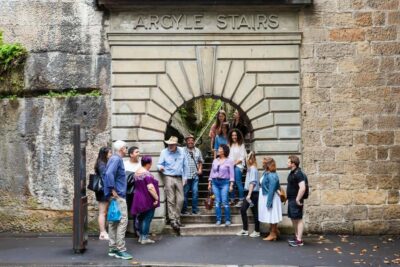

Great Ocean Road Tour Plus Koalas, Forest Walk and Morning Tea
Read our review →
Blue Mountains Small Group Tour with Waterfall Walk & Fresh Lunch
Read our review →
Maria Island Cruise and Guided Walk Day Tour with Lunch and Drinks
Read our review →Browse the lists this tour appears in