
Reviewed · WALKING TOURS
Melbourne Sports Walking Tour
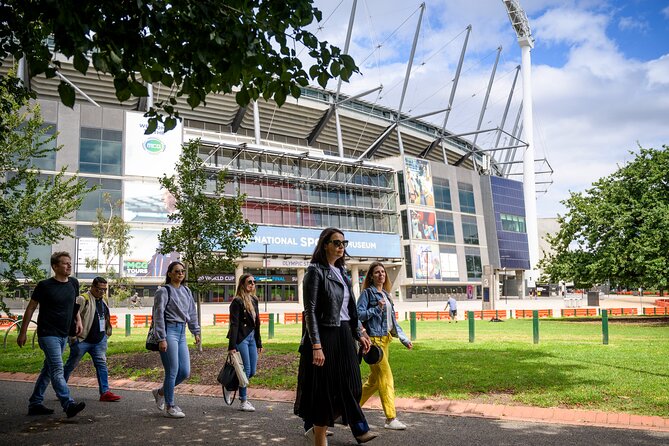
Show up at Fed Square, leave with sports stories. I like how the tour starts at Fed Square, so you can find your guide fast. I also like the max 8 group size, which makes it easy to ask questions and get real answers.
In about two hours, you follow a route through Melbourne’s stadium belt, and the thread is the 1956 Olympic Games. Along the Yarra River, you get a solid sense of why this place has always mattered to sport and crowds.
The tradeoff is this is a walking tour, not a full stadium access pass. If you want long, inside-only tours of every venue, you may have to accept close views plus explanations, plus good weather is key.
In This Review
- Key things I’d circle before you go
- From Fed Square to the MCG: pacing, meeting point, and what “2 hours” really means
- Yarra River stop: the easy walk that explains the bigger picture
- Rod Laver Arena and Melbourne Park tennis lanes
- Melbourne and Olympic Parks: 1956 Olympic stories that connect the venues
- AAMI Park for soccer and rugby: the part that surprises non-fans
- The MCG finale: walking into Australian sport’s most famous arena
- Guides make it: what to expect from your host and how to get more out of it
- Price and value: is $63.12 for a 2-hour walk a fair deal?
- Who this tour suits best, and who might want another plan
- Practical tips for a smoother stadium stroll in Melbourne
- Should you book this Melbourne Sports Walking Tour?
- FAQ
- Where does the tour start and where does it end?
- How long is the Melbourne Sports Walking Tour?
- What is the group size limit?
- Do I get a mobile ticket?
- Are there admission fees for the stops?
- Is this tour outdoors, and does weather matter?
- Is it suitable for most people to participate?
- What is the cancellation and refund timing?
Key things I’d circle before you go
- Max 8 group size keeps it personal and question-friendly
- Fed Square start, MCG finish helps you wrap the walk right where big matches live
- Major stadium precinct route hits Rod Laver, Olympic Park, AAMI Park, and the MCG
- 1956 Olympics context ties together tennis, footy, and the city’s big-event DNA
- Yarra River storytelling gives you the geographic reason behind the sports build-up
- Guides with props and rules talk make the games easier to understand as you look
From Fed Square to the MCG: pacing, meeting point, and what “2 hours” really means
This tour is built for an easy, steady pace. You’re outside for most of the experience, with short stops that let you look around, listen, and move on without feeling dragged. The full loop is about 2 hours total, and it stays focused on the Melbourne sporting precinct.
Meeting is straightforward at Princes Bridge, Melbourne VIC 3000, with the actual meet-up happening at Fed Square. You finish at the Melbourne Cricket Ground (MCG), Brunton Ave, Richmond VIC 3002, and it’s a short walk from there back toward Federation Square, or you can use nearby tram and train stops.
That end point matters. The MCG is one of those places where even without a match on, you can feel the scale. Ending there also makes it simple to tack on lunch or another stadium stop on your own.
More Walking Tours in Melbourne
- Ultimate Melbourne Walking Tour: History, Laneways & Culture
★ 5.0 · 1,451 reviews - Great Ocean Road Tour Plus Koalas, Forest Walk and Morning Tea
★ 4.5 · 1,068 reviews - Great Ocean Road 12 Apostles & Rainforest Walk with Morning Tea
★ 4.5 · 549 reviews
Yarra River stop: the easy walk that explains the bigger picture
You start by heading along the Yarra River. The stop is short, but it works like a warm-up, because it puts the rest of the stadium scenery into context fast.
This is where your guide helps you connect two things people often separate in their minds: the city’s geography and the way crowds gather. The river isn’t just scenery. It’s part of how Melbourne grew, moved, and staged big moments, including sporting ones.
If you are the type who likes to understand why something is located where it is, this stop is worth it. Even 15 minutes here makes the rest of the walk feel less random.
Rod Laver Arena and Melbourne Park tennis lanes
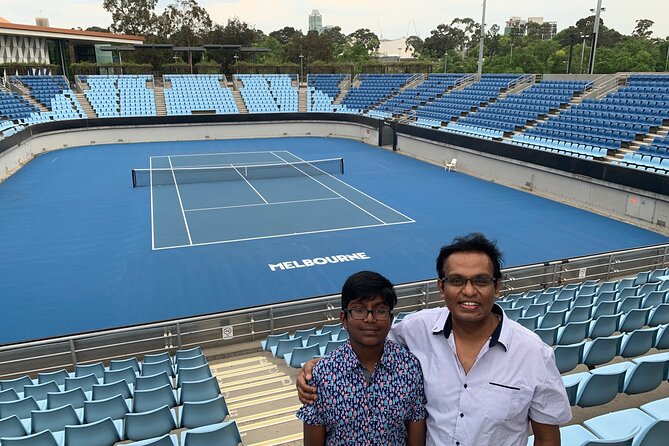
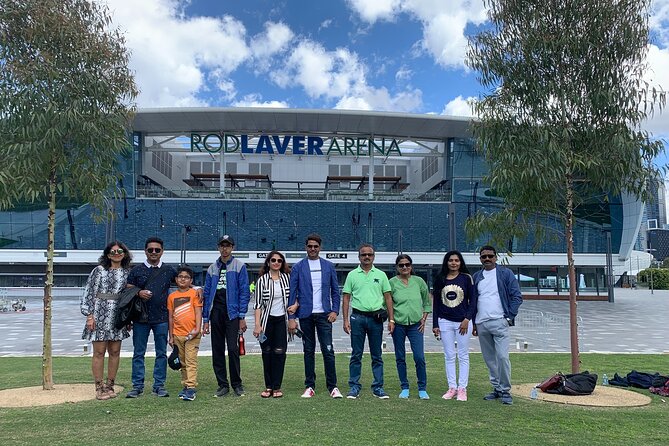
Next you move through the Melbourne Park tennis complex, with Rod Laver Arena as a highlight. Expect to walk past the big, iconic tennis spaces and learn how the precinct became what it is today.
This is also a great stop if you follow tennis, because your guide will talk through what makes the courts and tournament setup different from other sports. If you have never watched Australian Open tennis closely, don’t worry. The tour is built to help you “read” the venue as you walk.
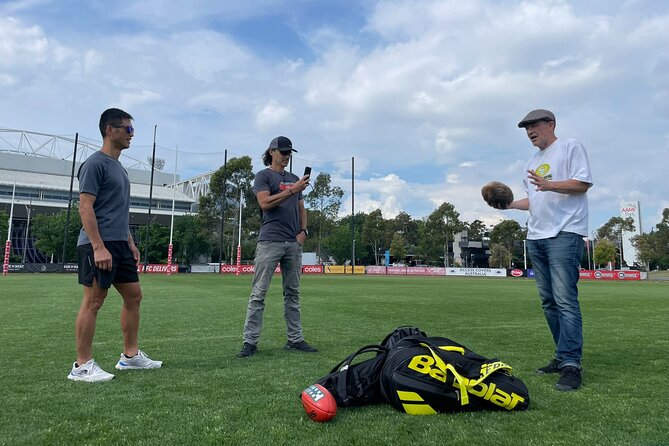
One theme that shows up in how guides run this experience is teaching the basics on the spot. Some guides use props and clear explanations to help you understand match flow and what you’re looking for when you see the courts and seating.
You also get a chance to take photos with the arenas around you. It’s not a studio shoot, so plan on quick snapshots, then listening.
Melbourne and Olympic Parks: 1956 Olympic stories that connect the venues
Now you hit Melbourne & Olympic Parks, and this is where the tour’s story gains momentum. The 1956 Olympic Games held in Melbourne become the anchor, and your guide ties the wider sporting world back to this area.
Even if you know little about 1956, the way the tour frames it makes the details easier to hold. You’re not stuck with a list of dates. You’re walking through the physical proof of how Melbourne built for major sport.
This stop is short, but it gives you a lens. After it, the route to the next venues feels like a continuation of the same big-event mindset, not a bunch of unrelated stadiums stacked in a neighborhood.
Same part of the map, a completely different day:
- Great Ocean Road Small-Group Eco Tour from Melbourne
★ 5.0 · 6,607 reviews - From Melbourne: Great Ocean Road, 12 Apostles, Wildlife Tour
★ 4.7 · 6,020 reviews - Laid back, Yarra Valley Wine Tour: Wine, Cider, Gin, Beer + Choc
★ 5.0 · 4,552 reviews - Great Ocean Road Reverse Itinerary Boutique Tour – Max 11 Guests
★ 5.0 · 4,186 reviews
AAMI Park for soccer and rugby: the part that surprises non-fans
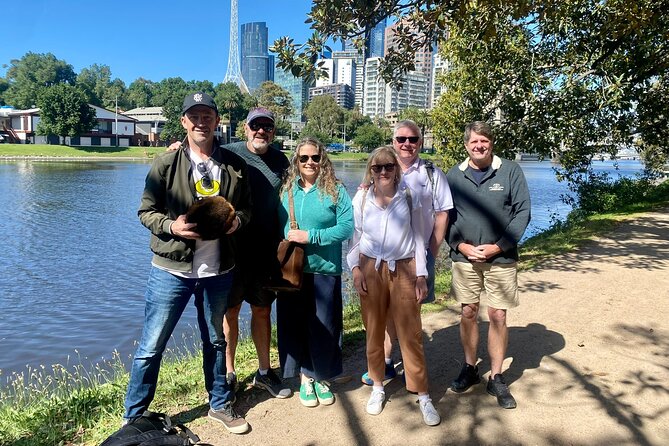
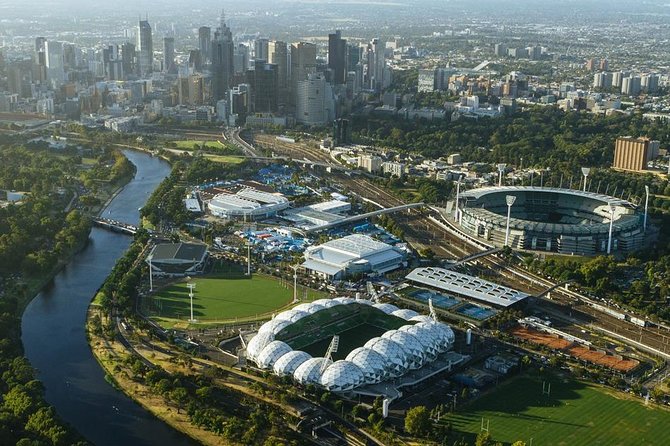
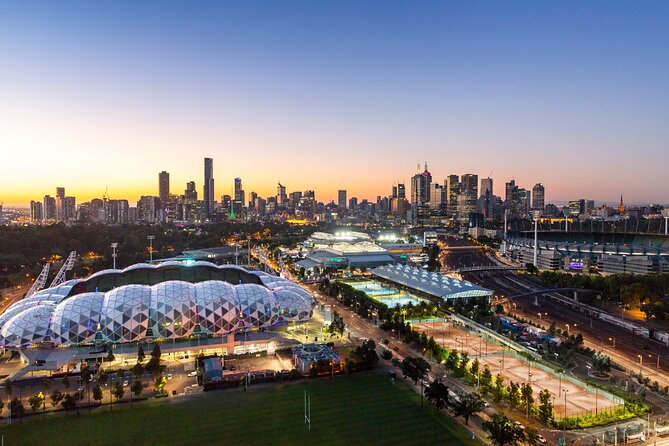
Between tennis and the MCG, you’ll visit AAMI Park. This is Melbourne’s main soccer and rugby stadium, and it’s a nice reminder that the city’s sports culture is not one-track.
You’ll learn how these games fit into Melbourne’s sporting calendar and why the stadium matters to the crowds. For people who mostly follow one sport, this stop can broaden your view quickly.
It also helps that the tour switches sports types. Tennis, then the Olympics context, then soccer and rugby, then the MCG. That rhythm keeps the information from feeling like a single-note lecture.
The MCG finale: walking into Australian sport’s most famous arena
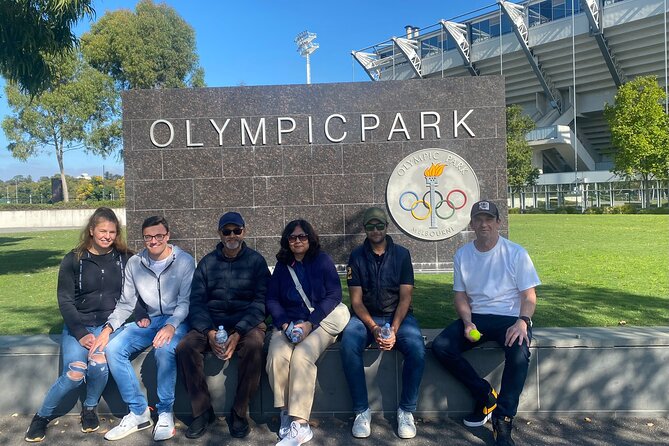
The last stop is the Melbourne Cricket Ground (MCG). This is home of Australian sport, and finishing here is a clever move because it gives you that final “big moment” feeling even if you’re not seeing a live match.
The MCG is one of those landmarks where your brain already recognizes it, even before the tour gives you the deeper story. Your guide connects that familiarity to what sport means in Melbourne.
You’ll also likely get a sense of how the MCG sits at the center of the city’s sporting identity. It’s the kind of place that makes you want to look back at the previous venues and see how they relate.
When you wrap, you’re also well-positioned to keep going on your own. The MCG finish point has good nearby tram and train options, and it’s close enough to make the return to central areas pretty easy.
Guides make it: what to expect from your host and how to get more out of it
The biggest strength here is the guide style. People consistently praise the way hosts keep the tour friendly, personal, and practical, while still weaving in sports facts and stories.
You might hear different voices on different days, including guides such as Ben, Greg, Cathy, Brian, Catherine, and Terry. The names change, but the approach tends to match: explain the sport in plain language, connect it to what you can see right now, and keep the group moving.
A smart way to boost your experience is to come with one or two questions. If you’re curious about Australian rules football versus rugby, ask early. If you are following tennis, ask what makes the Australian Open setup feel different on court. If you’re more into Olympics trivia, ask how the 1956 Games shaped what came after.
Some guides also bring props. That matters more than it sounds. Props turn a vague description into something you can visualize while you stand next to the stadium environment.
Price and value: is $63.12 for a 2-hour walk a fair deal?
At $63.12 per person for about 2 hours, this is not a free street stroll. But it also isn’t overpriced for what you’re getting.
Here’s why I think it can be good value:
- You’re paying for a small group experience (max 8), not a big bus tour
- You cover multiple major venues in a short time without needing to plan a self-guided route from scratch
- The guide adds context that you would miss if you just walked past stadiums on your own
- Included admission tickets are marked free, so you’re not adding surprise costs at each stop
Also, the tour is priced like a focused specialty outing. It’s ideal if you don’t want to spend your limited Melbourne time piecing together stadium hopping on public transport.
If you are the type who loves sports and wants the story behind where things are, this price starts to feel reasonable fast.
If you are only casually interested in sports, you might feel better spending less and doing a longer self-guided walk around the river and precinct instead.
Who this tour suits best, and who might want another plan
This is best for you if you:
- Like learning in small groups
- Follow sports at all, even just casually
- Want Melbourne orientation that stays human-scale and story-based
- Appreciate context like Olympics history and how cities build for major events
It may be less satisfying if you:
- Want long interior stadium access or museum-style exhibits
- Dislike walking in open-air conditions
- Need an itinerary that never changes with weather
Because it’s outdoors and weather is required, check the forecast. When conditions are poor, this kind of walk can feel like a chore instead of a treat.
Practical tips for a smoother stadium stroll in Melbourne
Bring the basics and you’ll be comfortable. Wear shoes that handle sidewalks and curb edges, since the whole experience depends on easy walking.
If you’re visiting in warmer months, keep sun protection handy. Melbourne can swing from mild to blazing, and you’ll be out long enough to feel it. If rain is in the mix, this is the kind of tour that depends on good conditions, so plan for flexibility.
You’ll also want to have your mobile ticket ready on your phone. It’s a simple format, and it keeps check-in from becoming a time sink.
The tour is listed as suitable for most travelers, and service animals are allowed. If you have specific mobility questions, it’s worth thinking about how long you’ll be walking outdoors and how quickly you can move between stops.
Should you book this Melbourne Sports Walking Tour?
Yes, if you want a compact, guided way to understand why Melbourne is a sports city. The mix of Fed Square simplicity, a small group, and stadium-to-river storytelling is exactly the kind of experience that gives you more than photos.
Skip it if you’re chasing guaranteed, inside-the-stadium access for every venue. This experience is centered on walking the precinct, hearing the stories, and making sense of the places.
If you’re booking for a specific day, do it early. The tour is commonly booked about 22 days in advance, so better to secure your slot rather than hope something opens up.
FAQ
Where does the tour start and where does it end?
The tour starts around Princes Bridge, Melbourne VIC 3000, with the meet-up at Fed Square. It ends at the Melbourne Cricket Ground (MCG), Brunton Ave, Richmond VIC 3002.
How long is the Melbourne Sports Walking Tour?
The duration is about 2 hours.
What is the group size limit?
The tour has a maximum of 8 travelers, so it stays small.
Do I get a mobile ticket?
Yes. You receive a mobile ticket.
Are there admission fees for the stops?
Admission for the listed stops is marked as ticket free, meaning there is no extra admission cost included in the tour stops.
Is this tour outdoors, and does weather matter?
The experience requires good weather.
Is it suitable for most people to participate?
It’s listed as most travelers can participate.
What is the cancellation and refund timing?
You can cancel for a full refund if you cancel up to 24 hours before the experience starts. If you cancel less than 24 hours before, the amount paid is not refunded.
Newest Melbourne reviews on the site
- Melbourne’s Luna Park General Entry with Unlimited Rides★ 3.5 · 12 reviews
- St Kilda SUP Rental★ 5.0 · 12 reviews
- St Kilda SUP Group Lesson★ 5.0 · 19 reviews
- Yarra Valley by night! Private wine, whisky and dinner tour★ 5.0 · 24 reviews
- Great Ocean Road 12 Apostles kangaroo, koala and chocolate tour★ 4.5 · 259 reviews
- Yarra Valley sunrise balloon flight only★ 5.0 · 54 reviews
- Yarra Valley sunrise balloon flight & champagne breakfast★ 5.0 · 159 reviews
- Yarra Valley Foodies Tour with Chandon & Kangaroo Safari!★ 5.0 · 211 reviews
Walking Tours, compared.
Sydney Opera House Official Guided Walking Tour
Read our review →
Blue Mountains Tour with Waterfall Walk & Lunch
Read our review →
Ultimate Melbourne Walking Tour: History, Laneways & Culture
Read our review →

Great Ocean Road Tour Plus Koalas, Forest Walk and Morning Tea
Read our review →
Blue Mountains Small Group Tour with Waterfall Walk & Fresh Lunch
Read our review →
Maria Island Cruise and Guided Walk Day Tour with Lunch and Drinks
Read our review →Browse the lists this tour appears in