
Reviewed · NATIONAL PARKS
Jabiru: Guided Flight over Kakadu National Park
A bird’s-eye view beats brochures. A guided flight over Kakadu National Park lets you understand why this vast place is a UNESCO World Heritage site, even if you only have one hour.
Two things I really like about this experience are the big aerial perspective from window seats and the guided commentary that turns raw scenery into something you can actually place. The only caution is that this is a small fixed-wing aircraft, so it can feel warm, and it is not a good fit if you get motion sickness.
What makes it worthwhile is how the pilot/guide narration helps you read the park from above, including what changes between the wet and dry seasons. For example, you might spot major features like Jim Jim and Twin Falls, or the broader floodplain country at Magela, and the guide helps you connect the dots as you fly. The drawback to plan around: there is no commercial-jet comfort level, so dress for heat and bring water, especially in warmer months.
In This Review
- Key highlights to know before you go
- Jabiru Aerodrome to the Sky, in 60 Minutes
- Wet vs Dry Season Routes: Why Your Flight Looks Different
- Wet season route: more waterfalls and escarpments
- Dry season route: more river shape and floodplain scenery
- Over Arnhem Plateau, Jim Jim, and Twin Falls
- Wet Season Landmarks: Ranger Uranium Mine, Lightning Dreaming, Deaf Adder Gorge
- Dry Season Landmarks: Dinosaur Valley and Upper East Alligator Valley
- Magela Floodplains and the Crocodile Hotel From Above
- Price and Value: Is $183 Worth It?
- What You Should Bring for a Warm, Small-Aircraft Ride
- Guides, Commentary, and the Small-Group Advantage
- The One Thing to Watch Out For: Route Coverage
- Who This Kakadu Flight Fits Best (and Who Should Skip It)
- Should You Book This 1-Hour Guided Flight Over Kakadu?
- FAQ
- How long is the guided flight over Kakadu National Park?
- What is the price per person?
- Where does the tour start and end?
- What is included in the price?
- Do I need a Kakadu National Park pass?
- What should I bring with me?
- Is there a live guide and what language is it in?
- Is this suitable for people with motion sickness?
- What is the cancellation policy?
Key highlights to know before you go
- Window-seat view, not a passenger “best guess”: you’ll be in a position to frame waterfalls, valleys, and floodplains right away
- Wet vs dry season routing: your flight path shifts based on the season you choose
- Live English pilot/guide + audio guide: you get spoken context as you look, not just at the end
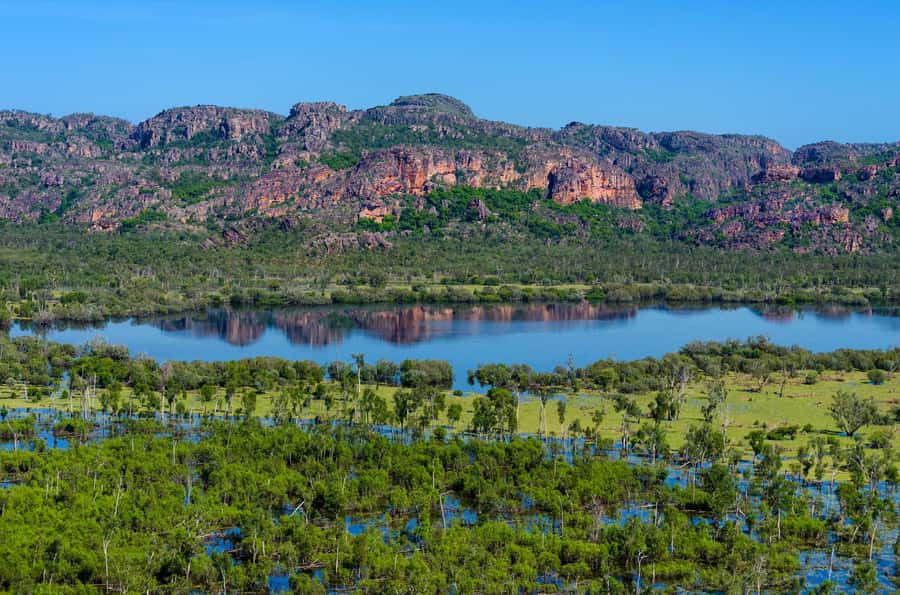
- Big Kakadu landmarks from the sky: Arnhem Plateau, Jim Jim and Twin Falls, and Magela floodplains are all in the mix
- Usually small-group feel: it can run with very few people, which makes Q and A easier
- Respectful storytelling: the commentary is framed around protection and place, not just sightseeing
Jabiru Aerodrome to the Sky, in 60 Minutes
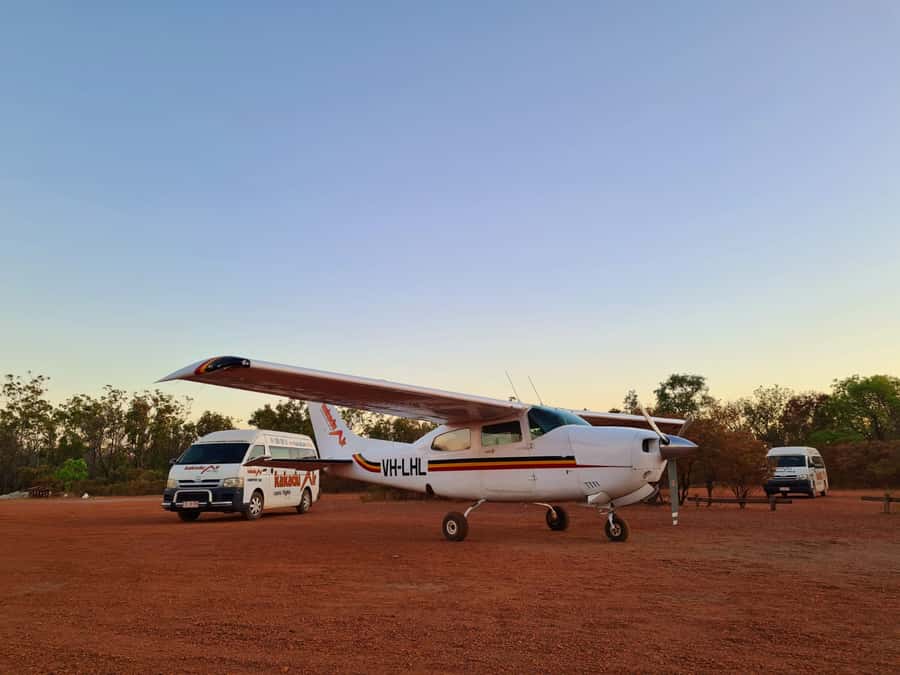
This is a simple concept done well: get from Jabiru Aerodrome into the air over Kakadu, then come back the same way, all in about 1 hour. There’s no long driving day attached, and that matters in northern Australia, where heat and distance can quietly chew up time.
You start at the end of the Arnhem Highway, with the meeting point being the last stop. After you park, you’ll follow signs to the reception area in the main and only building. Once you’re settled, you’ll get window seats and you’ll also receive cold bottled water, which sounds minor until you’re standing under the tropics waiting for boarding.
The flight itself is on a fixed-wing aircraft, which means two things for your comfort:
1) you should dress for warmth because there is no air-conditioning like you’d expect on a big airline
2) it is not suitable if you get motion sickness, since you will be in an exposed aircraft environment for the whole hour
More Kakadu and Litchfield trips:
- Litchfield National Park and Jumping Crocodile Cruise
★ 5.0 · 2,119 reviews - From Darwin: Litchfield Park Tour & Jumping Crocodile Cruise
★ 4.9 · 829 reviews - Kakadu Day Tour from Darwin with Offroad Dreaming
★ 5.0 · 776 reviews
Wet vs Dry Season Routes: Why Your Flight Looks Different
Kakadu changes character depending on the season, and this tour is built around that reality. The flight takes different paths based on whether you’re going during the wet or the dry season. That’s important, because a one-hour flight can only cover so much, so the season you pick becomes your biggest “what will I see” decision.
Wet season route: more waterfalls and escarpments
During the wet season, the flight goes south and builds a dramatic sequence: you pass by the Ranger Uranium Mine, move past Mt. Brockman, and head toward the escarpment region labeled Lightning Dreaming. From there, the route crosses Deaf Adder Gorge and takes you toward Double Falls.
Then you continue across the Arnhem Plateau, and the sky view opens up toward Jim Jim and Twin Falls. In wet season conditions, those river-and-fall zones can feel especially alive from above, because the country is more saturated and water systems are more active.
Dry season route: more river shape and floodplain scenery
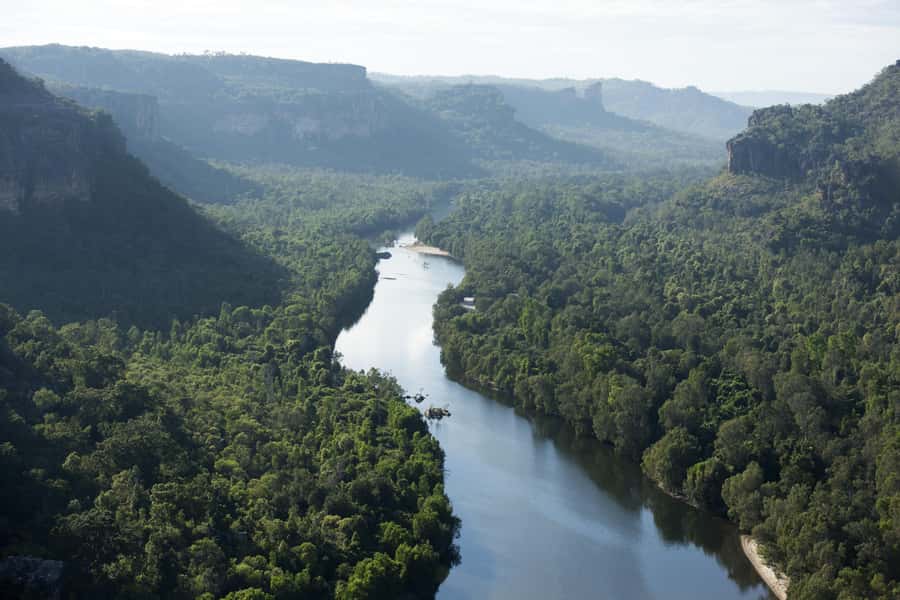
During the dry season, the flight starts by passing the Ranger Uranium Mine, then you head across toward Dinosaur Valley. After that, you fly through Upper East Alligator Valley and follow the twists and turns of the river from above.
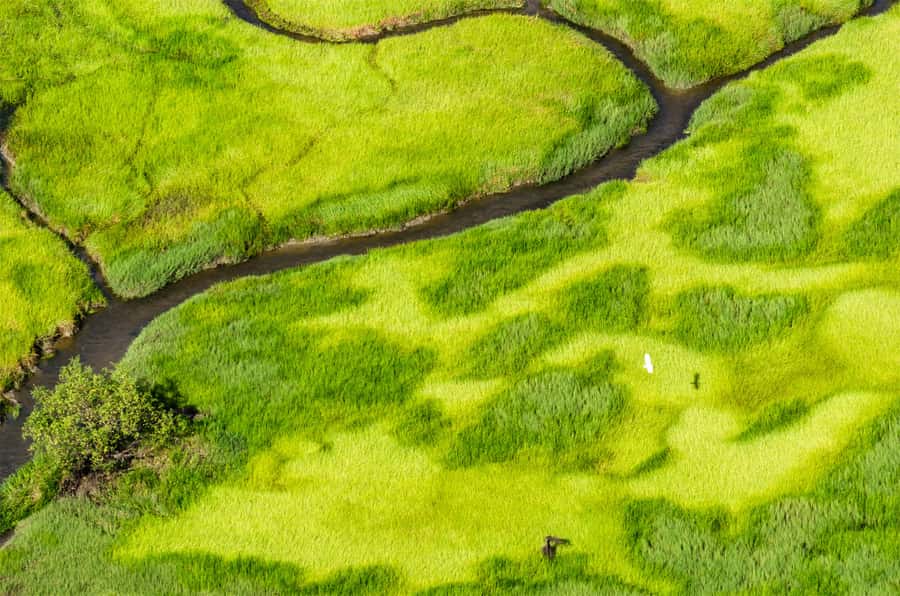
Finally, you move over the Magela floodplains to see the famous Crocodile Hotel. In dry conditions, the floodplain and river patterns often read like a map from the air, even if you are not a bird or a geographer.
A few more Australia trips to compare
- Grampians National Park Small-Group Eco Tour from Melbourne
★ 5.0 · 761 reviews - From Port Arthur: Tasman Island Wilderness Cruise
★ 4.9 · 704 reviews - Sydney: Blue Mountains National Park Tour with River Cruise
★ 4.6 · 701 reviews - From Hobart/Adventure Bay: Bruny Island Wilderness Cruise
★ 4.8 · 601 reviews
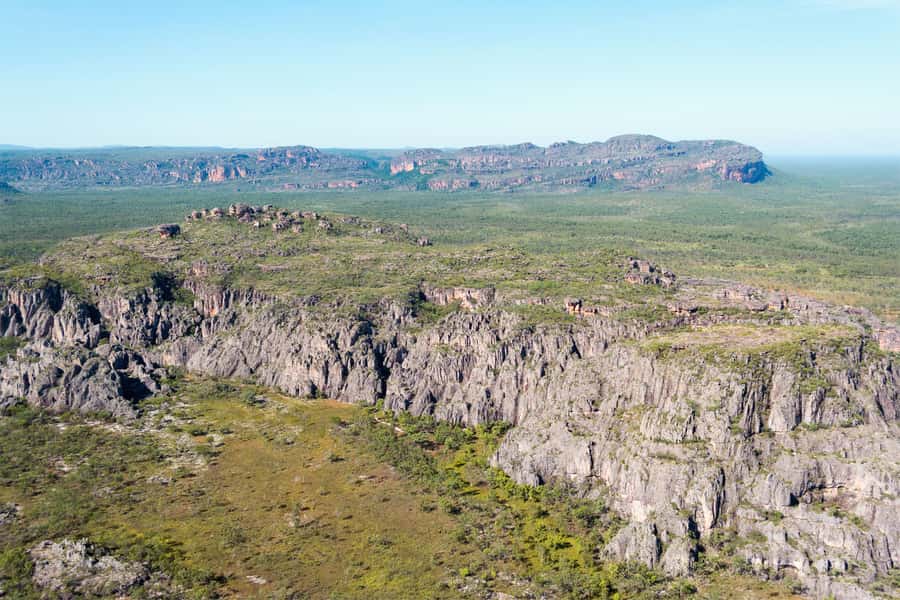
Over Arnhem Plateau, Jim Jim, and Twin Falls
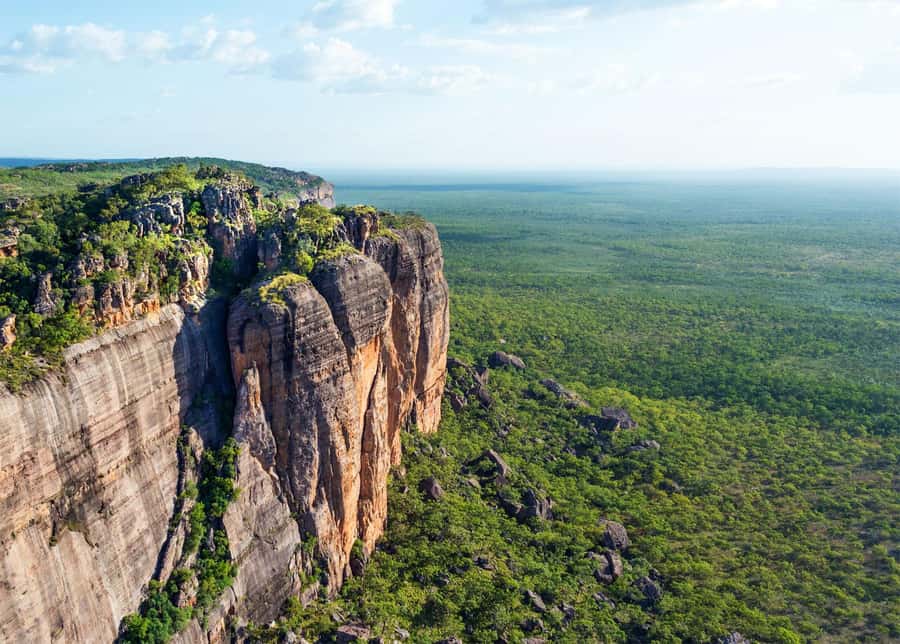
If you want one theme for this flight, it’s “water systems seen clearly.” The Arnhem Plateau area gives you that quick sense of scale, because you can trace edges of country and where the land steps and drains.
As the flight progresses, you may get views over Jim Jim and Twin Falls, which is exactly the kind of feature that makes a sky tour feel different from looking at a waterfall from a road. From the air, you’re not just seeing water. You’re seeing how it carved the land and how the surrounding terrain is structured around the flow.
This is where the pilot/guide commentary earns its keep. The guide isn’t just naming features. They help you understand what you’re looking at in terms of protected country and the way Kakadu’s ecosystems shift across seasons.
Wet Season Landmarks: Ranger Uranium Mine, Lightning Dreaming, Deaf Adder Gorge
In the wet season routing, the flight turns into a guided tour of major geography at speed, and that can be a good thing. You do not have to interpret every feature yourself, because the commentary is happening while you look.
You’ll pass the Ranger Uranium Mine and then move toward Mt. Brockman and the escarpment area referred to as Lightning Dreaming. Even if you know nothing about Kakadu ahead of time, that part of the route can help you understand the bigger story of the region, including how diverse landscapes and land use exist alongside protection efforts.
Next comes Deaf Adder Gorge and Double Falls. These are the type of places where aerial perspective helps you grasp the scale and layout. The falls are not just a single point, they are part of a drainage system, and from above you tend to see that whole network more quickly than you would from a viewing platform.
Dry Season Landmarks: Dinosaur Valley and Upper East Alligator Valley
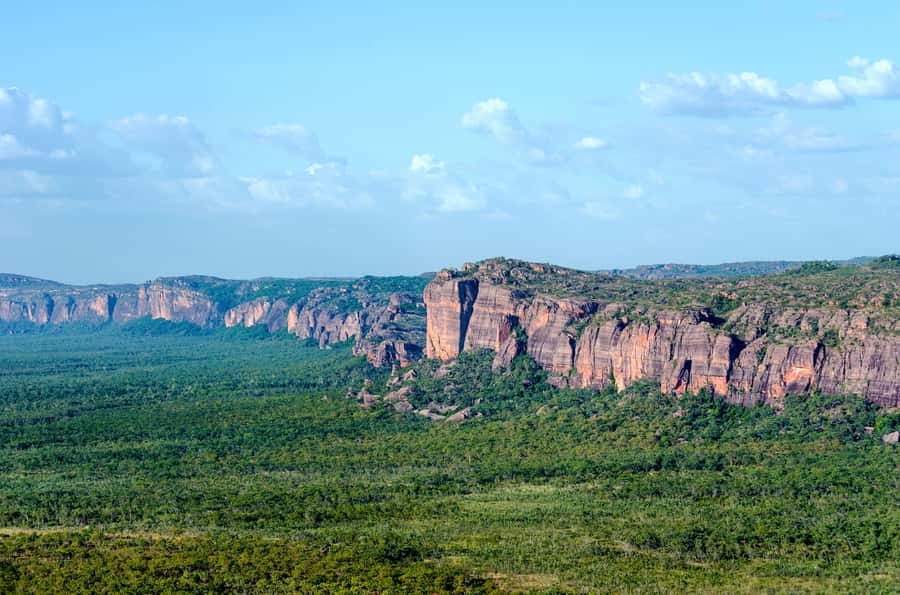
Dry season is for people who love geometry in nature. When water levels drop, the river curves can look almost engineered. You’ll fly past Dinosaur Valley and then through Upper East Alligator Valley, where the route is designed to let you follow the land through a winding river system.
That “follow the river twists and turns” piece is what makes the dry season flight feel educational. You start to see Kakadu as a living set of connections, not a collection of isolated sights.
It also sets up what you’ll remember afterward. Instead of thinking only about individual falls, you’ll likely remember the way the river lines cut through country and how floodplain areas relate to those lines. And if you plan to do additional Kakadu exploring on the ground later, that mental map helps.
Magela Floodplains and the Crocodile Hotel From Above
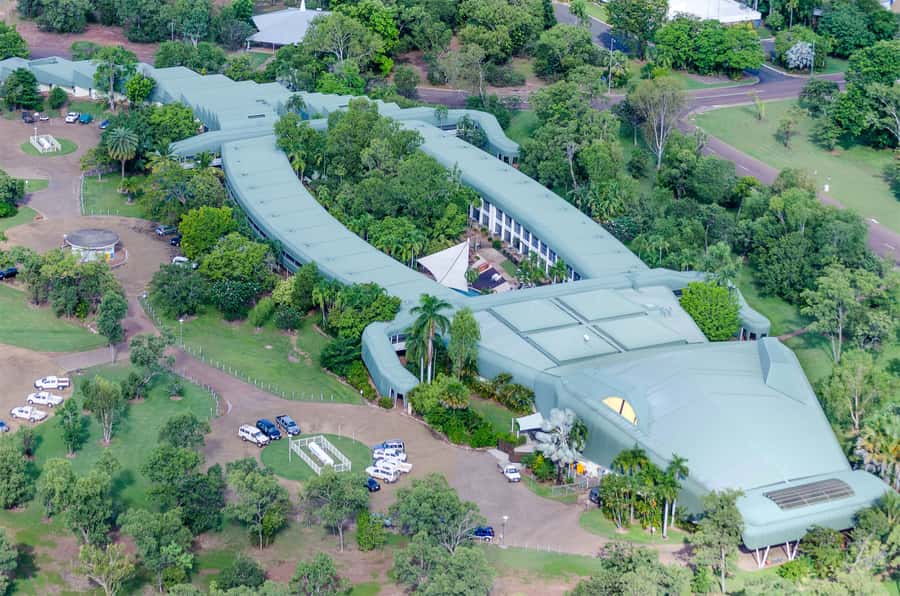
The final segment in the dry season highlights a very Kakadu-specific mix: wetlands, open country, and a landmark that is easy to spot. You fly over the Magela floodplains and get views of the Crocodile Hotel.
From a practical standpoint, the floodplains are a good “arrival and exit” feature on a short flight. They read well from above. And from a travel perspective, it anchors the trip in the real-world geography people actually travel through, not just remote-looking wilderness shapes.
Even if you are not a crocodile-obsessed person (fair), the view is useful because it helps you understand where settlement and famous places sit relative to the water systems. That context can make later Kakadu driving and touring feel more connected.
Price and Value: Is $183 Worth It?
At $183 per person for a 60-minute guided flight, you’re paying for three things:
- time efficiency (you get an overview of major Kakadu areas without committing to a full day)
- aerial access (some of the most famous viewpoints are hard to fully appreciate from the ground)
- guided interpretation (live English pilot/guide narration plus an English audio guide)
Is it expensive? In northern Australia, yes, it costs real money. But for value, it’s hard to beat when you want a fast, high-impact understanding of the park. You also get cold bottled water included, and you have window seats rather than “maybe you’ll get the side.”
The key value question is your personal touring style. If you love slow, in-depth walks and long drives, this may feel too short to satisfy you on its own. If you want a one-hour hit of big-picture Kakadu, it’s a strong use of time.
Also, plan for the Kakadu National Park pass separately. It is not included, and you need it before entering the park.
What You Should Bring for a Warm, Small-Aircraft Ride
This tour gives you water and a view, but it does not eliminate the realities of the region. I’d pack for heat and sun like it’s your main job.
Bring:
- sunglasses
- a hat
- a camera (or phone, but protect it in the sun)
One more practical thing: dress in light layers you can handle in warmth. A passenger on a commercial jet can usually shrug off discomfort. Here, comfort depends on what you wear and how you hydrate.
And if you are considering the flight, do be honest with yourself about motion sensitivity. This experience is not suitable for people with motion sickness, so there is no point “pushing through” if that’s a risk for you.
Guides, Commentary, and the Small-Group Advantage
One of the best parts of this kind of flight is the human factor. This experience is run by Kakadu Air and includes a pilot/guide who also provides live commentary in English.
In the reviews, the guiding approach comes up again and again: easy-going, informative, and respectful about how the country is protected. One specific guide name that shows up is Josh, with praise for friendly service and a good time over Kakadu’s natural wonders.
There’s also a “small group” angle. One review notes luck with having very few people onboard, essentially turning it into a private-feeling trip. Even if you cannot count on that, the high transport score suggests the operation is smooth and well handled, and smaller numbers usually make the experience more personal.
The One Thing to Watch Out For: Route Coverage
A one-hour aerial tour has a built-in limitation, and you should plan around it. The flight follows set routes that differ by season, and that means you might not see the same areas others mention.
One review raised a concern that the flight only covered the north-east part of the park and felt a bit less exciting than a route starting more centrally. That’s a useful reminder: you are not buying a “complete Kakadu overview.” You’re buying the best view along a chosen aerial line for your season.
If your goal is to maximize variety across many different Kakadu regions, use this flight as an opener or a topper, then add ground touring separately. If your goal is simply to see famous features from above, this flight is built exactly for that.
Who This Kakadu Flight Fits Best (and Who Should Skip It)
This flight is a great match for:
- people who want a fast overview of Kakadu without a full-day commitment
- travelers who enjoy learning while looking, not just taking photos
- first-timers to Kakadu who want the park’s key landmarks like Jim Jim, Twin Falls, and Magela in one short window
- anyone who values window-seat views and spoken context
It is not the right fit if:
- you have mobility impairments (it is not suitable for people with mobility impairments)
- you exceed 287 lbs (130 kg)
- you get motion sickness
- you expect a fully air-conditioned, airline-style ride
If you’re traveling with kids, this can still work well for families who are comfortable with a short flight and are ready for warm conditions, but you should still think about motion sensitivity and sun management.
Should You Book This 1-Hour Guided Flight Over Kakadu?
I think you should book it if you want Kakadu’s “big picture” in a small time block. The guided commentary, window seats, and the way the route changes with wet versus dry season make this more than just a scenic lap. It’s a structured view of major Kakadu features, and the operational scores suggest it runs smoothly.
Skip it or pair it carefully if you:
- need air-conditioned comfort the whole time
- dislike motion or have motion sickness risks
- want a fully comprehensive tour of every corner of Kakadu in one go
If you can choose between wet and dry season, treat that as a planning lever, not an afterthought. Wet season leans toward falls and gorge country. Dry season leans toward river shape and floodplain views, including the Crocodile Hotel.
FAQ
How long is the guided flight over Kakadu National Park?
The flight duration is 60 minutes.
What is the price per person?
The price is $183 per person.
Where does the tour start and end?
You meet your guide at Jabiru Aerodrome, and the tour returns you back to Jabiru Aerodrome.
What is included in the price?
Included are a 60-minute scenic flight, cold bottled water, window seats, and a pilot/guide. An audio guide in English is also included.
Do I need a Kakadu National Park pass?
Yes. You need to purchase a Kakadu National Park pass before entering Kakadu, and it is not included.
What should I bring with me?
Bring sunglasses, a hat, and a camera.
Is there a live guide and what language is it in?
Yes, there is a live tour guide and it is English. The audio guide is also in English.
Is this suitable for people with motion sickness?
No. The activity is listed as not suitable for people with motion sickness.
What is the cancellation policy?
You can cancel up to 24 hours in advance for a full refund.
Newest Australia reviews on the site
- Airlie Coastal Beach Adventures – Dingo Beach & Cape Gloucester★ 5.0 · 27 reviews
- Airlie Waterfalls & Rainforest Bushwalk Eco Adventure★ 5.0 · 23 reviews
- Airlie Beach Sightseeing Explorer- 3 hr Snaphots & highlights★ 5.0 · 33 reviews
- Whitsundays Day Cruise: Whitehaven Beach & Hill Inlet★ 5.0 · 274 reviews
- One Way Airport Transfer: Proserpine-Airlie Beach (or vice versa)★ 4.5 · 63 reviews
- Bowen Beaches Discovery-Top of the Whitsundays★ 5.0 · 40 reviews
- British Defender 3D2N Whitsunday Snorkelling Sailing Adventure★ 5.0 · 30 reviews
- Airlie Beach Jet Ski Safari (1 Hour)★ 4.5 · 257 reviews
National Parks, compared.
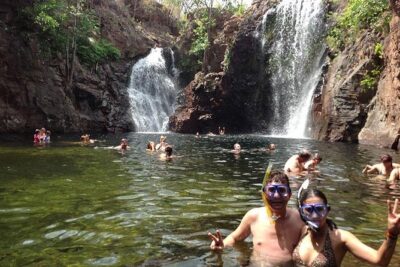
Litchfield National Park and Jumping Crocodile Cruise
Read our review →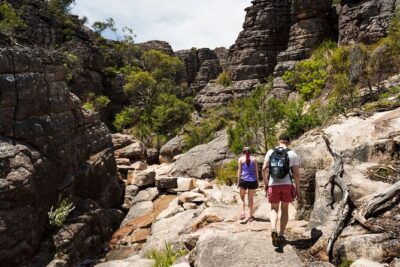
Grampians National Park Small-Group Eco Tour from Melbourne
Read our review →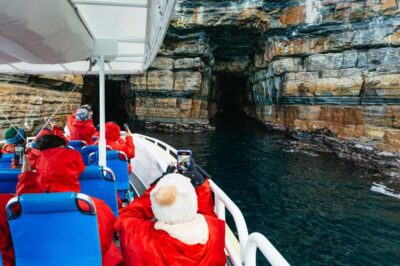
From Port Arthur: Tasman Island Wilderness Cruise
Read our review →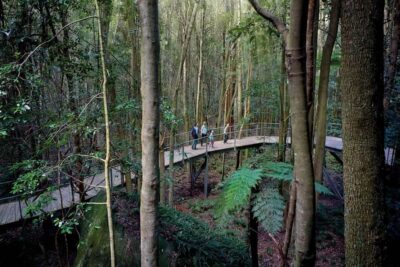
Blue Mountains National Park Tour with River Cruise
Read our review →
From Hobart/Adventure Bay: Bruny Island Wilderness Cruise
Read our review →
Port Arthur Full-day Guided Tour with Harbour Cruise and Tasman National Park
Read our review →
Grampians National Park Small-Group Eco Day Tour
Read our review →
Bruny Island Wilderness Coast Eco Cruise with Lunch
Read our review →Browse the lists this tour appears in