
Reviewed · FARMS
Bundaberg: Monsoon Aquatics Coral Farm Guided Tour
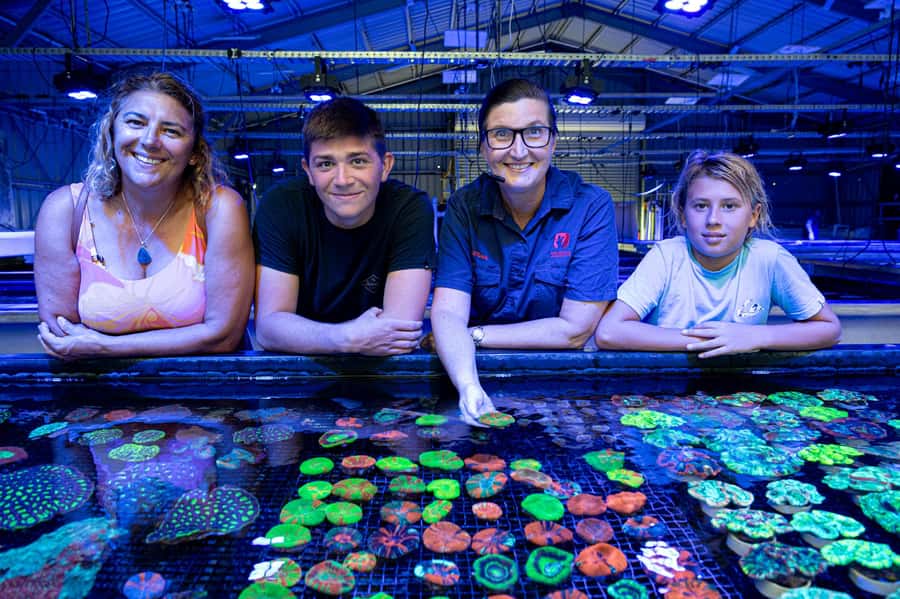
Coral farming beats any fish tank. This one-hour tour at Monsoon Aquatics is a hands-on look at how coral is grown for reef recovery, not just displayed for viewing. I love the behind-the-scenes coral farm setup and the way the guide keeps reef science clear for everyone, including kids. One heads up, though, this is a farm tour, so it feels more like tanks and cultivation areas than a walk-through aquarium.
It runs year-round from the Port of Bundaberg, and you get a close look at 70,000+ corals plus about 200 marine species. If you’re curious about how restoration works in real life, you’ll leave with a lot more confidence than when you arrived.
In This Review
- Key Takeaways Before You Go
- Inside Australia’s Largest Coral Farm in Bundaberg
- The One-Hour Route: Coral Growing Areas, Feeding, Research, Clownfish
- A note on expectations
- Why the Guide Matters More Than You Think
- Sustainability You Can Actually Understand
- Price and Value: Is $22 Worth It?
- Practicalities: Shoes, Water Rules, and Finding the Veranda
- Who This Tour Suits Best (and Who Might Want a Different Activity)
- Should You Book This Coral Farm Tour?
Key Takeaways Before You Go
- Working coral farm, not a showroom. You see coral growing methods that support reproduction and restoration.
- Small, question-friendly groups. The guide keeps the pace easy, with time to ask stuff.
- Feeding demonstrations. Live moments help you connect what you see with how corals are maintained.
- Reef research view. You get a snapshot of how the farm supports future reef rebuilding.
- Clownfish finish. The tour ends with everyone’s favourite, making it a fun wrap-up.
- Practical rules that keep corals safe. Closed-toe shoes and water only during the tour.
Inside Australia’s Largest Coral Farm in Bundaberg
This tour is one of those rare activities where the main attraction is not scenery or wildlife you happen to spot, but a real production process. Monsoon Aquatics runs a coral farm designed to grow corals responsibly, and your guide walks you through what they do and why it matters.
The scale is what hits you first. The farm features 70,000+ corals and about 200 marine species sourced from across Australia’s coastline. That number matters because it turns the reef from an idea into something managed, nurtured, and gradually rebuilt.
I also like that it is not treated like a lecture. The guide talks about coral like it is a living system with needs and stages, and that changes how you see it. One review even called out how the guide used kid-friendly wording and was enthusiastic, not robotic. Another mentioned the guide offered to take family photos, which is a nice extra if you want one decent memento without hunting for good lighting.
A few more Australia trips to compare
- Sydney: Opera House Guided Tour with Entrance Ticket
★ 4.8 · 8,312 reviews - Sydney Opera House Official Guided Walking Tour
★ 4.5 · 3,770 reviews - From Cairns: Self-Guided Kuranda Trip with Train and Skyrail
★ 4.6 · 3,392 reviews
The One-Hour Route: Coral Growing Areas, Feeding, Research, Clownfish
The tour lasts about 1 hour, fully guided, and you move through the farm’s key areas in a logical order. The goal is to show you both the beauty and the practical side of coral cultivation.
Stop 1: Exploring the coral collections up close
You get a close look at the coral “nursery” concept, with corals housed and grown in the farm environment. Expect to spend real time looking at different coral types and how they are arranged for ongoing care. It can feel a little tank-focused, and that is the point. This is built for learning how coral is grown, not for a quick glance and a photo run.
Stop 2: Live coral feeding demonstration
Next comes one of the most memorable moments, the live demonstration of coral feeding. Watching food and care routines in action helps you understand how coral husbandry works, not just what coral looks like. It also gives your brain a hook for the rest of the tour, because you start noticing what you might otherwise miss, like feeding timing and general maintenance routines.
Stop 3: How reef restoration research fits in
You also get a glimpse into the farm’s research that supports reef restoration. Even if you do not leave with a full research report in your pocket, you leave with something more useful: a clearer sense of where a coral farm fits into the larger reef story. This is one reason the tour rates so highly. People tend to come for a fun hour and leave feeling like they learned something real.
Stop 4: The clownfish collection finale
Every child, and honestly many adults, love the ending. The tour wraps up with the clownfish collection. It works as a soft landing after the more technical parts, and it makes the whole experience feel rewarding without turning it into a stressful science class.
A note on expectations
If you want big, dramatic coral structures like you might see on a reef day trip, this will feel different. The farm is about growing and caring for corals in controlled conditions. One review specifically noted it is definitely education-focused rather than an aquarium-style experience, with mostly tanks and growing setups. That is not a flaw. It just sets you up to appreciate it for what it is.
Why the Guide Matters More Than You Think
This is a guided tour, but the difference here is how the guidance shows up in the room. The tour experience is built around explanation, questions, and a calm pace through the farm.
In feedback, guides are praised for being both knowledgeable and engaging, especially with kids. One review highlighted that the guide was extremely enthusiastic about the business and used words kids could understand and relate to. Another mentioned the guide was amazing, interactive, and willing to take family photos.
That matters because coral farming can sound dry if you only hear the words. Here, you learn the why behind the process: coral is living, fragile, and managed step by step. When your guide explains it well, you start seeing details you would miss if you just walked through on your own.
Also, the group is described as small and intimate. That is helpful because coral farming involves questions. People usually want to know what goes where, how long things take, and how this links to the reef outside the tanks. A small group gives your questions a better chance of landing well.
Same part of the map, a completely different day:
- All Inclusive Blue Mountain,Scenic World,Lunch,Koalas,ferry
★ 5.0 · 7,832 reviews - Great Ocean Road Small-Group Eco Tour from Melbourne
★ 5.0 · 6,607 reviews - From Melbourne: Great Ocean Road, 12 Apostles, Wildlife Tour
★ 4.7 · 6,020 reviews - Ocean Rafting: Whitehaven Beach, Snorkelling & Hill Inlet Lookout
★ 5.0 · 4,777 reviews
Sustainability You Can Actually Understand
A lot of conservation talk sounds vague. This tour is more concrete. You are essentially learning how coral reproduction and cultivation can support reef restoration efforts.
The tour is positioned as sustainable and responsible, and you can feel that message in how the process is framed. It is not presented as a one-time rescue act. It is presented as ongoing work, with corals grown and cared for as part of a larger reef rebuilding picture.
What I like is that the tour does not ask you to accept hope as a slogan. Instead, it shows a pathway: grow corals, care for them, and use research to improve restoration outcomes. The farm’s research portion helps connect your seeing to a larger purpose.
If you are the kind of person who likes your feel-good moments with an explanation attached, you will probably enjoy this. And if you are traveling with kids, it gives them a story arc that is easy to understand: corals are nurtured here so they can help the reef later.
Price and Value: Is $22 Worth It?
At $22 per person for one hour, this sits in a sweet spot for value. It is not priced like a premium full-day reef outing, but it is also not trying to be a cheap photo stop.
Here is why it feels like good value:
- You get a real guide, not just a printed sign. You can ask questions.
- It is time-efficient. One hour fits easily into a Bundaberg itinerary.
- The experience is directly tied to conservation work. Your ticket supports coral reproduction and restoration efforts.
Would you ever wish it lasted longer? Maybe, especially if you love marine life. But as an intro, one hour is enough to give you understanding without turning the visit into a slog.
The biggest determinant of whether it feels worth it is your expectation. If you want a classic aquarium experience, you might feel short-changed because this is more farm than show tank. If you want to understand how corals are grown and what reef restoration actually looks like, this price looks more and more fair.
Practicalities: Shoes, Water Rules, and Finding the Veranda
This is the kind of tour where the simple rules make your visit smoother.
Meeting point and navigation
Meet your guide on the Veranda at Monsoon Aquatics Coral Farm. Parking is available onsite for cars and RVs, and caravan parking is outside the gate. Since older car GPS systems can send you to the wrong address, use Apple or Google Maps to get there.
What to wear
Bring closed-toe shoes. Non-slip shoes are required because the floors may be slippery. Open-toed shoes and bare feet are not allowed.
What you can bring
You may only bring water on the tour. Food and other drinks are not allowed during the visit. A nice detail is that there are refreshments and a gift shop onsite, including Bundaberg Brewed Drinks and local macadamias, but plan to enjoy those outside the tour time.
Timing and weather
Tours operate year-round, rain or shine. That is practical in Queensland, where the weather can change its mind quickly.
Mobility access
The tour is listed as wheelchair accessible. If you or someone in your group uses mobility equipment, this is a real advantage.
Who This Tour Suits Best (and Who Might Want a Different Activity)
This coral farm tour is a great fit if you:
- love marine life but want an education-first experience
- care about conservation and want to see how restoration work looks on the ground
- want an activity that works across ages, with kids generally able to follow along when the guide explains things well
- prefer guided learning to self-guided exhibits
It may feel less ideal if you:
- expect a huge, showy walk-through aquarium with lots of large free-swimming fish
- want long stretches of open-air views, because this is primarily indoor or tank-focused
- need a very fast-paced, entertainment-heavy format
One review even suggested it is not really for young kids, while others praised how the guide engaged families with children. That tells me the real answer is expectation and attention span. School-age kids and curious teens usually do great. Younger kids may enjoy the clownfish finale, but they may find the cultivation sections more detailed than they want.
Should You Book This Coral Farm Tour?
If you want a meaningful, family-friendly hour in Bundaberg that teaches you something real, I think you should book. The combination of a small guided group, coral feeding moments, and a clear link to reef restoration makes it feel like more than a standard attraction.
Book it especially if you like conservation stories with a process behind them. Just go in knowing it is a farm tour first, so you are signing up to learn coral husbandry, not to chase dramatic reef scenery.
Newest Australia reviews on the site
- Airlie Coastal Beach Adventures – Dingo Beach & Cape Gloucester★ 5.0 · 27 reviews
- Airlie Waterfalls & Rainforest Bushwalk Eco Adventure★ 5.0 · 23 reviews
- Airlie Beach Sightseeing Explorer- 3 hr Snaphots & highlights★ 5.0 · 33 reviews
- Whitsundays Day Cruise: Whitehaven Beach & Hill Inlet★ 5.0 · 274 reviews
- One Way Airport Transfer: Proserpine-Airlie Beach (or vice versa)★ 4.5 · 63 reviews
- Bowen Beaches Discovery-Top of the Whitsundays★ 5.0 · 40 reviews
- British Defender 3D2N Whitsunday Snorkelling Sailing Adventure★ 5.0 · 30 reviews
- Airlie Beach Trike Tours★ 5.0 · 76 reviews
Farms, compared.
Amazing Yarra Valley Wine Tour + Chocolate, Farm Fresh, Gin
Read our review →
Hidden Gems: Boutique Full-Day Wine, Farm & Lunch Tour
Read our review →
Experience Coffin Bay Oyster Farm and Bay Tour
Read our review →
Coffin Bay Oyster Farm Wading Tour & Tasting Experience
Read our review →
Rockhampton: Koorana Crocodile Farm Guided Tour
Read our review →
Hidden Gems Margaret River: Authentic Wine & Farm Experience
Read our review →
Cygnet Bay Pearl Farm Behind-the-Scenes Tour & Live Harvest
Read our review →Browse the lists this tour appears in