
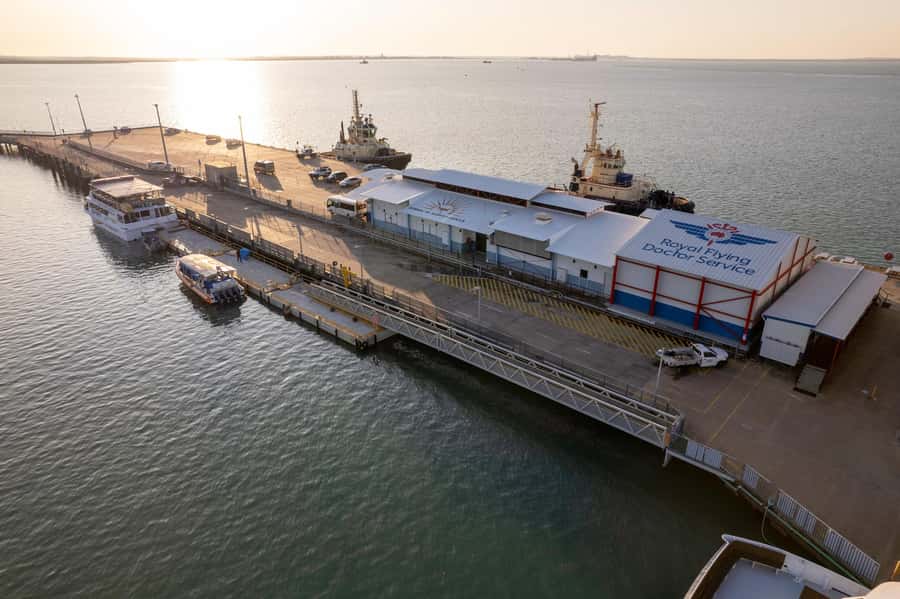
Reviewed · DARWIN TOURS
WWII Bombing of Darwin & Royal Flying Doctor Service
Darwin is quiet now, but this visit shows why 1942 mattered. This RFDS Darwin Tourist Facility experience mixes the birth of the Royal Flying Doctor Service with the WWII bombing of Darwin Harbor, using modern tech like VR and holographic storytelling. Two big things I like: you get both stories in one stop, and the presentation relies on hands-on, tech-forward displays rather than just reading panels. One thing to consider, though, is that it works best when you plan for a focused block of time, since the full set of exhibits takes about 1.5 hours to see properly.
I also like that the setup is genuinely practical. Staff are on hand, you can take a self-guided tour, and you have headset audio translators so you can keep your pace without getting stuck. The most common drawback is simple: you must fit it into the day’s schedule, because last entry is early on normal trading days and even earlier on public holidays.
In This Review
- Key highlights you will actually care about
- Entering the RFDS Darwin Tourist Facility at 45 Stokes Hill Rd
- The self-guided route, and why 1.5 hours is the sweet spot
- Stokes Hill Wharf: the two Australian stories told with tech
- The Window of 1942 platform, and holographic cinema sessions
- VR experiences: two ways to see the story from new angles
- The decommissioned RFDS Pilatus PC-12: seeing the real hardware
- Value check: is $21 per person worth it?
- Who should book this, and who may want a different plan
- Practical tips to make your visit smoother
- Should you book the WWII Darwin Harbor and RFDS experience?
- FAQ
- How long does the experience take?
- Where is the meeting point?
- What is included with the ticket?
- Do I need to join a group?
- Are there holographic and VR elements?
- Is there an aircraft to see?
- What time is last entry?
- Is the facility wheelchair accessible?
- What languages are available?
- Is free cancellation available?
Key highlights you will actually care about
- Two story lines in one ticket: RFDS in the Northern Territory from 1939, plus the 1942 Darwin Harbor bombing
- VR included (2 experiences) that turns key moments into something you can watch from inside the story
- Holographic cinema sessions and interactive hologram-style storytelling
- A decommissioned RFDS Pilatus PC-12 so you can see an aeromedical aircraft close up
- Headset audio translators to help you follow along at your own speed
Entering the RFDS Darwin Tourist Facility at 45 Stokes Hill Rd
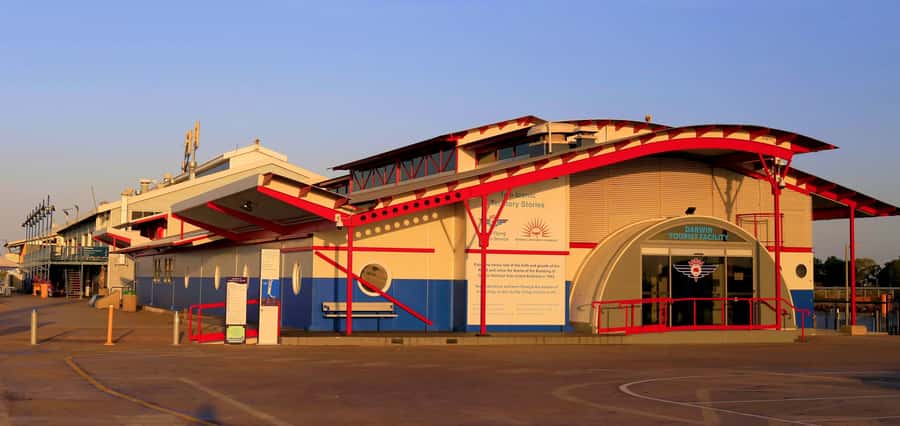
You start at the RFDS Darwin Tourist Facility, 45 Stokes Hill Rd in Darwin City, and from the first minute, the place sets you up for a smooth visit. There’s a clear staff welcome, and you’ll get an outline of how the facility works, including timings for the holographic cinema sessions and a specific reference point for the Window of the 1942 bombing platform.
This matters because the exhibits are not only static displays. Some parts are timed, like the holographic cinema, so you do not want to wander aimlessly for 30 minutes and then realize you missed your slot. Instead, treat the welcome like a mini game plan. Get your bearings, then do the self-guided loop with the scheduled elements in mind.
Also, the setting around Stokes Hill Wharf is important. It’s not a random museum stop that feels isolated. You are placed near the water and the wider Darwin story, which helps the WWII material land in a more real-world way.
A few more Darwin trips to compare
- Litchfield National Park and Jumping Crocodile Cruise
★ 5.0 · 2,119 reviews - Adelaide River Cruises – Jumping Crocodile Experience
★ 5.0 · 997 reviews - Sunset 3-Hour Cruise from Darwin with Dinner and Sparkling Wine
★ 5.0 · 980 reviews
The self-guided route, and why 1.5 hours is the sweet spot
This is a self-guided tour, which is great if you like moving at your own pace. You are not trapped in a loud group rhythm, and you can spend extra time on the parts that grab you. Staff remain available if you need help, so you are not left hunting for explanations.
Plan for about 1.5 hours to view the facility in its entirety. That timing is not just a random rule. It matches how the exhibits are designed: some zones are faster (short tech demos, quick interactive prompts), while others take longer because you may want to watch VR, listen carefully, and then look closely at aircraft details.
If you arrive and you feel tempted to rush, slow down slightly. The most satisfying moments are often the ones where the tech presentation is followed by something tangible, like the aircraft. You will get more from that sequence if you are not sprinting from room to room.
One practical tip: start with the things that depend on time. If you know the holographic cinema is scheduled, build your route around that first, then come back to the areas that are open anytime.
Stokes Hill Wharf: the two Australian stories told with tech
The experience is built around two quintessential Australian stories brought to life at Stokes Hill Wharf. The first centers on the RFDS, which began aeromedical operations in the Northern Territory in 1939. The second focuses on the Bombing of Darwin Harbour in 1942.
What I like about this pairing is that it does not present WWII as a standalone event. It links the pressure and trauma of that period with the kind of service that grew from the need for fast medical support in huge distances. Even if you are not a history buff, the contrast is easy to understand because the exhibits use different storytelling methods for each chapter.
You will see the RFDS side through the way the organization is presented, and you will see the WWII side through tech-forward exhibits designed for dramatic impact. For the bombing portion, you are guided toward the Window of the 1942 bombing platform, which is meant to give you a structured way to experience that material without feeling like you are lost in a complicated museum maze.
Also, since you have headset audio translators and interactive elements, you can slow down for understanding. That’s a big deal with WWII content, because details matter and it is easy to miss them if you treat the visit like a quick photo stop.
The Window of 1942 platform, and holographic cinema sessions
For the WWII portion, the experience leans on a combination of guided tech and specific exhibition focal points. The Window of the 1942 bombing platform is a named section, which usually means the exhibit is designed around a set viewing moment. In practical terms, that means you are meant to stand where the display expects you to stand, absorb what you see, and then move on when the story beats are done.
Then you get holographic cinema sessions, which are timed. If you want the visit to feel effortless, put those sessions on your internal clock. I’d rather arrive a few minutes early than scramble at the last moment.
The overall style here is interactive storytelling. So instead of only reading about raids and survival, you watch and listen in a way that aims for clarity. The exhibits explicitly aim to help you hear heroic stories of survival and discover important facts, which is exactly what makes this more than a visual gimmick. It is meant to keep the focus on people and outcomes, not only events.
One note for pacing: holographic cinema can be attention-heavy. If you are traveling with kids or anyone who gets tired quickly in darkened rooms, take breaks between the timed elements and the lighter interactive stations.
Same part of the map, a completely different day:
- From Darwin: Litchfield Park Tour & Jumping Crocodile Cruise
★ 4.9 · 829 reviews - Charles Darwin Dinner Cruise
★ 4.5 · 820 reviews - Kakadu Day Tour from Darwin with Offroad Dreaming
★ 5.0 · 776 reviews - Cape Adieu Darwin Sunset Dinner Cruise
★ 5.0 · 750 reviews
VR experiences: two ways to see the story from new angles
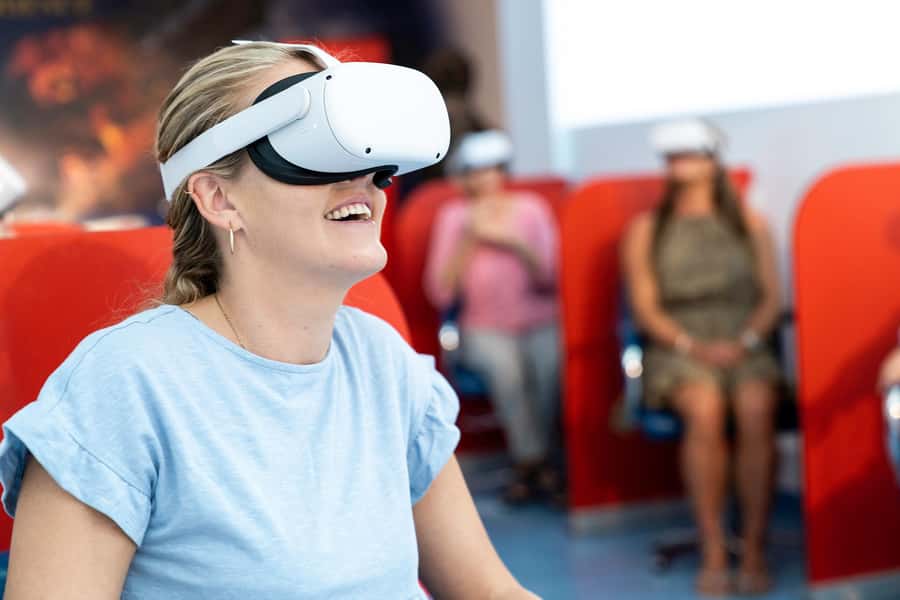
VR is included, and there are 2 virtual reality experiences. This is one of the strongest value points for your time, because VR is a fast way to make history feel immediate without you needing extra background knowledge.
Even when VR is well done, some people bounce off it if they are sensitive to motion or if they simply dislike headsets. The good news is that the rest of the facility also supports self-paced learning with interactive story telling holograms and other exhibition areas. So you can still enjoy the overall tour even if you do not love one VR segment.
In this specific experience, VR is used as part of the broader narrative delivery for both the RFDS and the WWII story. That means the tech is not random entertainment. It’s tied to the two major themes: how the RFDS grew from aeromedical needs starting in 1939, and how the bombing of Darwin Harbor in 1942 is presented as an intense, human experience.
If you are booking this because you like technology, pay attention to how the VR slots fit into the 1.5-hour flow. Leaving the VR for the very end can be stressful if you hit every timed session tightly.
The decommissioned RFDS Pilatus PC-12: seeing the real hardware
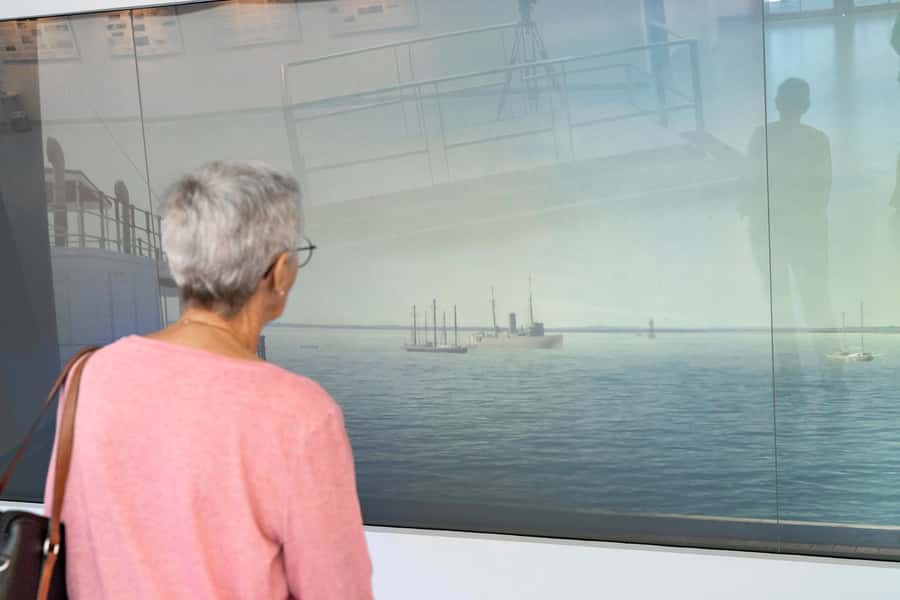
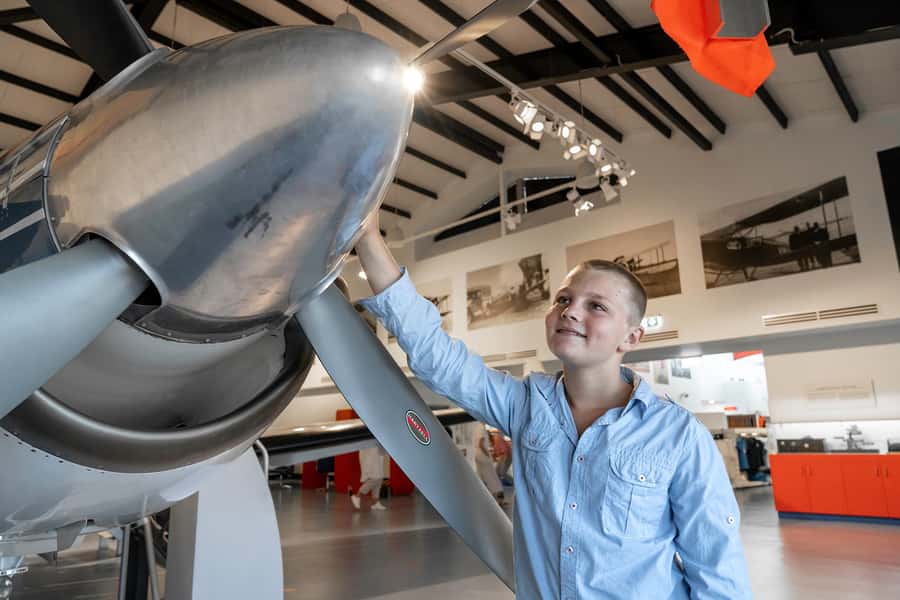
One of the most practical, satisfying components is the aircraft. You can admire a decommissioned RFDS Pilatus PC-12 to get a sense of what an aeromedical plane looks like when it is built for healthcare work, not touring or display flying.
This is the part that turns story into object. You can read about aviation and medicine, but a close-up look at a real aircraft adds context fast. It also gives you a place to pause between the heavier WWII storytelling and the lighter interactive stations. If you are traveling with anyone who gets antsy during dark or tech-heavy exhibits, the aircraft break helps reset attention.
Also, since the aircraft is explicitly described as RFDS, you get a more direct link to the 1939 start of aeromedical operations in the Northern Territory. It ties the RFDS story to the physical reality of how the organization functions.
Value check: is $21 per person worth it?
At $21 per person, this experience is priced like a smart museum add-on, not like a pricey guided tour. The value comes from stacking multiple formats into one ticket: self-guided touring, headset audio translators, 2 VR experiences, holographic cinema sessions, and interactive hologram-style storytelling, plus the aircraft to view in person.
I look at it this way: if you were to pay separately for VR-style attraction time, a timed tech presentation, and a museum-style entry, you would usually end up spending more than a small flat fee. Here, the pricing looks designed for locals and visitors who want quality without a long, expensive commitment.
It also helps that the experience runs on a timed schedule. Last entry is 3:00 PM on normal trading days and 2:00 PM on public holidays, so you should plan a morning or early afternoon start if you want the full loop without stress.
One more value detail: the facility is wheelchair accessible, and the structure is designed for self-guided navigation with staff support. That makes it a good choice if you need flexibility in pacing.
Who should book this, and who may want a different plan
I think this is a great fit if you enjoy interactive museums, VR, and story-based exhibits that explain real services and real-world events without drowning you in paperwork.
It’s especially suitable for:
- Families and curious teens who like tech and want history made visual
- Travelers who are short on time but still want two big topics handled in one place
- People interested in Australia’s services and aviation side of the country
It may be less ideal if:
- You dislike VR headsets or prefer only quiet, text-based museums
- You are arriving late in the day, because last entry is early
- You want a deep, guided lecture format. This is self-guided, with scheduled cinema moments, not a long talk
If you are a DIY planner, this will likely feel straightforward. If you prefer group-led pacing, treat the staff welcome and timed sessions as your structure, and then let the rest be your own route.
Practical tips to make your visit smoother
- Use the staff welcome to map your day, especially for holographic cinema sessions.
- Leave room for the exhibits to take their time. Trying to do everything in a rush usually cuts down understanding.
- Plan for the full 1.5-hour view so the VR and holographic parts do not feel like a checkbox.
- If you get tired in headset or dark settings, take short breaks after VR or cinema and use the aircraft area as a reset.
- Start earlier rather than later, because last entry is set for the afternoon.
Also, since there are headset audio translators included, you can comfortably shift between reading, listening, and watching. That combination is what keeps the experience from turning into pure entertainment.
Should you book the WWII Darwin Harbor and RFDS experience?
Book it if you want a high-value Darwin stop that connects the RFDS origin in 1939 with the bombing of Darwin Harbor in 1942, using VR, holographic cinema, and interactive storytelling. At $21 per person, the mix of formats is the real selling point, and it should work even if you only have a short window in the city.
Skip it or choose a different option if you strongly dislike VR, need a traditional lecture, or you know you will arrive late. Since timed cinema sessions exist and last entry is early, you want your day structured enough to enjoy everything without rushing.
If you like technology that serves a story, this one is a smart bet. It is not just about what happened, it is about how aviation and medicine responded, and the exhibits help you see that connection clearly.
FAQ
How long does the experience take?
Plan on about 1.5 hours to view the facility in its entirety.
Where is the meeting point?
The meeting point is the RFDS Darwin Tourist Facility, 45 Stokes Hill Rd, Darwin City NT 0800, Australia.
What is included with the ticket?
Included are a self-guided tour, headset audio translators, 2 virtual reality experiences, and holographic cinema sessions.
Do I need to join a group?
No. It is a self-guided tour, and staff are available if you need assistance.
Are there holographic and VR elements?
Yes. You will have holographic cinema sessions and two virtual reality experiences, plus interactive story telling holograms.
Is there an aircraft to see?
Yes. You can admire a decommissioned RFDS Pilatus PC-12.
What time is last entry?
On normal trading days, last entry is at 3:00 PM. On public holidays, last entry is at 2:00 PM.
Is the facility wheelchair accessible?
Yes, it is wheelchair accessible.
What languages are available?
The listed language for the experience is English.
Is free cancellation available?
Yes. You can cancel up to 24 hours in advance for a full refund.
Newest Darwin reviews on the site
- LookAbout Darwin Wetlands Wildlife Premium Tour Max 6 Guests★ 4.9 · 72 reviews
- Litchfield National Park: Full-Day & Lunch from Darwin★ 4.6 · 205 reviews
- From Darwin: Litchfield National Park Small-Group Day Trip★ 4.7 · 131 reviews
- Litchfield & Berry Springs, Premium tour, 10 guests & lunch★ 4.5 · 18 reviews
- Darwin: Premium Litchfield Regional Small Group Day Tour★ 4.6 · 61 reviews
- Katherine Gorge & Edith Falls Full-Day Tour from Darwin★ 4.6 · 250 reviews
- Darwin: Adelaide River Half-Day Jumping Crocs Cruise★ 4.3 · 130 reviews
- Darwin: Kakadu & Nourlangie Day Trip Plus Billabong Cruise★ 4.3 · 166 reviews
Darwin Tours, compared.
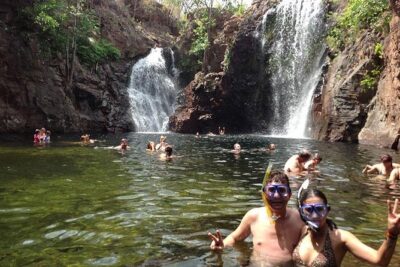
Litchfield National Park and Jumping Crocodile Cruise
Read our review →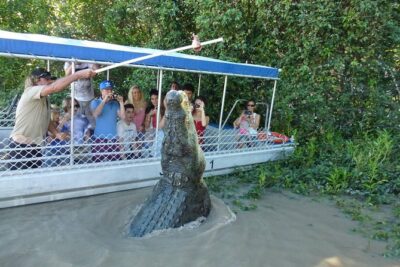
Adelaide River Cruises – Jumping Crocodile Experience
Read our review →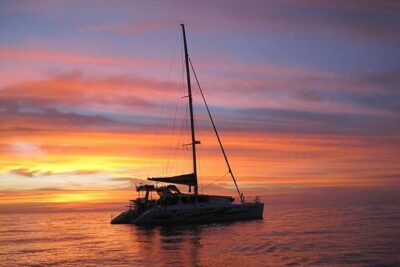
Sunset 3-Hour Cruise from Darwin with Dinner and Sparkling Wine
Read our review →
Litchfield Park Tour & Jumping Crocodile Cruise
Read our review →

Kakadu Day Tour from Darwin with Offroad Dreaming
Read our review →

1 Day Corroboree Billabong Wetland Experience including 2.5 hour cruise + lunch
Read our review →Browse the lists this tour appears in