
Reviewed · ROTTNEST ISLAND TOURS
Rottnest Island: Tandem Skydive
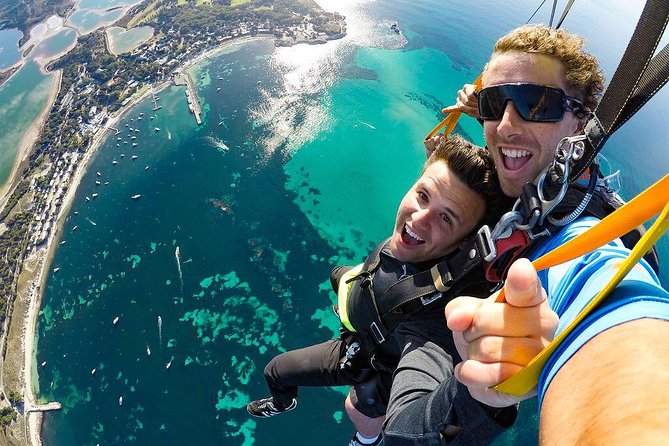
Rottnest Island looks unreal from the sky. This tandem skydive is all about choosing your altitude, 10,000 or 15,000 feet, then looking straight down as your instructor guides you through the jump.
I also love the small group, limited to 3 participants, which makes the pre-jump time feel more personal. Then you finish with a beach landing, so it feels like an event, not just a flight.
The one consideration: your skydive is weather dependent, and you’ll want to plan your Rottnest Island ferry timing because ferry tickets are not included.
In This Review
- Key highlights you should care about
- Why a Rottnest Island tandem skydive feels different
- The full timeline, from briefing to beach landing
- Choosing 10,000 feet vs 15,000 feet (what changes)
- Safety basics, eligibility checks, and what the team does well
- What to bring and what to wear on Rottnest Airfield
- Getting there: ferry planning and the 15-minute jetty walk
- Price and value: is $270 worth it?
- Who this is for, and who should skip it
- Should you book the Rottnest Island tandem skydive?
- FAQ
- Where is the meeting point for the tandem skydive?
- Do I need to bring a ferry ticket?
- Is transport to and from Rottnest Island included?
- Can I choose to jump from 10,000 feet or 15,000 feet?
- How long is the freefall?
- What happens with the parachute during the skydive?
- Where do you land?
- Are photos and video included?
- What should I wear or bring?
- Is the skydive weather dependent?
Key highlights you should care about
- Altitude choice with a real time difference: 10,000 feet for about 30 seconds of freefall, or 15,000 feet for up to 66 seconds.
- Parachute plan is built in: chute deploys at 5,000 feet, followed by about a 5-minute ride.
- You land on the beach: your landing happens alongside family and friends, which makes it feel grounded and celebratory.
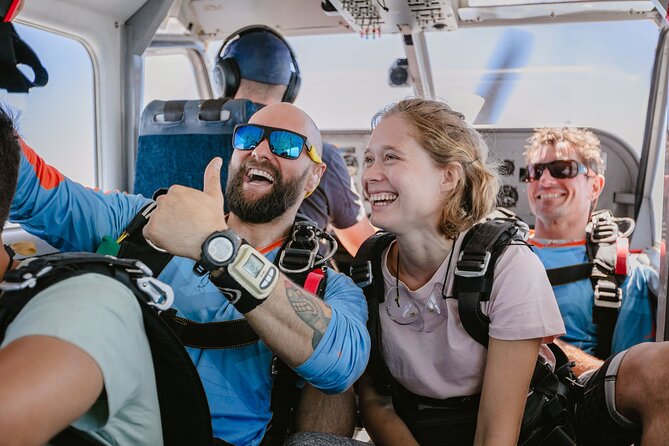
- Small group experience: limited to 3 participants, with an English-speaking instructor.
- Photo and video can be added on the day: professionally edited HD photos and video are available for purchase.
Why a Rottnest Island tandem skydive feels different
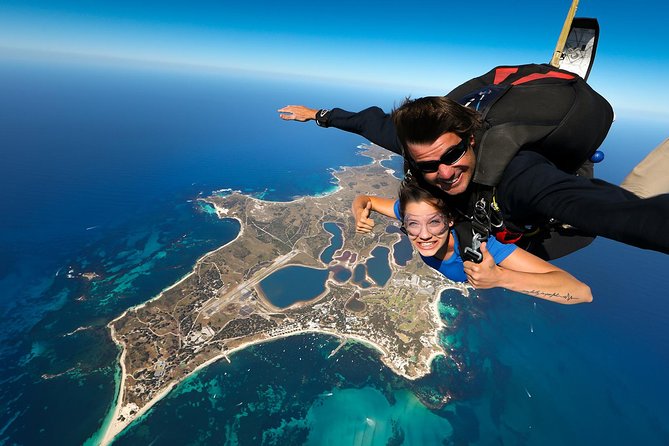
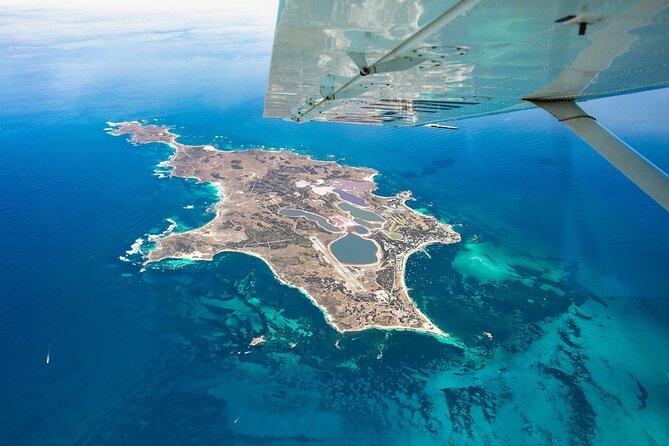
If you’ve only ever seen Rottnest Island from the ground, you’re missing half the story. From above, the island’s shape and coastline take over your attention fast, and the speed of the experience keeps your brain from overthinking it.
The other thing I like is the mix of thrill and structure. You’re not just strapped in and hoped-for-the-best. You get a safety briefing, you ride up together, then you exit as a tandem pair, with an instructor doing the technical heavy lifting. That setup is a big deal when you’re nervous, which many first-timers are.
Also, instructors get specific praise in the real world. I’ve seen names like Nick and Darcy come up for making first-time nerves feel manageable, and Heath shows up as someone who helps people stay calm and enjoy it. Even if you don’t meet those exact instructors, it’s a strong sign the team is used to nervous energy.
More Skydiving in Rottnest Island
- Rottnest Island Tandem Skydive
★ 5.0 · 258 reviews - Hillary’s Harbour: Rottnest Island Skydive and Ferry Package
★ 4.9 · 63 reviews - Fremantle: Rottnest Island Skydive and Ferry Package
★ 5.0 · 54 reviews
The full timeline, from briefing to beach landing
Your total time on this activity is listed as 150 minutes, and that’s a helpful number to plan your day around. Here’s what the experience feels like from start to finish based on the flow you’ll follow.
You begin at the Rottnest Island Terminal Building at Rottnest Airfield. It’s about a 15-minute walk from the jetty, so give yourself enough buffer that you’re not sprinting with your shoes on. Expect a warm welcome, then paperwork and getting harnessed up.
After that, you’ll get a safety briefing. This isn’t just a quick formality. It’s the moment you learn how to move in the harness, what to expect during freefall, and how the parachute sequence works. Then it’s time to head to the plane.
In the air, you’ll climb to your chosen altitude, either 10,000 feet or 15,000 feet. From inside the aircraft, you’ll have a clear view outside while your instructor gets ready for the exit.
Then comes the main event: you’ll freefall at around 200 km/h for 30 to 66 seconds, depending on the altitude. It’s fast enough that time feels weird. One second you’re making peace with gravity, and the next second you’re already thinking about what to look at.
At 5,000 feet, your parachute is deployed. After that, you get about a 5-minute parachute ride. This is the part where you can actually take in the island and calm down enough to enjoy the view.
Finally, you land on the beach. That beach landing matters more than it sounds. You’re not hidden in a field or off somewhere random. You finish where people can see you, and it’s easier for friends and family to feel part of the moment.
Choosing 10,000 feet vs 15,000 feet (what changes)
You get two altitude options, and they directly change the time you spend in freefall.
- 10,000 feet: expect about 30 seconds of freefall
- 15,000 feet: expect up to 66 seconds of freefall
What you should take from that is not just “more seconds.” It’s a different mental rhythm. At 10,000 feet, you’ll feel the shock, then it transitions sooner into the parachute phase. At 15,000 feet, you get more time to fully experience what you came for, without it ending just as you start to accept it.
If you’re doing this as a bucket list tick and you’re nervous, 10,000 feet can be the gentler first step. If you’re the kind of person who wants to feel it longer and you can handle intensity, 15,000 feet is the louder choice.
Either way, the freefall speed stays around 200 km/h, and the parachute sequence is the same idea: deploy at 5,000 feet, then enjoy the ride down. That consistency is reassuring.
Safety basics, eligibility checks, and what the team does well
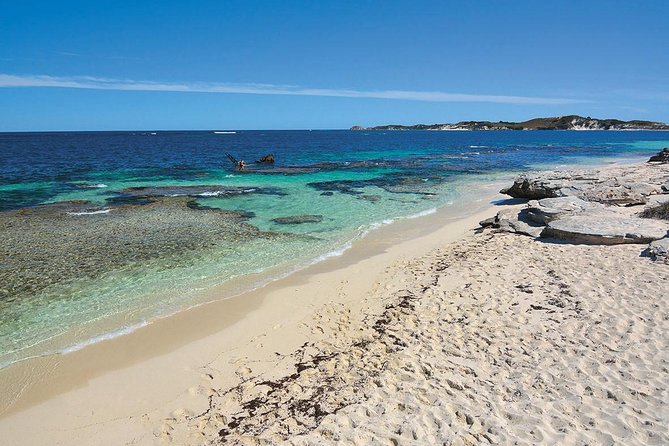
This experience is heavily safety-managed, and you should treat the safety rules as part of the experience, not paperwork.
On the day, your eligibility is assessed by the chief safety instructor, based on factors like your weight, height, health, and relevant medical conditions. The activity is not suitable for people with heart problems, and it also lists restrictions around pre-existing medical conditions.
Weight limits are stated clearly:
- People over 200 lbs (91 kg) are listed as not suitable.
- Passengers weighing more than 95 kg are taken on a case-by-case basis.
If you’re anywhere near those thresholds, don’t guess. Ask directly and be honest about your situation early, because the final call happens on the day.
Age rules are also strict enough to plan around:
- Children under 16 are not suitable.
- Ages 16–17 must be accompanied by an adult or legal guardian.
There’s also a practical rule that keeps things safe at the harness and landing stage: you’ll need to wear closed-toe shoes, and sandals or flip-flops are not allowed. Comfortable clothes help too, because you’ll be suited up and you want the harness to fit well.
One more reassuring part: you’re not going in alone. You’ll be in a small group with an instructor who gives guidance during the process. The strongest recurring theme in real-world feedback is that instructors help calm nerves, which is exactly what you want when you’re about to step into open air.
More tandem skydives in Rottnest Island:
- Perth: Rottnest Island Skydive and Ferry Package
★ 4.6 · 26 reviews - Airlie Beach: Tandem Skydive over the Whitsundays
★ 4.8 · 726 reviews - Gold Coast Tandem Skydive
★ 5.0 · 467 reviews - Airlie Beach: Tandem Skydiving Experience with Beach Landing
★ 4.9 · 382 reviews
What to bring and what to wear on Rottnest Airfield
This part is simple, but it can ruin your day if you skip it.
Bring:
- Comfortable clothes
- Closed-toe shoes
Don’t bring or wear:
- Sandals or flip-flops
Also, keep your flexibility in mind. Your skydive time slot is confirmed post-booking, and operations vary by season. That means you’ll want to build your day around the activity, not squeeze it into an already packed itinerary.
If you’re thinking about photos and video, plan for that decision too. The professionally edited high-definition video and photos package is available for purchase on the day. It’s not included in the base price, so decide after you see how you feel in the moment. For many people, that becomes an easy yes once they realize what they’ll want to relive.
Getting there: ferry planning and the 15-minute jetty walk
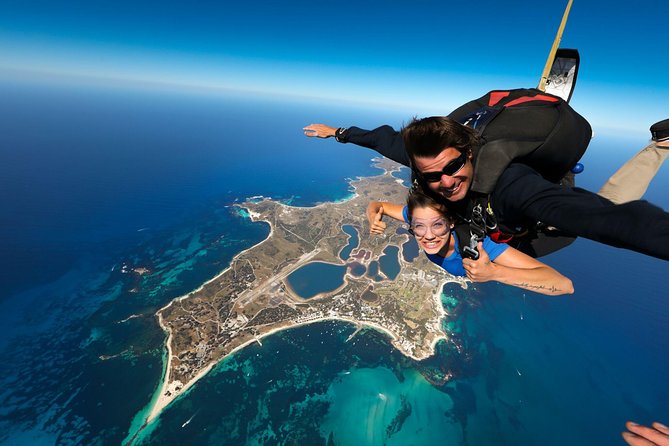
Transport to and from Rottnest Island is not included, and ferry tickets are specifically called out as not included. You’ll need to make your own way to the island from Perth or Fremantle.
Here’s the practical bit that matters for planning: you must phone one hour prior to your Rottnest Island travel departure time to confirm the weather is suitable. Because the entire jump is weather dependent, this is one of those situations where last-minute changes can happen.
For the on-island meeting point, go to the Rottnest Island Terminal Building, Rottnest Airfield. It’s about a 15-minute walk from the jetty. I’d still pad that walk with a few minutes. You’ll be wearing the wrong shoes if you rush, and the whole point is to arrive relaxed and ready.
Price and value: is $270 worth it?
At $270 per person, the price is not small. But it also isn’t just “a thrill.” You’re paying for a full tandem setup, safety management, aircraft time, and the parachute ride down.
What’s included in the price:
- A tandem skydive over Rottnest Island from 10,000 or 15,000 feet
- Freefall for up to 66 seconds at around 200 km/h
- Parachute landing on the beach
- Instruction in English
- A small group format (limited to 3 participants)
Optional, not included:
- HD video and photos package (available for purchase on the day)
So is it value? In my view, it’s a good value if you treat it like a once-in-a-trip memory you’re actually going to keep. The people who buy the photos and video tend to do it because it captures the part you can’t fully process in real time: the coastline, the angles, and the fact that you did it while feeling scared but safe.
If you absolutely hate being filmed or you won’t buy photos no matter what, the value drops a bit. But even then, the included experience is complete. You’re not paying extra for the parachute ride or the landing.
Who this is for, and who should skip it
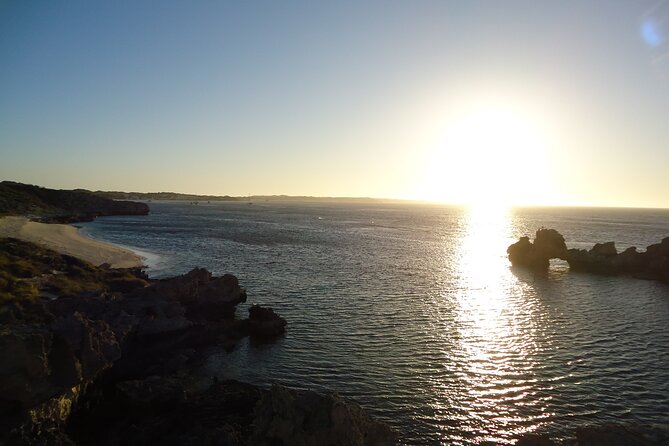
This tandem skydive fits best for:
- First-timers who want tandem instruction, not solo risk
- People who want intense views and want the island from a new angle
- Anyone who’s okay with height and speed for a short, controlled window
It’s not for you if:
- You have heart problems or relevant medical conditions
- You’re under 16
- You’re traveling as an unaccompanied minor
- You’re outside the weight limits listed (with case-by-case consideration above 95 kg)
If you’re a healthy adult within the limits and you’re excited by the idea of beach landing after freefall, this is one of the more straightforward “big thrill” options in the region because the structure is so clear.
Should you book the Rottnest Island tandem skydive?
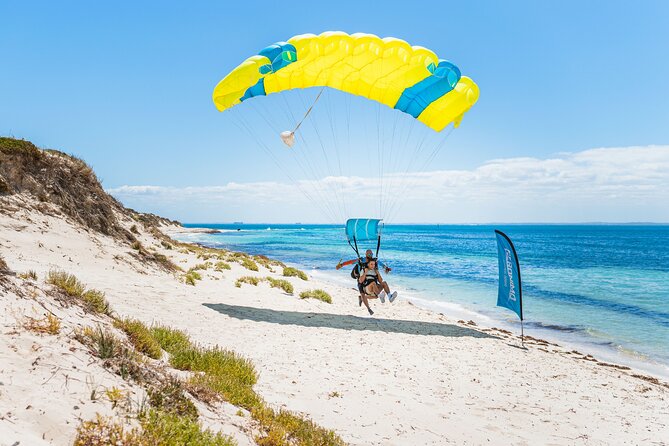
Book it if you want a high-impact experience in a tight time window, and you’re ready for the reality that weather can change the plan. The payoff is real: you get a choice between 10,000 and 15,000 feet, a fast freefall window, and then a calmer parachute ride before landing on the beach.
Consider skipping or postponing if you’re not comfortable with strict eligibility rules, you have a medical concern you haven’t discussed, or you hate travel-day uncertainty. Also, if your schedule can’t handle a call one hour before your ferry departure, this might add stress instead of joy.
If you can handle the “plan to move with conditions” mindset, this is a great use of time on Rottnest Island.
FAQ
Where is the meeting point for the tandem skydive?
You meet at the Rottnest Island Terminal Building at Rottnest Airfield. It is about a 15-minute walk from the Rottnest Island jetty.
Do I need to bring a ferry ticket?
No, ferry tickets are not included. You need to make your own way to Rottnest Island from Perth or Fremantle.
Is transport to and from Rottnest Island included?
No. Transport to and from Rottnest Island is not included in the activity.
Can I choose to jump from 10,000 feet or 15,000 feet?
Yes. You can select your altitude option: 10,000 ft or 15,000 ft.
How long is the freefall?
Freefall lasts 30 to 66 seconds, depending on whether you jump from 10,000 feet or 15,000 feet.
What happens with the parachute during the skydive?
Your parachute is deployed at 5,000 feet. After deployment, you enjoy a parachute ride of about 5 minutes before landing.
Where do you land?
You land on the beach, as part of the experience.
Are photos and video included?
No. A professionally edited high-definition video and photos package can be purchased on the day.
What should I wear or bring?
Wear comfortable clothes and closed-toe shoes. Sandals or flip-flops are not allowed.
Is the skydive weather dependent?
Yes. All bookings are weather dependent, and you need to call 1 hour prior to your Rottnest Island travel departure time to confirm the weather is suitable.
Newest Rottnest Island reviews on the site
- Rottnest Island Segway 1-Hour Settlement Tour★ 4.8 · 61 reviews
- Rottnest Island Segway 1.5-Hour Fortress Adventure Tour★ 4.7 · 71 reviews
- Perth: Rottnest Island Ferry, Bike, Coffee & Lobster Roll★ 4.4 · 17 reviews
- Rottnest Island: Grand Bus and Train Tour with Lunch★ 4.6 · 106 reviews
- Rottnest Fortress Adventure Segway Package★ 4.4 · 11 reviews
- Perth: Rottnest Island Skydive and Ferry Package★ 4.6 · 26 reviews
- Perth: Rottnest Island Scuba Diving Day Trip-Certified Diver★ 4.8 · 9 reviews
- From Perth: Rottnest Island Ferry & Bus Day Tour★ 4.6 · 76 reviews
Rottnest Island Tours, compared.

From Perth or Fremantle: Rottnest Island Ferry and Bus Tour
Read our review →
Rottnest Island Grand Island Day Tour with Lunch
Read our review →
Rottnest Grand Island Package with Ferry, Tour & Light Lunch
Read our review →Browse the lists this tour appears in