
Reviewed · PHILLIP ISLAND TOURS
Phillip Island Whale Watching Tour
Seals, dolphins, whales, all in one morning. I like the modern boat setup, with enough room so you can actually see what the crew is pointing out. I also love the Seal Rocks focus, because even if whales take their time, the wildlife action stays constant. One thing to keep in mind, whale sightings are not guaranteed.
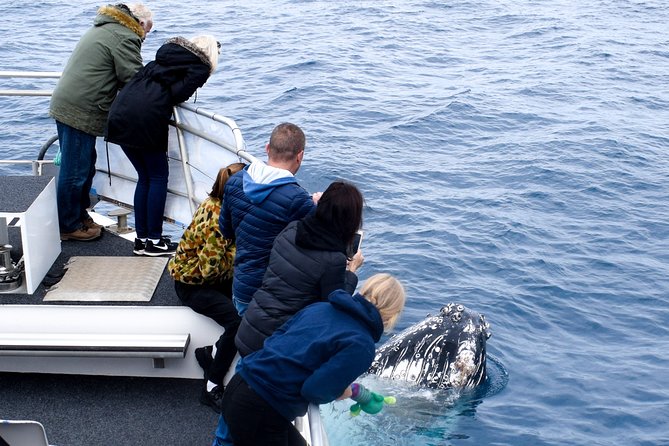
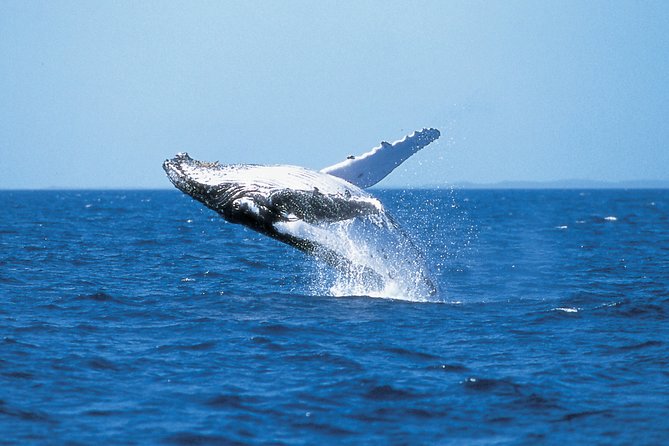
This is a whale watching cruise built around the migration route, so the goal is humpback and southern right whales along Victoria’s coast. The company expects a 70-90% whale sighting success rate between June and August, and the tour needs good weather to run. If the sea is rough or whales are quiet that day, you’ll still get seals, dolphins, and birdlife, but the whale moment might be shorter.
In This Review
- Key highlights to look for
- Phillip Island cruise basics: a focused 4 hours, not a long slog
- Getting on board at Rhyll Beach Rd with a mobile ticket
- Seal Rocks first: why the fur seals are more than a warm-up
- Cape Woolamai: coastal scenery plus birdlife scanning
- Humpback and southern right whales: the search, the timing, and the odds
- Dolphins, pods, and the “look again” moment
- Captain commentary and crew teamwork: how you spot faster
- Morning tea included: small comfort, real value
- Price and value: is $125.52 for 4 hours fair?
- Who should book this whale watching tour
- What to bring and how to manage expectations at sea
- Should you book Wildlife Coast Cruises on Phillip Island?
- FAQ
- Where does the Phillip Island whale watching tour start?
- How long is the cruise?
- How much does it cost per person?
- Is the ticket mobile?
- What is included in the tour?
- Are whale sightings guaranteed?
- How many people are on the boat at most?
- What happens if poor weather cancels the tour?
Key highlights to look for
- Seal Rocks first stop for thousands of fur seals in their natural habitat
- 70-90% whale odds in June to August so you can plan without blind faith
- Wandering Albatross and little penguins may be part of the bird spotting
- Max 70 travelers on board helps with sightlines and a calmer feel
- Onboard captain commentary keeps your eyes busy, not just your phone
- Morning tea included (coffee, tea, muffin, pastry) to keep things comfortable
Phillip Island cruise basics: a focused 4 hours, not a long slog
The Phillip Island Whale Watching Tour is a half-day cruise that runs about 4 hours, starting at 8:30 am from 16 Beach Rd, Rhyll VIC 3923. It ends back at the meeting point, so you are not piecing together extra transport at the end of a windy morning.
This is set up for real wildlife viewing from the water, not a drive-by photo stop. The time window matters. You are on the water during daylight hours when spotting marine life is most likely, and the route is planned around whale migration season.
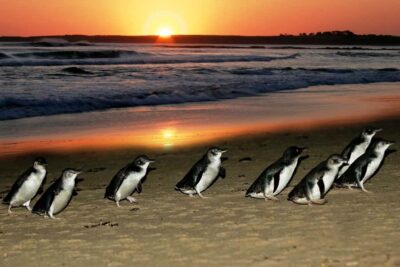
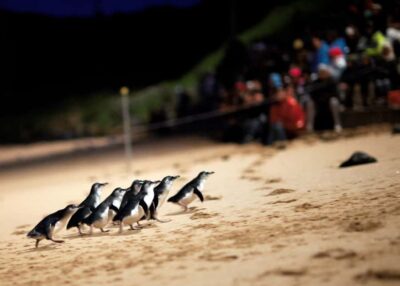
More Phillip Island penguin nights:
- Penguin Parade, & Wildlife Encounters Eco Tour from Melbourne
★ 5.0 · 3,774 reviews - From Melbourne: Penguin Parade, Koalas & Kangaroos
★ 4.5 · 1,932 reviews - From Melbourne: Phillip Island Penguin Parade & Koalas Tour
★ 4.7 · 1,408 reviews
Getting on board at Rhyll Beach Rd with a mobile ticket
You start at 16 Beach Rd in Rhyll, and you will use a mobile ticket to get in. The tour is capped at a maximum of 70 people, which is a big deal on wildlife cruises where crowding can kill your view.
You will also have a local guide and live commentary on board. That matters more than it sounds. When you know what you are looking for, you stop scanning randomly and start catching patterns, like where birds wheel overhead or when dolphins start moving like they are herding something.
Tip for your sanity: dress for a cool, breezy boat ride. Even in daylight, coastal wind can make a “quick cruise” feel long and chilly if you come underprepared.
Seal Rocks first: why the fur seals are more than a warm-up
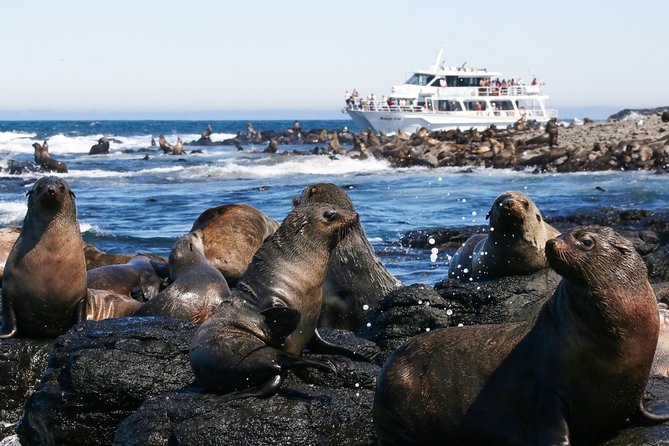
The first stop is Seal Rock, and that is not just a warm-up between whale sightings. The whole cruise is built on the idea that you will see whales, but the seals at Seal Rocks are the kind of wildlife moment that can keep the trip satisfying on any day.
You are looking for thousands of fur seals in their natural environment. That means:
- You may spot seals hauled out and stretched along the rocks
- You may see movement and sudden bustle when something shifts in the water
- You get a steady stream of “small surprises” even while you wait for the bigger animals
If you have ever felt whale watching pressure, where everyone stares into the distance hoping hard enough, Seal Rocks helps break that spell. You are not just waiting. You are watching.
Cape Woolamai: coastal scenery plus birdlife scanning
After Seal Rocks, the cruise heads to Cape Woolamai. This is where the trip starts to feel like classic Phillip Island coastal travel, with open views and more chances to spot seabirds.
Birdlife is part of the plan. The cruise mentions rare seabirds such as the Wandering Albatross, and it also references little penguins in the wider wildlife experience. On a moving boat, birds are often your best early warning system. When you see a lot of birds working the same area, something is going on below the surface.
A practical note: bird spotting is easier when you pause your own movement. Let the boat angle into the wind, look for the biggest silhouette first, then work your way down to smaller shapes. The crew commentary helps you do that faster than guessing.
More whale watching from Phillip Island:
- Philip Island: Dolphin and Whale Cruise
★ 4.4 · 48 reviews - Dolphin & Whale Cruise
★ 5.0 · 23 reviews - Phillip Island: Whale Watching Boat Tour
★ 4.9 · 22 reviews - Sydney: Whale Watching Adventure Cruise
★ 4.2 · 1,790 reviews
Humpback and southern right whales: the search, the timing, and the odds
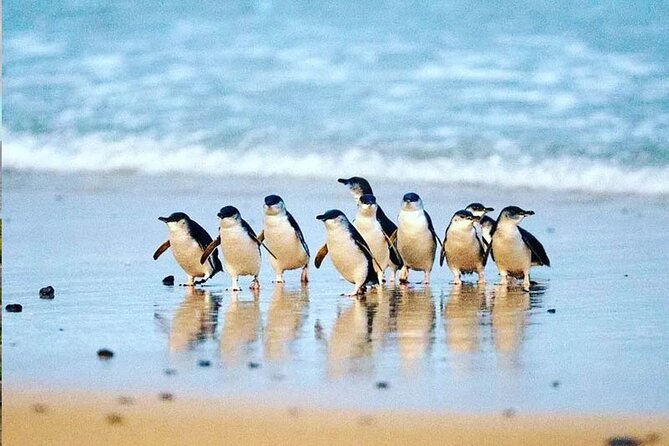
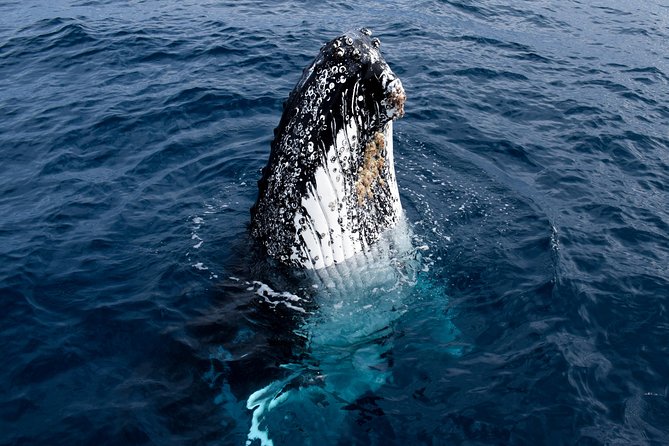
The heart of this tour is whale watching along the annual migration route around Phillip Island. You are specifically scouting for humpback whales and southern right whales.
Here is the realistic expectation you should use when booking: whale sightings are not guaranteed. For June to August, the tour expects 70-90% sightings success. That is a strong rate. It is also a reminder that nature sets the schedule, not the calendar.
When whales are present, you are looking for animals that surface in a rhythm. You might see a blow, a change in the water texture, or a full moment where the whale moves through the area. Even when sightings are brief, the guidance on board helps you interpret what you are seeing so you do not miss the important second.
And if whales are quiet? The cruise is still structured so you are not left with nothing. Dolphins, seals, and seabirds are in the mix, and the crew keeps searching rather than giving up after the first pass.
Dolphins, pods, and the “look again” moment
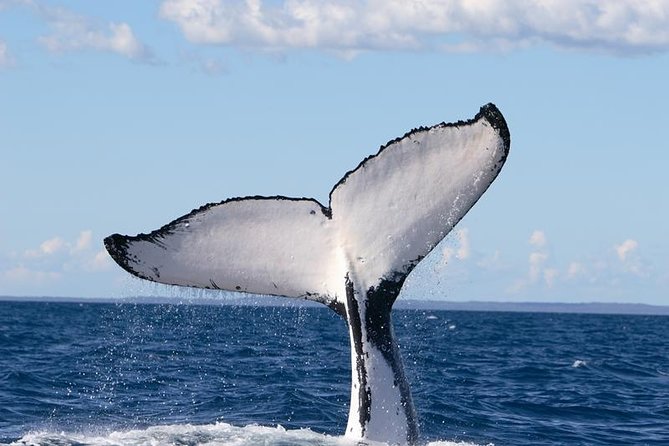
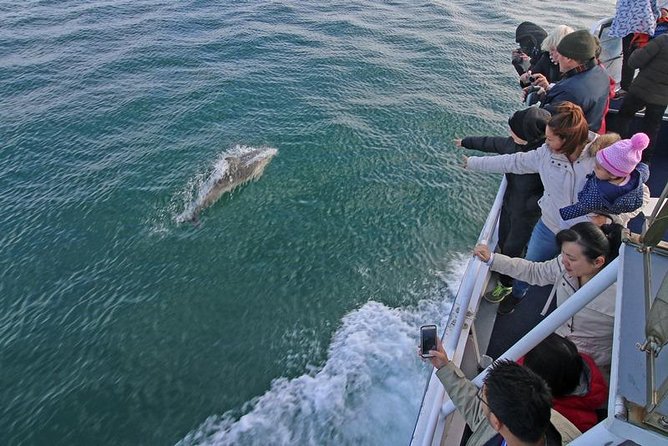
The tour experience includes playful dolphin pods during the cruise. Dolphins are often one of the more predictable animals to spot compared with whales, because they tend to stay active and visible around the boat.
You might see them alongside the vessel, or you might catch them as the boat changes position and the crew points out where they have been surfacing. In wildlife terms, dolphins can be a clue. When dolphins are active in an area, it often means food is nearby, which can also attract larger animals.
One reason I like this kind of mixed-species plan is that it lowers the emotional risk. You can go in hoping for whales without feeling like the day will be a letdown if you only get seals and dolphins.
Captain commentary and crew teamwork: how you spot faster
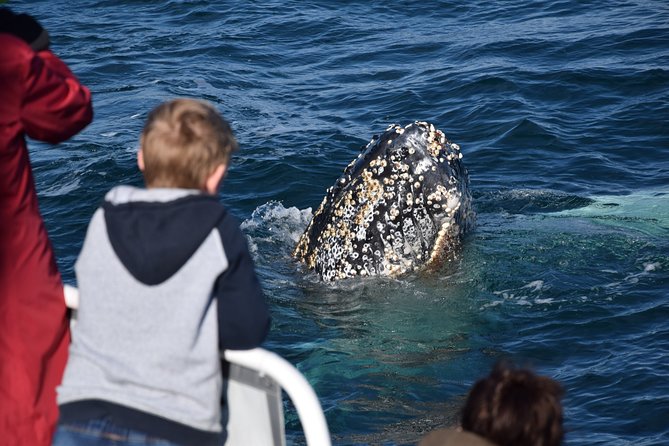
The onboard experience is guided by live captain commentary, plus a local guide. This is the difference between staring at open water and actually learning how sightings happen.
The cruise is designed around continuous searching. That shows up in the overall vibe of the trip, and it is one of the most praised aspects of the experience. People feel the crew actively works the route and keeps scanning, rather than treating whale watching like a passive waiting game.
Crew friendliness also comes up again and again. You should expect an approachable team that helps you make sense of what you are seeing. On a boat, this matters because sighting time is short. When someone tells you what to look for and where, you can get your eyes on target before the action is gone.
Morning tea included: small comfort, real value
Morning tea is included, with coffee, tea, a muffin, and a pastry. That is a basic offering, but it is a smart one. A 8:30 am start means you will likely be hungry, and having a warm snack before the busiest spotting time helps a lot.
Some people also describe a more extended food experience during the cruise, like lunch and additional tea. The listing is clear that morning tea is included, and you should treat anything beyond that as dependent on the day’s service.
Either way, the value is that you are not scrambling for breakfast right before boarding. You get something in your stomach and you stay comfortable while the crew does the scanning.
Price and value: is $125.52 for 4 hours fair?
At $125.52 per person, this is not a cheap activity. But it is also not just a short boat ride. You are paying for:
- A purpose-built whale watching route on the migration circuit
- Onboard live commentary and active searching
- A stop at Seal Rocks where the wildlife viewing is consistently strong
- A max group size of 70, which improves your odds of seeing what matters
When whale watching works well, the experience can feel like you got a whole wildlife documentary in real life. And even when whales are not cooperating, Seal Rocks gives you a major animal encounter that is hard to replicate elsewhere in one morning.
If you want one “big wildlife event” during your Phillip Island visit, this price becomes easier to justify. If you are trying to stack multiple expensive tours, you might want to consider whether you prefer guaranteed land-based seal viewing versus chasing whales at sea.
Who should book this whale watching tour
I think this tour is a great fit if you want a single, well-organized half-day that mixes:
- Seal Rocks fur seal viewing
- Dolphins and seabird scanning
- Whale migration hopes, with realistic odds
It is also a good match for first-time whale watchers who want guidance. The crew commentary and the structured route help you understand what sightings look like, and it reduces the frustration factor.
If you are someone who hates uncertainty at all, the whale-not-guaranteed policy may feel annoying. But the design of the trip (seals plus dolphins plus birds) makes it less of a gamble than it looks on paper.
Finally, if you are traveling with people who love wildlife but have different “comfort levels” with waiting, this works well because there is always something to see.
What to bring and how to manage expectations at sea
You do need to plan for the realities of a boat tour. The experience requires good weather. If conditions are not right, the operator can cancel due to poor weather and offer a different date or a full refund.
For your own comfort, bring layers. Even if you start in mild weather, you may get cool wind on the water. Warm clothes also help you stay focused, because you will be more willing to look out steadily instead of huddling.
For expectations, do this: think of whales as a bonus that you are actively searching for, with a strong success rate in June to August, rather than a guarantee. Then commit to enjoying the seals, dolphins, and birdlife while you wait.
That mindset is the easiest way to have a satisfying morning regardless of what the whales decide to do.
Should you book Wildlife Coast Cruises on Phillip Island?
I would book this tour if you want a well-run, wildlife-focused morning that gives you real odds at humpback and southern right whales while also delivering seal viewing at Seal Rocks and dolphins and seabirds along the route. The active searching, the onboard commentary, and the smaller-than-you-might-expect group size make it feel practical, not chaotic.
I would hesitate only if whales are your single non-negotiable goal and you cannot handle the idea that sightings are never fully guaranteed. If that is you, you might still book, but go in prepared to be happy with the seals, because Seal Rocks is built to deliver.
If you are visiting in winter migration season (June to August), the expected 70-90% whale success rate makes this especially compelling.
FAQ
Where does the Phillip Island whale watching tour start?
It starts at 16 Beach Rd, Rhyll VIC 3923, Australia, with a start time of 8:30 am.
How long is the cruise?
The duration is approximately 4 hours.
How much does it cost per person?
The price is $125.52 per person.
Is the ticket mobile?
Yes, this activity uses a mobile ticket.
What is included in the tour?
You get morning tea (coffee, tea, muffin, pastry), a local guide, and live commentary on board.
Are whale sightings guaranteed?
No. Whale sightings are not guaranteed, and the tour expects between 70-90% sightings success between June and August.
How many people are on the boat at most?
There is a maximum of 70 travelers.
What happens if poor weather cancels the tour?
The experience requires good weather. If it is canceled due to poor weather, you will be offered a different date or a full refund.
Newest Phillip Island reviews on the site
- From Phillip Island: Wine and Wildlife Tour with Penguin Parade★ 5.0 · 34 reviews
- Dolphin & Whale Cruise★ 5.0 · 23 reviews
- Melbourne 3, 5, or 7 Ticket Flexi Pass★ 4.0 · 40 reviews
- Phillip Island: Golden Hour Penguin Express Tour w/ Island Pickup★ 5.0 · 54 reviews
- Phillip Island Sunset Cruise★ 4.5 · 38 reviews
- Puffing Billy Train and Phillip Island Penguin Parade Day Tour★ 4.0 · 17 reviews
- Phillip Island Medium Size Group Tour★ 4.5 · 25 reviews
- Phillip Island Wildlife Cruise and Penguin Tour from Melbourne★ 5.0 · 30 reviews
Phillip Island Tours, compared.
Penguin Parade, & Wildlife Encounters Eco Tour from Melbourne
Read our review →

Phillip Island Penguins & Wildlife Day Tour from Melbourne
Read our review →
Phillip Island Penguin and Koala Highlights Day-Trip from Melbourne
Read our review →Browse the lists this tour appears in