Reviewed · MELBOURNE TOURS
Melbourne Art Deco Architecture Tour
Melbourne can look modern and old at once. This small-group Art Deco walking tour turns the city’s CBD into a classroom, starting at the Manchester Unity Building and moving toward the Majorca Building. You’ll learn how the 1934 centenary sparked a building boom, and how to spot the Art Deco style by design tricks like terracotta self-cleaning tiles and bold patterning.
John-level storytelling and San-style attention to details make the whole thing click fast.
One thing to plan for: it’s a 2-hour walk with moderate fitness needed, and you end back at the meeting point, so you’ll want comfy shoes and an easy route back afterward. There’s also no hotel pickup, so you’ll be getting yourself to 220 Collins Street.
In This Review
- Key things I’d circle on your planning list
- Why Melbourne’s 1934 Art Deco building boom still matters
- Getting started at the Manchester Unity Building, 220 Collins Street
- How to spot Art Deco fast, tiles, patterns, and cultural cues
- Manchester Unity Building, where the story starts
- Majorca Building, comparing Art Deco in the real world
- Learning in a small group, with guides like John, San, Catherine, and Sam
- The walking pace and what to expect in 2 hours
- The hidden value: learning to look up and slow down
- Price and value for a 2-hour, max 10 person walk
- Who should book this Art Deco architecture tour
- Should you book it?
- FAQ
- What is the duration of the Melbourne Art Deco Architecture Tour?
- Where does the tour start?
- What time does the tour begin?
- Is this a walking tour?
- What is the group size?
- Is hotel pickup included?
- Are food and drinks included?
- What ages can join?
- Does the tour use a mobile ticket?
- What if the tour is canceled due to minimum numbers?
Key things I’d circle on your planning list
- 1934 centenary context: why Melbourne’s Art Deco cluster happened right when it did
- Hands-on style spotting: terracotta self-cleaning tiles, patterning, and recognizable motifs
- Small group size (max 10): enough space for questions instead of just listening
- Real CBD examples: Manchester Unity Building and the Majorca Building as anchors
- Morning timing: a 10am start that leaves your afternoon free
Why Melbourne’s 1934 Art Deco building boom still matters
Melbourne’s Art Deco isn’t just a pretty face. It’s tied to a specific moment, the 1934 Centenary of Melbourne, when the city’s celebration acted like a spark for a building surge. When lots of new construction happens in a short window, you get a tight visual “snapshot” of what designers and architects were excited about.
That’s why this tour’s focus on the CBD works. A lot of the city’s best examples sit close together, so you can walk and compare without wasting time on long hops across town. And once you understand the centenary timing, you start looking at the buildings like historical documents, not just photo backdrops.
You’ll also learn that Art Deco design didn’t come from one place. The style was influenced by far-flung cultural references, including Spanish, Egyptian, and Mayan design ideas. That matters because it gives you a quick way to understand why the shapes, colors, and decorative habits can look so different from one building to the next.
A few more Melbourne trips to compare
- Great Ocean Road Small-Group Eco Tour from Melbourne
★ 5.0 · 6,607 reviews - From Melbourne: Great Ocean Road, 12 Apostles, Wildlife Tour
★ 4.7 · 6,020 reviews - Laid back, Yarra Valley Wine Tour: Wine, Cider, Gin, Beer + Choc
★ 5.0 · 4,552 reviews
Getting started at the Manchester Unity Building, 220 Collins Street
The tour meets at 10:00am at the Manchester Unity Building, 220 Collins Street. It’s a practical start point for the simple reason that it’s in the CBD, and it’s near public transportation.
Because there’s no hotel pickup, this is a “show up and go” kind of experience. If you like guided tours that respect your time and don’t make you wait for a shuttle, that’s a plus. You’ll also use a mobile ticket, so you’ll want your phone charged and ready.
From the start, the guide sets you up to look up. That may sound obvious, but Art Deco loves the higher levels: façades, entrances, corners, and decorative bands. If you go in expecting eye-level sightseeing, you’ll miss a big chunk of what makes these buildings special.
How to spot Art Deco fast, tiles, patterns, and cultural cues
The best part of an architecture walk is when it teaches you a skill. This one does. Your guide shows you how to recognize Art Deco on the street, not in a museum.
Here are the style clues they focus on:
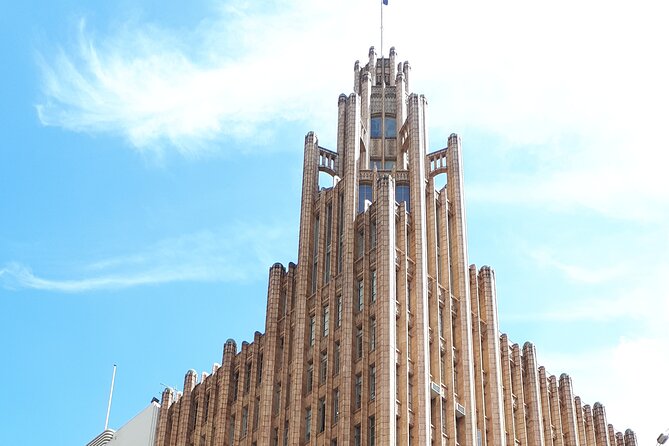
- Terracotta self-cleaning tiles, which help create that crisp, decorative surface look
- Distinctive patterning, often repeating in bands or geometric arrangements
- Design details that point to Art Deco’s broader influences, including Spanish, Egyptian, and Mayan inspirations
Once you know what to look for, you start seeing the “rules” behind the look. You’ll notice how symmetry, stacked shapes, and strong geometry often replace the softer curves common in other eras. You’ll also spot how decoration is used to communicate prestige and modernity, like the building is trying to say, we’re future-ready.
For photos, this is the cheat sheet you want. Tilt your camera upward, frame the entrance or corner details, and take a second shot from a few steps back. Many Art Deco features are small but meaningful, and your guide’s explanations make those details easier to read.
Manchester Unity Building, where the story starts
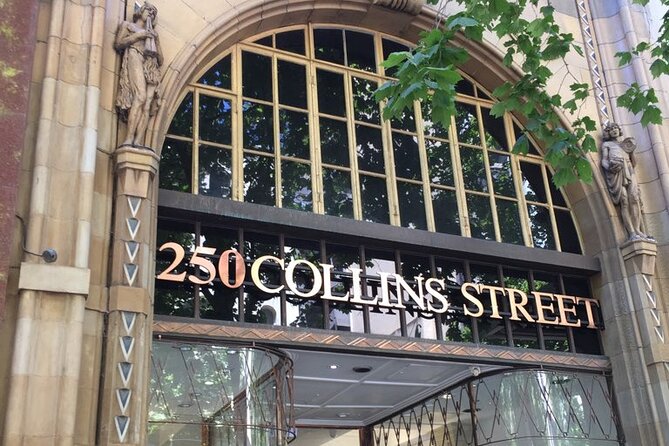
The Manchester Unity Building is your main anchor, both because it’s your meeting point and because it’s a key example of the Art Deco style in the city. Starting here gives the tour a strong baseline. If you can see the style clearly at the beginning, you’ll understand what changes as you move to other buildings.
Your guide will talk about how Melbourne’s centenary helped drive the building boom, and then connect that idea to the architecture in front of you. That combination is what makes this stop more than just a location. It becomes a way to interpret the city.
Practical tip: spend a few moments around the façade before the group starts moving. Even on a tight schedule, pausing near strong geometric features lets you “train” your eye for what comes next. And with a small group, you’re usually able to ask questions on the spot instead of waiting until the end.
Same part of the map, a completely different day:
- Great Ocean Road Reverse Itinerary Boutique Tour – Max 11 Guests
★ 5.0 · 4,186 reviews - Penguin Parade, & Wildlife Encounters Eco Tour from Melbourne
★ 5.0 · 3,774 reviews - Melbourne: Yarra Valley Wine, Gin, Whisky and Chocolate Tour
★ 5.0 · 3,667 reviews - Great Ocean Road Tour w/ Deluxe Minibus & Top-Rated Guide
★ 4.8 · 2,644 reviews
Majorca Building, comparing Art Deco in the real world
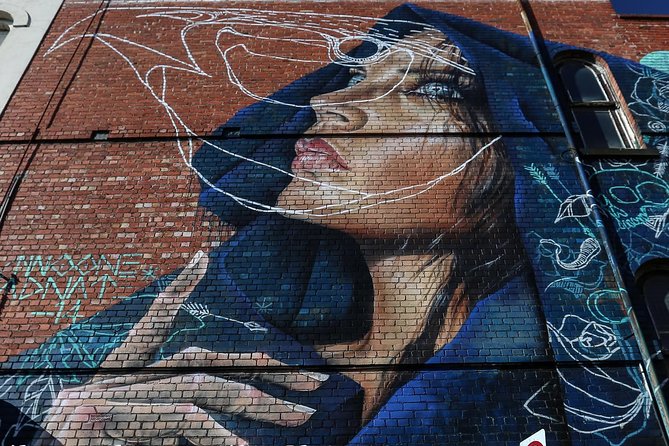
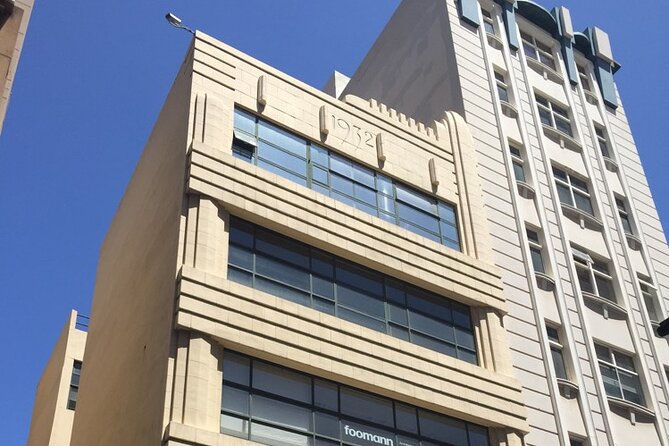
Next, you’ll get to the Majorca Building, another major stop that helps you confirm what you learned about the style. One building is interesting. Two buildings, seen back-to-back, let you compare.
That’s the value of walking. The guide can point out similarities and differences in a way that sticks. You see how the design language shows up across different structures, and you get a sense for how Melbourne’s version of Art Deco feels tied to local street-level character and layout.
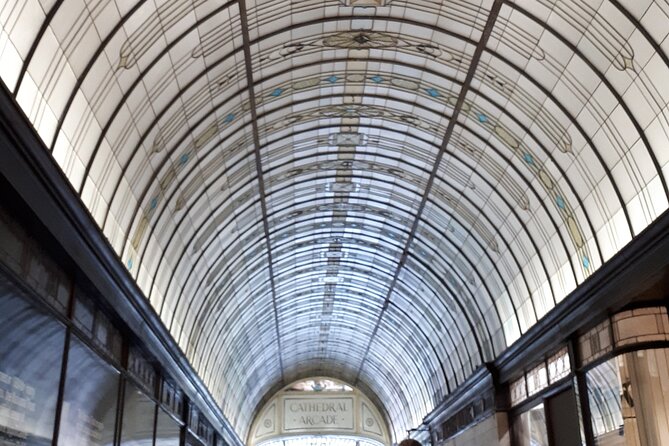
Also, this part of the tour includes learning how Art Deco fits within the wider mix of architecture in the city. You don’t just get a one-style highlight reel. You see how older and newer influences overlap in the CBD. That makes the experience feel more grounded and less like a theme park.
Learning in a small group, with guides like John, San, Catherine, and Sam
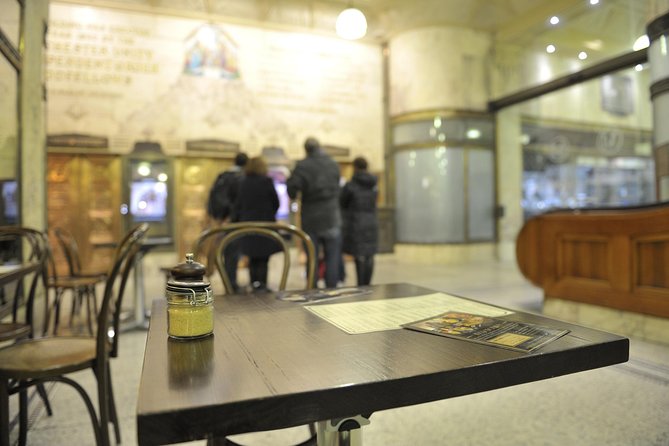
This tour caps at 10 travelers, which is the sweet spot for a walking architecture tour. With a smaller group, you get more back-and-forth. It’s not just question time at the end, it’s questions during the walk, when the building details are right in front of you.
The guides you might encounter include John, San, Catherine, and Sam. Their common thread seems to be clarity and engagement. People also point out how well the guides answer questions and adapt to interests, which is a big deal if you’re the type who likes to ask why a particular feature looks the way it does.
One small perk shows up in the feedback too. In at least one case, Sam reportedly helped coordinate tram direction afterward. You shouldn’t count on that every time, but it does hint that the guide team tends to care about your day, not just the 2-hour window.
The walking pace and what to expect in 2 hours

The whole experience runs about 2 hours. That timing matters because it keeps the tour focused. You get enough time to see the key examples and learn style recognition, but you’re not stuck for a half-day of nonstop steps.
Still, plan for walking. The tour is designed for active travelers and calls for moderate physical fitness. If you have mobility concerns, don’t ignore that line. Wear shoes you can walk in for the length of a short city loop, and keep your route back in mind since you end where you meet.
Since it’s a morning tour, it also plays nicely with a classic Melbourne day plan. You get your architecture fix early, then you’re free to do other things in the afternoon without the tour swallowing your entire schedule.
The hidden value: learning to look up and slow down
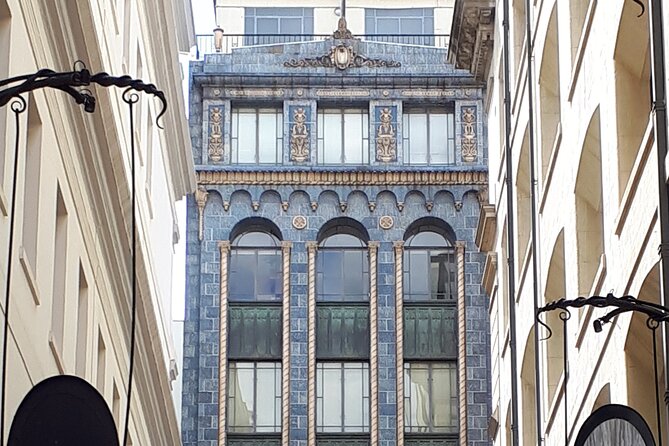
Most people rush through downtown. This tour nudges you to do the opposite. It trains your attention on:
- façade details you’d normally speed past
- repetitive geometric patterns that are easy to miss
- design cues that make different buildings feel connected
That’s why this can work even if you’re not a hardcore architecture person. The guide’s approach gives you a simple “reading method” for Art Deco, so the buildings become more than decoration.
And if you do care about design, you’ll enjoy the way the tour explains the materials and motives behind the look. Terracotta self-cleaning tiles might sound like a technical footnote, but it’s actually useful. It tells you why surfaces can keep their visual sharpness, even years later.
Price and value for a 2-hour, max 10 person walk
At $64.55 per person, this is not a freebie, but it also doesn’t try to be an all-day attraction. For the cost, you get:
- a local guide
- about 2 hours of guided walking in the CBD
- focused stops at major Art Deco examples like Manchester Unity and Majorca
- a small group size that supports questions
The “value” part is really about focus. You’re paying for guided interpretation and time-efficient city coverage, not for a bus ride or a long schedule. If you’re the type who enjoys learning how to spot styles, you’ll get more out of it than someone who only wants quick landmark photos.
Food and drinks are not included, so budget for what you plan to do after. Since the tour ends back at the meeting point, it’s easy to transition to lunch nearby or take the tram to your next stop.
Who should book this Art Deco architecture tour
Book it if you:
- want a walking introduction to Melbourne’s Art Deco in the CBD
- enjoy design details and want practical tips for spotting the style
- like small-group tours where you can ask questions, not just listen
This is also a smart pick for a morning schedule. The 10am departure gives you breathing room for the rest of your day, and the guided structure helps if you’re not sure where to start in Melbourne’s architecture scene.
I’d be cautious if you:
- have trouble with sustained walking for a couple hours
- need hotel pickup, since there isn’t any
- want a tour built around long indoor stops, since this is about walking and seeing façades and street-level architecture cues
Should you book it?
Yes, if your goal is to understand Melbourne’s Art Deco rather than just collect photos. The combination of a small group, guided style spotting, and strong anchors at Manchester Unity and Majorca makes it a high-signal tour for the time.
If you go in expecting a casual stroll only, you might find it a bit more instructive than you want. But if you like to learn how to read a city, you’ll come away knowing what to look for the next time you see Art Deco buildings back home.
FAQ
What is the duration of the Melbourne Art Deco Architecture Tour?
The tour is about 2 hours.
Where does the tour start?
You meet your guide at the Manchester Unity Building, 220 Collins Street, Melbourne VIC 3000.
What time does the tour begin?
The start time is 10:00am.
Is this a walking tour?
Yes, it is an active walking tour.
What is the group size?
The tour is limited to a maximum of 10 travelers.
Is hotel pickup included?
No, hotel pickup is not included.
Are food and drinks included?
No, food and drinks are not included.
What ages can join?
The minimum age is 13 years.
Does the tour use a mobile ticket?
Yes, the tour includes a mobile ticket.
What if the tour is canceled due to minimum numbers?
If the minimum number of travelers is not met, the tour may be canceled, and you will be offered an alternative date or a full refund. Confirmation is received at booking.
Newest Melbourne reviews on the site
- Melbourne’s Luna Park General Entry with Unlimited Rides★ 3.5 · 12 reviews
- St Kilda SUP Rental★ 5.0 · 12 reviews
- St Kilda SUP Group Lesson★ 5.0 · 19 reviews
- Yarra Valley by night! Private wine, whisky and dinner tour★ 5.0 · 24 reviews
- Great Ocean Road 12 Apostles kangaroo, koala and chocolate tour★ 4.5 · 259 reviews
- Yarra Valley sunrise balloon flight only★ 5.0 · 54 reviews
- Yarra Valley sunrise balloon flight & champagne breakfast★ 5.0 · 159 reviews
- Yarra Valley Foodies Tour with Chandon & Kangaroo Safari!★ 5.0 · 211 reviews
Melbourne Tours, compared.
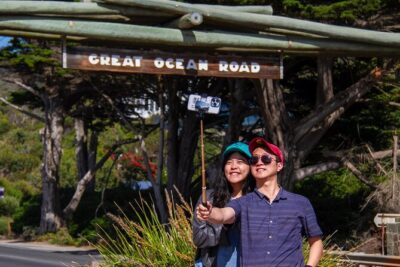
Great Ocean Road Small-Group Eco Tour from Melbourne
Read our review →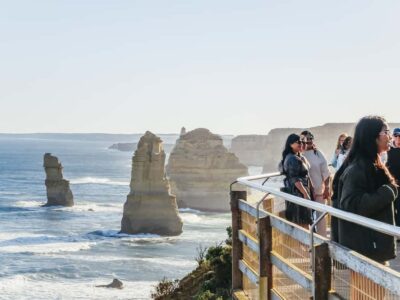
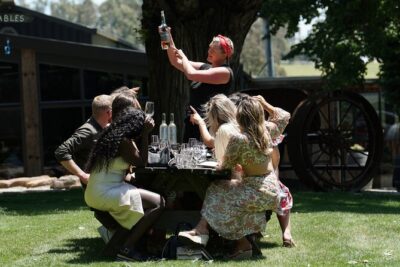
Laid back, Yarra Valley Wine Tour: Wine, Cider, Gin, Beer + Choc
Read our review →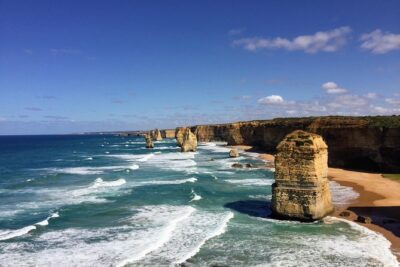
Great Ocean Road Reverse Itinerary Boutique Tour – Max 11 Guests
Read our review →
Penguin Parade, & Wildlife Encounters Eco Tour from Melbourne
Read our review →
Yarra Valley Wine, Gin, Whisky and Chocolate Tour
Read our review →
Great Ocean Road Tour w/ Deluxe Minibus & Top-Rated Guide
Read our review →