

Reviewed · GREAT BARRIER REEF CRUISES
Cairns: Outer Edges of The Great Barrier Reef Scenic Flight
Reef views from 40 minutes in the air. A Cairns scenic flight over the Great Barrier Reef turns the whole system into something you can actually grasp, from outer reefs to tiny sand isles.
Two things I really like are the pilot-led commentary you hear through provided headsets, and the chance to look down over classic spots like Green Island and Arlington Reef almost immediately after takeoff. You also get a window seat with air-conditioned comfort, so it feels built for viewing, not just transportation.
One consideration: the flight is subject to weather conditions, so visibility and timing depend on what the sky is doing that day.
In This Review
- Quick hits before you fly
- Cairns to the Outer Barrier, in 40 minutes
- Meet at Daintree Air Services and settle into your window seat
- What you see from Green Island to Arlington Reef
- Reading the reef from above, not just staring at it
- Marine life chances, plus whale spotting in July to August
- Comfort, safety, and the small-plane reality check
- Price and value: what $169 buys you in 40 minutes
- Who should book this Cairns reef flight, and who might pass
- Should you book this Great Barrier Reef scenic flight?
- FAQ
- How long is the Cairns Outer Edges Great Barrier Reef scenic flight?
- What is included in the ticket price?
- Where do I meet for the flight?
- Are food and drinks included?
- Is the flight affected by weather?
- When can I spot humpback whales?
- Is there a weight limit?
Quick hits before you fly
- Fast, high-value time over the reef: in about 10 minutes you’re already working your way over reef country.
- Window-seat viewing with headsets: you can focus on the islands and coral while hearing the pilot clearly.
- A route that hits major landmarks: Green Island, Oyster Reef, Vlasoff Cay, Upolo Reef, Pixie Reef, Arlington Reef, and more.
- Marine life spotting from above: manta rays, green turtles, dugongs, and sharks are all possible.
- Whale season adds extra sparkle: humpback whales can be seen July to August.
Cairns to the Outer Barrier, in 40 minutes
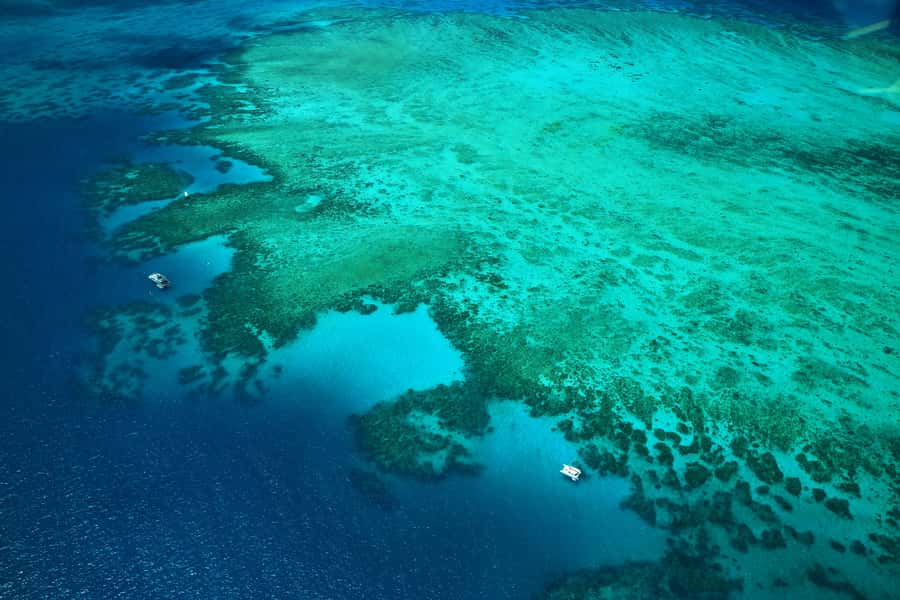
This is one of the quickest ways to wrap your head around the Great Barrier Reef’s scale. From the air, you stop thinking in terms of a single reef patch and start seeing the reef as a big living mosaic, with channels, sand cays, and coral fields all laid out below.
The flight is 40 minutes total, and that matters. You’re not stuck with a long day schedule just to get one aerial look. It’s also easier to pair with other Cairns plans, like rainforest time or a lagoon stop, because you’re only trading a short block of your day for a view most people spend weeks chasing on the water.
It’s a fixed-wing plane, which tends to feel stable and gives you broad sightlines. Your best viewing advantage is simple: you’re high enough to see patterns, and close enough that islands and reefs actually look distinct, not like generic color swatches.
Also, you’re flying over the outer section and nearby inner islands and reefs, with the promise of seeing up to 140 kilometers of the Outer Barrier. That distance isn’t just a number, it means the route can show the reef’s “edges” and structure, not only the most famous tourist hotspots.
If your goal is to understand what you’ll later see while snorkeling or diving, this flight gives you context fast. And if your goal is just to witness the reef from above, this is still a satisfying ticket because the entire experience is built around what’s outside the window.
More Great Barrier Reef Cruises in Cairns
- Great Barrier Reef Snorkeling and Diving Cruise from Cairns
★ 4.5 · 3,714 reviews - From Cairns: Great Barrier Reef Cruise by Premium Catamaran
★ 4.9 · 3,567 reviews - Passions of Paradise Great Barrier Reef Cruise by Catamaran
★ 5.0 · 2,564 reviews
Meet at Daintree Air Services and settle into your window seat
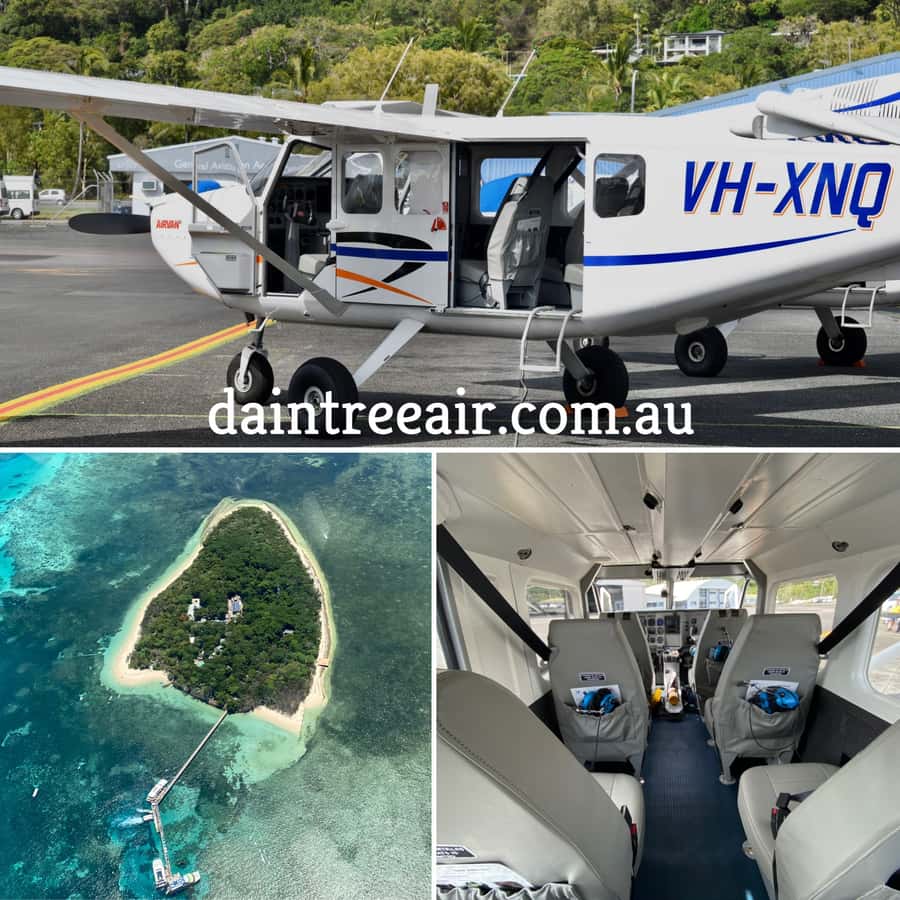
Your meeting point is Daintree Air Services. Look for the Daintree Air Services sign. Plan to arrive with a little breathing room because you’ll want time for check-in and the safety briefing before you’re herded into viewing mode.
Once you’re on board, the setup is straightforward. You get headsets and a window seat, which is a big deal for aerial viewing. Headsets help you hear what the pilot is pointing out, and they also make the cabin feel less chaotic, even when the plane is doing its thing in the sky.
One helpful practical tip from real flights: if you wear earrings, remove them before you put on the padded headphones. The padding can press earrings into the side of your head, which is the kind of small annoyance you can avoid in 10 seconds.
Seat positioning matters too. The flight route is designed so both sides of the plane have chances to see major features, including a return pass over the reef. Even so, you’ll usually get your best angles from the side you’re sitting on, so if you care about photos of specific islands, mention your preference at check-in.
The cabin is designed for comfort. The experience is described as air-conditioned, and many passengers talk about smooth, easy flying. Still, on a small aircraft, you’re more aware of the movement than you would be on a jet. If you’re sensitive to that, show up rested and keep your focus on what’s outside the glass.
What you see from Green Island to Arlington Reef
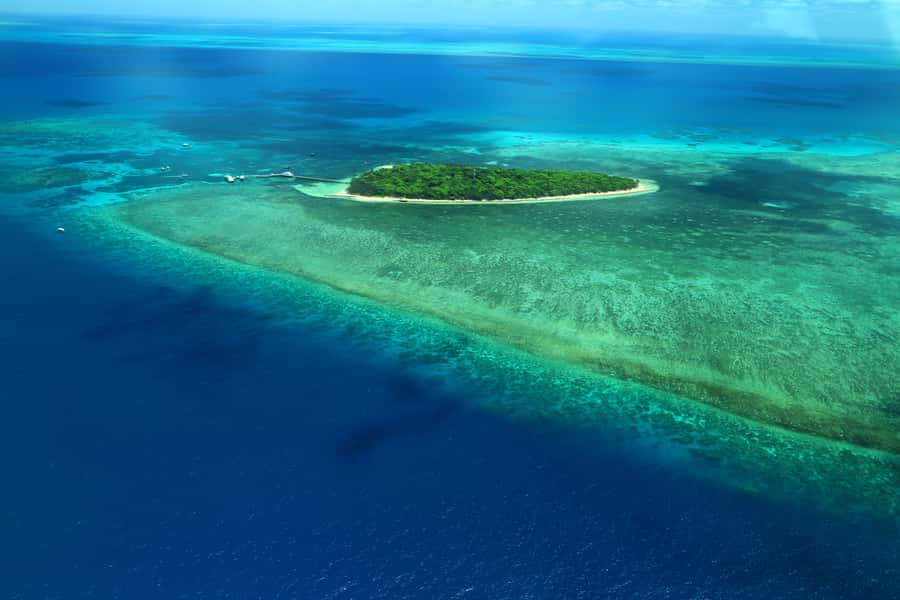
Right after departure, the real viewing starts. You can expect wonderful photo opportunities over Green Island and then continuing to reef and cay areas like Oyster Reef, Vlasoff Cay, Upolo Reef, Pixie Reef, and Arlington Reef. The whole arc is meant to show you both the reef texture and the island geometry.
Green Island is one of those places your brain instantly understands from the air. You see how the sand and shallow water tint the reef, and you get a sense of the “edge” where land fades into lagoon and then out to deeper reef. From above, it’s easier to see why these islands feel so separated from each other, even though they’re part of the same reef system.
Reefs like Arlington Reef help you appreciate something that’s hard to grasp from shore: coral isn’t one continuous wall. It comes in patches, ridges, and shapes that create channels. From the air, those channels look like invisible roads for marine life.
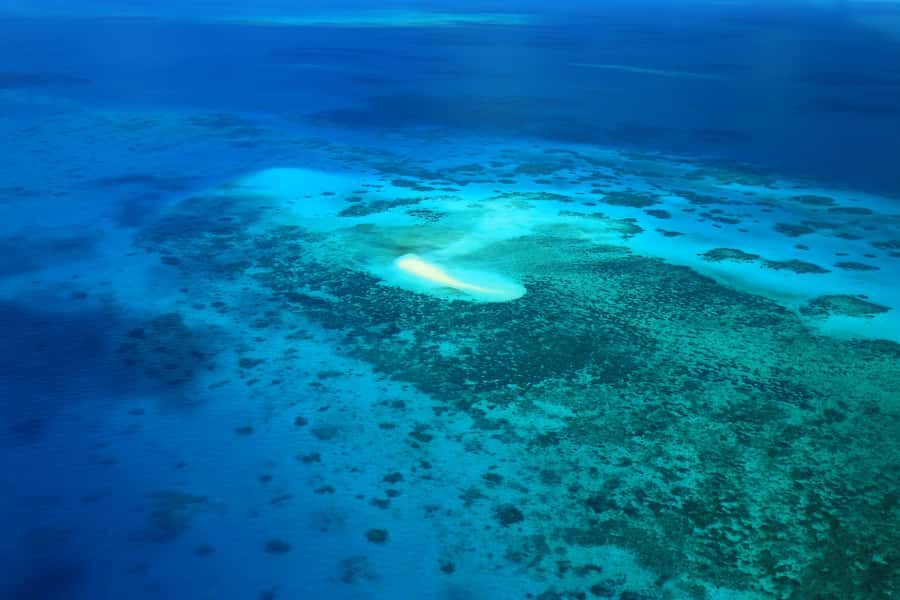
Cays such as Vlasoff Cay and sand isles scattered along the route are also worth watching. They can look small from boat level, but from the aircraft you can see how the reef platform and sandy shallow zones relate. That’s the kind of detail you can later use as a mental map when you do a snorkeling spot or reef tour.
The best part is the way the flight stays visually busy. This is not a single long, empty stretch over open water. You’re moving from landmark to landmark, so you keep getting a new view instead of just repeating the same angle for 40 minutes.
Reading the reef from above, not just staring at it
The reef’s colors can fool you if you only look for beauty. From the window, you start noticing patterns that explain the reef’s behavior.
For example, shallow water tends to look lighter. Coral and seagrass areas often create different tones. Sand cays and islands add those pale shapes that break up the darker blue areas. When you piece those together, the reef turns into a system, not a picture.
This is where the pilot commentary becomes more valuable than most people expect. Many flights focus on the view alone, but here the pilot talks through what you’re seeing below, pointing out key areas as you pass over them. Names you might hear include Sean, Cameron, Ethan, Jake, and the operator Greg has also been mentioned in passenger accounts. Different pilots will emphasize different spots, but the common theme is guided interpretation, not just sightseeing.
One reason I think this type of narration is worth your attention: it helps you photograph better. If you know what you’re looking at, you can aim your camera at the right feature instead of shooting random patches of color.
And it changes how you feel about the scale. The outer reef can look distant when you’re on the ground. From the air, you see the distance between islands and reefs, and you understand why the Great Barrier Reef is such a major natural system instead of a single attraction.
Also, because you’re flying over large stretches, you get a sense of continuity. The reef doesn’t stop and start like a park boundary. It keeps going, and the view makes that continuity impossible to ignore.
More Scenic Flights in Cairns
- Full Day Reef Cruise and 10 Minute Helicopter Scenic Flight
★ 4.5 · 340 reviews - Great Barrier Reef 40 Minute Scenic Flight from Cairns – Reef Hopper
★ 4.5 · 207 reviews - Outer Reef Odyssey – 40 minute Reef Scenic Flight
★ 5.0 · 73 reviews - Cairns: 45 Min Great Barrier Reef & Rainforest Scenic Flight
★ 4.8 · 22 reviews
Marine life chances, plus whale spotting in July to August
The reef is not just scenery. It’s habitat, and this flight is built around the possibility of spotting wildlife from above.
You might see manta rays, green turtles, dugongs, and sharks when conditions are clear enough and the animals happen to be in view. Seeing animals from the air is different from snorkeling. You’re not chasing them at water level. You’re scanning, then locking in when something surfaces or moves through shallower water.
There’s also a seasonal highlight. During July to August, humpback whales may be visible. If you’re traveling in those months, it’s smart to go into the flight with a whale mindset. You don’t control the outcome, but you do control your attention.
Even when you don’t see large animals, the flight still teaches you a lot about where life likely concentrates. Animals often use edges between shallow and deeper areas, and those boundaries are easier to spot from the air than from the deck of a boat.
The key is staying calm and looking methodically. Don’t only chase the most obvious island shapes. Spend a moment tracking the reef patterns where animals might cross, then enjoy the landmark moments when islands like Green Island slide into view.
Comfort, safety, and the small-plane reality check
A scenic flight over the Great Barrier Reef sounds romantic. The reality is practical: you’re in a small fixed-wing aircraft, and you want to feel safe while you hunt for photos.
Safety seems to be a big part of why passengers rate this experience so highly. Multiple accounts describe pilots who handle the route carefully and even adjust plans when weather is moving in. One passenger noted their pilot avoided a storm front while still delivering outstanding views of Green Island, sand cays, and the reef.
That matters to you because weather is the main variable on this product. The flight is subject to weather conditions, and if clouds roll in, visibility can soften. Still, pilots can often work around the worst areas to keep the experience worthwhile.
Comfort comes down to two factors. First, you’re in an air-conditioned cabin. Second, you have headsets so you can hear the commentary without straining. The window also helps because you’re not leaning forward and craning your neck for the whole flight.
If you’re prone to worries about flying, you’ll likely feel better knowing that passengers mention feeling safe even in a smaller plane. On top of that, the flight includes a safety briefing, and the staff generally moves efficiently from check-in to takeoff.
Minor practical note: one customer mentioned the bathroom needed more attention. That’s not something that should stop you, but if you’re sensitive to cleanliness standards, go prepared and do what you can before you arrive.
Price and value: what $169 buys you in 40 minutes
At $169 per person for a 40-minute flight, you’re paying for two things: access and perspective.
Access means you get air time over a massive section of reef without the long travel time that often comes with water-based options. Perspective means you’re seeing the reef the way your body can’t see it on a snorkel, from above and at a scale that makes sense.
Is it expensive? It depends on what you compare it to. If you’re used to paying for single activities that last an hour or two, this is a compact purchase. But if you want the reef’s full layout in one shot, the value becomes clearer.
Think about it like this: this flight compresses the learning curve. After you see the reef from above, you return to water-level experiences with a mental map. Even if you never snorkel or dive, the aerial view gives you a deep appreciation for the scale and design of the system.
There’s also value in the added structure of the experience. You don’t just sit there. You get headsets, a pilot, and guided pointing out of major landmarks and marine life possibilities. That guidance is what turns a 40-minute flight into a meaningful experience rather than just a pretty ride.
Who should book this Cairns reef flight, and who might pass
This flight is a strong fit if you want:
- High-impact views with minimal time commitment
- Pilot commentary that helps you identify islands, reefs, and patterns
- A chance to spot marine life from above
- A whale possibility if you travel in July to August
It may be a less comfortable fit if:
- You’re sensitive to small aircraft movement, even if many passengers report feeling safe
- You have mobility or comfort needs that don’t match a short fixed-wing flight setup
- You exceed the stated weight limit. The experience is not suitable for people over 254 lbs (115 kg)
Also, it’s best for people who like taking in the world around them. If you prefer hands-on time, snorkeling or diving might feel more active. But if you want a big-picture look that you can’t easily get from land, this is a smart choice.
Should you book this Great Barrier Reef scenic flight?
If you’re choosing between doing this flight or skipping it, my honest advice is to book if your priorities include scale, landmarks, and a guided aerial view. You’re getting a 40-minute reef overview with a pilot at the window-level moment, and that combination is hard to beat for first-time reef appreciation.
Only hold back if your schedule can’t tolerate weather changes. Since the flight is subject to conditions, you want enough flexibility that a cloudy or changed route day doesn’t ruin your trip.
If you do book, show up ready to look out the window, bring your phone or camera charged, and be ready for the kind of view that turns the reef from a headline into a real place. The odds of seeing wildlife and, in July to August, humpback whales can add extra excitement, but even without animals, the reef patterns alone make the time feel well spent.
FAQ
How long is the Cairns Outer Edges Great Barrier Reef scenic flight?
The flight duration is 40 minutes.
What is included in the ticket price?
Your ticket includes the 40-minute flight, a pilot, headsets, and a window seat.
Where do I meet for the flight?
Meet at Daintree Air Services. Look for the Daintree Air Services sign.
Are food and drinks included?
No. Food and drinks are not included.
Is the flight affected by weather?
Yes. The tour is subject to weather conditions.
When can I spot humpback whales?
The chance to spot humpback whales is during July to August.
Is there a weight limit?
Yes. The flight is not suitable for people over 254 lbs (115 kg).
More Reef Days out of Cairns
- Ocean Freedom Great Barrier Reef Luxury Snorkel and Dive Cruise
★ 5.0 · 1,895 reviews - Cairns: Great Barrier Reef Half-Day Snorkelling Tour
★ 4.7 · 1,326 reviews - Great Barrier Reef Full Day Tour from Cairns
★ 4.5 · 1,316 reviews - Cairns: Outer Great Barrier Reef Full-Day Tour with Lunch
★ 4.7 · 1,298 reviews
More Scenic Flights over Cairns
- Airlie Beach: Whitsundays & Great Barrier Reef Scenic Flight
★ 4.8 · 1,810 reviews - Airlie Beach: Whitsundays & Heart Reef Scenic Flight
★ 4.9 · 1,426 reviews - Airlie Beach: Whitsunday Islands & Heart Reef Scenic Flight
★ 4.9 · 1,188 reviews - Airlie Beach: Fly Raft Package w Scenic Flight & Snorkeling
★ 4.8 · 788 reviews
Newest Cairns reviews on the site
- Cairns: Spirit of Cairns Dinner Cruise★ 4.6 · 336 reviews
- From Cairns: Rainforest & Nocturnal Wildlife Tour★ 4.7 · 144 reviews
- Kuranda, Skyrail & Gold Class Train from Cairns★ 4.7 · 177 reviews
- Kuranda & Hartley’s Crocodile Adventures★ 4.7 · 50 reviews
- Kuranda: Riverboat Tour★ 4.7 · 263 reviews
- Kuranda: Australian Butterfly Sanctuary★ 4.3 · 40 reviews
- Kuranda, Cairns & Port Douglas Multi-Park Package★ 3.0 · 10 reviews
- From Cairns: Kuranda Tour with Transfer★ 4.4 · 107 reviews
Great Barrier Reef Cruises, compared.
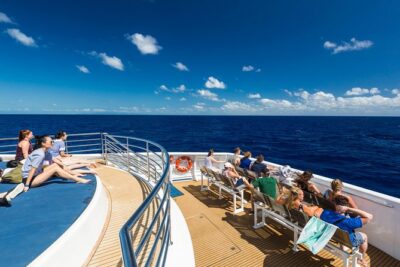
Great Barrier Reef Snorkeling and Diving Cruise from Cairns
Read our review →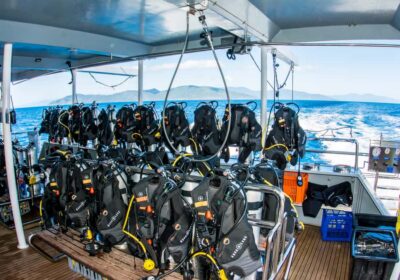
Great Barrier Reef Cruise by Premium Catamaran
Read our review →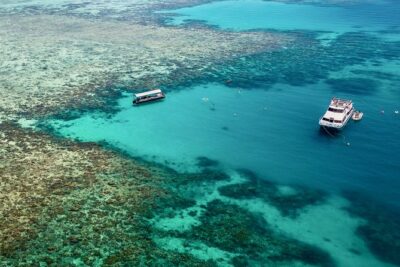
Passions of Paradise Great Barrier Reef Cruise by Catamaran
Read our review →Ocean Freedom Great Barrier Reef Luxury Snorkel and Dive Cruise
Read our review →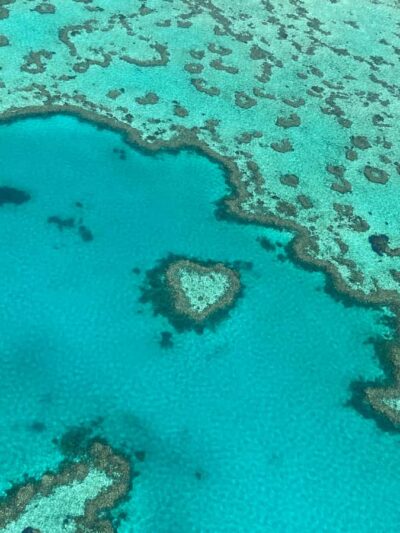
Whitsundays & Great Barrier Reef Scenic Flight
Read our review →
Calypso Outer Great Barrier Reef Cruise from Port Douglas
Read our review →
Great Barrier Reef Half-Day Snorkelling Tour
Read our review →Browse the lists this tour appears in