Reviewed · TICKETS
Albany: National Anzac Centre Entry Ticket
Albany tells the Anzac story up close. I love how this interactive museum turns WW1 history into one person’s lived experience, and I also like the tribute wall where you can leave your own message at the end. The main caution is that the exhibits deal with strong war themes, so it is generally not a great fit for kids age 7 and under.
The centre is set inside the Princess Royal Fortress complex, and it is designed so you can move at your own pace with audio and multimedia. I’d give yourself at least 2 hours, partly because you’ll want time for the interactive parts, and partly because the emotional payoff at the end lands differently when you are not rushing.
In This Review
- Key points to know before you go
- Inside Princess Royal Fortress, you start with a sense of place
- The star attraction: one WW1 story, told through 32 real identities
- How the National Archives tool makes the story feel like yours
- Albany’s WW1 departure story connects the museum to the real world outside
- The ending sequence: Pool of Reflections and the tribute wall
- Don’t miss the free guided tour of the Princess Royal Forts
- How long should you plan, and what time of day works best
- Practical matters: shoes, umbrellas, and the rules that keep it respectful
- Price and value: is $17 a good deal for a full day?
- Who should book, and who might want to adjust expectations?
- Should you book the National Anzac Centre ticket?
- FAQ
- What’s the meeting point for the National Anzac Centre ticket?
- How long should I plan to spend at the National Anzac Centre?
- What are the opening hours?
- Is the ticket valid for more than one visit during the day?
- Is this experience suitable for children?
- What should I bring?
- Are drones allowed?
Key points to know before you go

- Assume a real service identity from 32 characters and follow their journey through key phases of WW1
- Trace family service records using Australia’s National Archives tools built into the experience
- Leave a personal tribute on the interactive tribute wall
- Visit Princess Royal Forts with a free guided history talk
- See Albany’s WW1 departure context, including King George Sound and the first documented Anzac Day dawn service location
Inside Princess Royal Fortress, you start with a sense of place
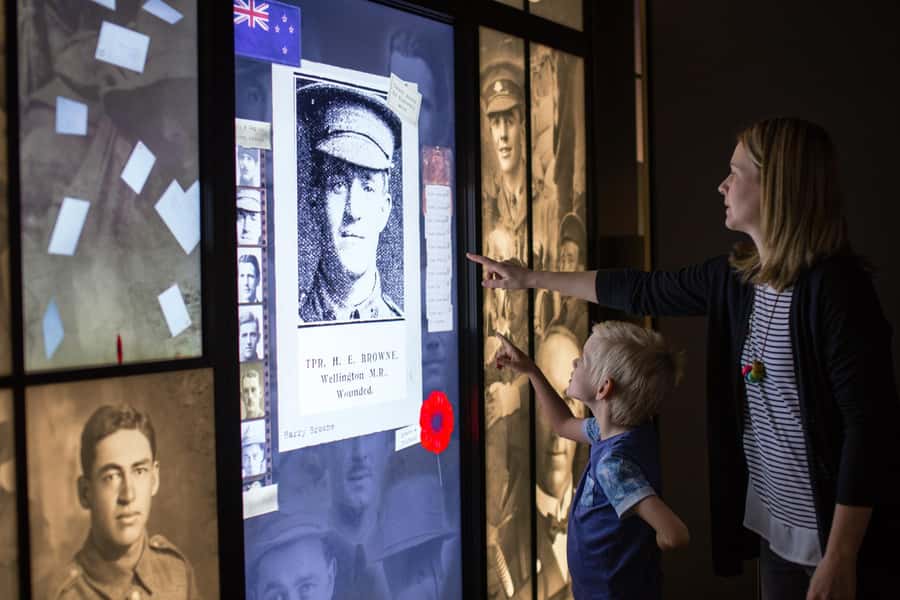
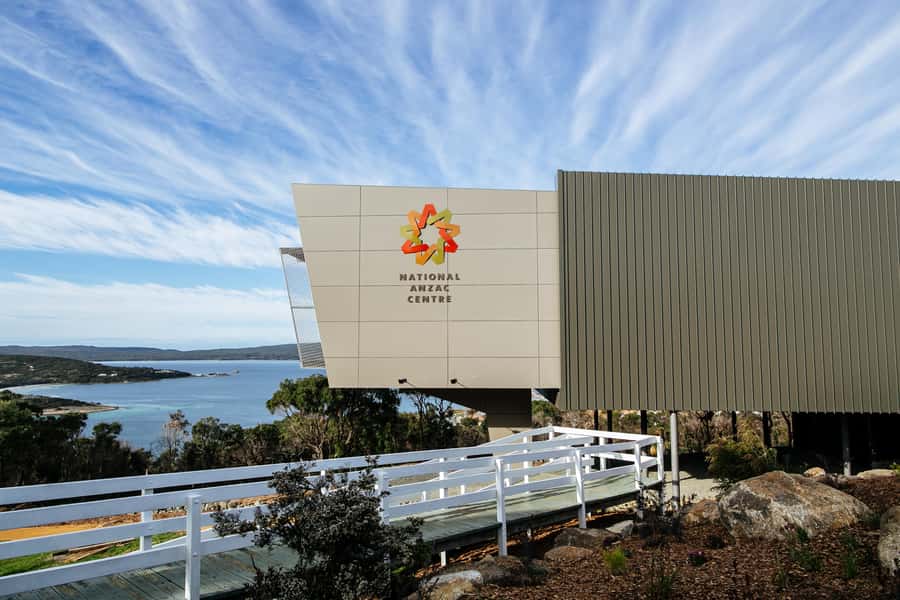
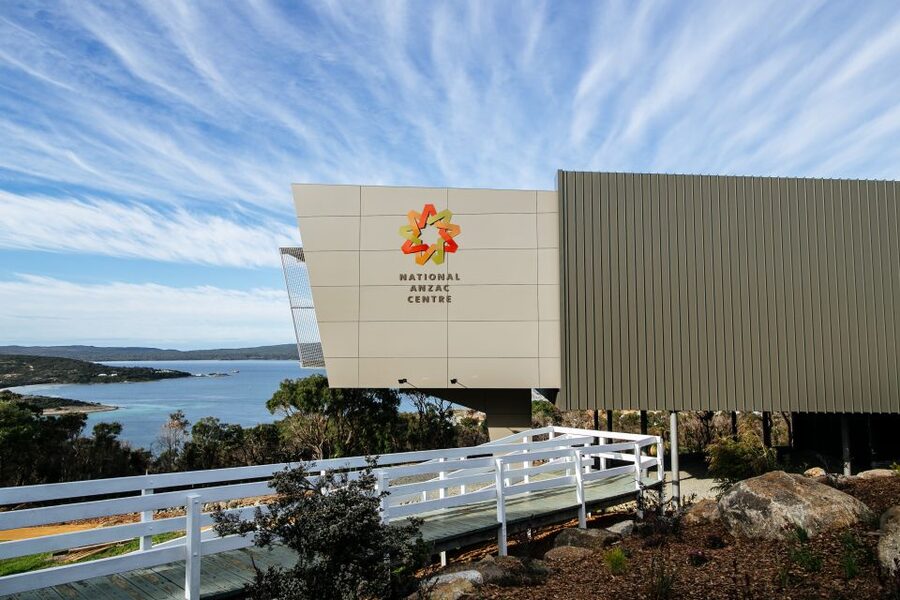
The National Anzac Centre is not in some generic museum box. It is built within the Princess Royal Fortress complex in Albany, which helps the story feel anchored in real geography, not just screens and text.
When you arrive, you’ll park in the main carpark and head to the National Anzac Centre entrance. From there, you’ll get oriented and you can quickly tell this is a self-paced museum experience, with some guided content woven in, including a history talk connected to the fortress.
A few more Australia trips to compare
- Sydney: Opera House Guided Tour with Entrance Ticket
★ 4.8 · 8,312 reviews - Sydney: Taronga Zoo Tickets
★ 4.6 · 1,551 reviews - From Brisbane: Australia Zoo Transfer and Entry Ticket
★ 4.9 · 1,539 reviews
The star attraction: one WW1 story, told through 32 real identities
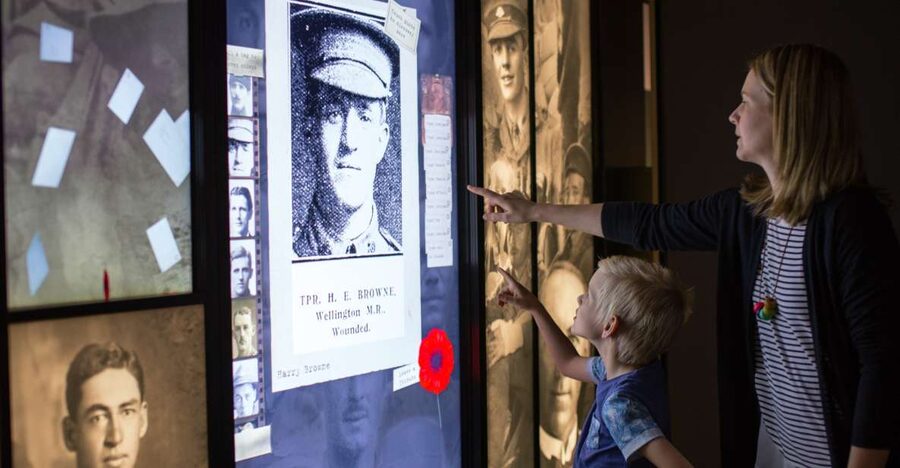
The heart of the visit is the moment you take on an assigned role, one of 32 actual service men and women. Instead of reading WW1 like a textbook, you follow that person’s path from recruitment and training, through shipboard life on the convoys, and on to the major conflicts tied to Gallipoli, the Middle East, and the Western Front.
What I like most is that the experience is structured like a personal timeline, not a random gallery. As you move through the rooms, you get interactive multimedia displays, poignant artifacts, rare images, film, and audio commentary. That mix matters, because it gives you more than one way to understand the story, and it lets you slow down when something hits.
You can take breaks without derailing your day. The exhibits are set up for you to pause, listen at your own speed, and decide what to re-check. This is one of those places where pacing is part of the experience, not a side detail.
How the National Archives tool makes the story feel like yours

One standout part of the museum is the chance to trace family service records through Australia’s National Archives. Even if you do not have a direct link in mind when you start, you’ll still find it powerful, because it gives the abstract idea of service a pathway back to names and details.
The value here is practical as well as emotional. You are not just learning what happened in WW1, you’re seeing how researchers and families connect the dots. If you are the type who likes to go home with something concrete, this is where you’ll get it.
Albany’s WW1 departure story connects the museum to the real world outside
Albany plays a key role in the Anzac story, and the museum does a good job of making that connection clear. On 1 November 1914, the first convoy of Australian and New Zealand troops departed for the First World War from King George Sound in Albany. For many, Albany was their last sight of Australian soil.
This context helps you understand why the National Anzac Centre belongs here. It’s not just about what happened overseas, it’s also about what it meant to leave from a specific place, at a specific moment, with a future that was not guaranteed.
You’ll also be guided to a location tied to the first documented Anzac Day dawn service in Australia. That adds a local, day-to-day thread to the story. It turns the Anzac narrative into something that continues long after WW1 ended.
Same part of the map, a completely different day:
- All Inclusive Blue Mountain,Scenic World,Lunch,Koalas,ferry
★ 5.0 · 7,832 reviews - Great Ocean Road Small-Group Eco Tour from Melbourne
★ 5.0 · 6,607 reviews - From Melbourne: Great Ocean Road, 12 Apostles, Wildlife Tour
★ 4.7 · 6,020 reviews - Ocean Rafting: Whitehaven Beach, Snorkelling & Hill Inlet Lookout
★ 5.0 · 4,777 reviews
The ending sequence: Pool of Reflections and the tribute wall
The close of the experience is designed to land emotionally, and it does so through both information and space. As the story reaches its final part, you’ll see the names of 41,265 servicemen and women who left Albany in the first and second convoys revealed as the names scroll beneath a Pool of Reflections.
Then comes the tribute wall, where you document your own feelings and messages to the Anzacs. If you like meaningful souvenirs that do not end up collecting dust, this is the one you’ll actually remember. The point is not performance, it’s reflection. I find that the tribute wall works best when you take a few seconds to read others, then write something simple and honest.
Don’t miss the free guided tour of the Princess Royal Forts
Included in the experience is a free guided tour of the Princess Royal Forts, plus a history talk about the Princess Royal Fortress complex. This is a smart pairing because it changes your viewpoint.
In the museum, you’re in story mode. Outside and around the fortress, you’re in place mode. You’ll be able to look at the fortress environment after you’ve absorbed the human stories, and that contrast is part of why the visit sticks with you.
Even if you are not a hardcore fort fan, the guided component helps you connect what you’re seeing to why it mattered. And because it is free with your entry, it is also good value for time.
How long should you plan, and what time of day works best
The recommended time is at least 2 hours. That’s enough to see the main flow, engage with the interactive parts, and still leave with the ending sequence done properly.
Hours are straightforward: the centre is open every day of the year except Christmas Day, from 9:00 AM to 5:00 PM, with last entry at 4:00 PM. Since you can exit and re-enter during the valid day, you do not have to force it into one continuous block.
One practical tip: plan for a steady pace. If you rush, you might speed through the parts that make the experience personal, especially the assigned identity journey and the audio commentary.
Practical matters: shoes, umbrellas, and the rules that keep it respectful
Bring comfortable shoes. You’ll be walking and standing, and you’ll want your feet to be happy. Also bring an umbrella, because Albany weather can be unpredictable and the fortress area is not always sheltered.
A few rules are listed, and they matter for planning your day:
- No smoking
- No drones
If you are visiting with mobility needs, the experience is wheelchair accessible, so you can plan without guessing.
Also remember: hotel transfers are not included. This is mostly a self-managed visit once you arrive and park.
Price and value: is $17 a good deal for a full day?
At $17 per person, the National Anzac Centre entry feels like fair value for a couple of reasons.
First, the ticket is not just access to static displays. You’re paying for an experience with interactive multimedia, audio commentary, and a guided history talk plus a free guided tour of the Princess Royal Forts. That combination adds up.
Second, you get a full calendar day with the ability to exit and re-enter. That flexibility is practical. If you want a slower morning and a late start, you can do it without feeling like you already used up the clock.
Finally, you are paying for content that is built to be personal. The assigned 32-service identity approach and the tribute wall are not the kind of thing you forget after a quick stop.
Who should book, and who might want to adjust expectations?
This experience is a strong match if you want:
- History with real emotional focus, not just dates
- Interactive storytelling that you can control
- A meaningful place to pause, listen, and reflect
- A chance to connect WW1 to Australian departure history in Albany
It may not be the best pick if you’re travelling with very young children. The centre is not generally recommended for children 7 years old or younger due to strong war themes. Kids under 5 are permitted free of charge, but the general suitability guideline is still worth taking seriously.
If you want a family outing, I’d think twice unless everyone in your group is genuinely ready for this kind of topic.
Should you book the National Anzac Centre ticket?
Yes, if you are visiting Albany and you want one experience that feels both local and deeply human. The assigned identity format, the interactive tribute wall, and the fortress setting give you more than a museum stop, you get a guided emotional arc from recruitment to the end of the story.
Book it if you can spare at least 2 hours, and if you are comfortable with serious WW1 themes. Bring your umbrella, wear comfortable shoes, and plan to take your time with the ending. That is where the visit becomes more than information.
If you want, tell me your travel dates and whether you’ll be in Albany for one day or more, and I can suggest a simple day plan around the National Anzac Centre.
FAQ
What’s the meeting point for the National Anzac Centre ticket?
Park in the main carpark and proceed to the entrance at the National Anzac Centre.
How long should I plan to spend at the National Anzac Centre?
It is recommended to allow at least 2 hours for the experience.
What are the opening hours?
The National Anzac Centre is open every day of the year (except Christmas Day) between 9:00 AM and 5:00 PM, with last entry at 4:00 PM.
Is the ticket valid for more than one visit during the day?
Yes. The ticket is valid for the full calendar day of issue, and you can exit and re-enter multiple times during that day.
Is this experience suitable for children?
It is not generally recommended for children 7 years old or younger due to strong war themes. Children under 5 are permitted free of charge.
What should I bring?
Bring an umbrella and comfortable shoes.
Are drones allowed?
No. Smoking and drones are not allowed.
Newest Australia reviews on the site
- Airlie Waterfalls & Rainforest Bushwalk Eco Adventure★ 5.0 · 23 reviews
- Airlie Coastal Beach Adventures – Dingo Beach & Cape Gloucester★ 5.0 · 27 reviews
- Airlie Beach Sightseeing Explorer- 3 hr Snaphots & highlights★ 5.0 · 33 reviews
- Whitsundays Day Cruise: Whitehaven Beach & Hill Inlet★ 5.0 · 274 reviews
- One Way Airport Transfer: Proserpine-Airlie Beach (or vice versa)★ 4.5 · 63 reviews
- Bowen Beaches Discovery-Top of the Whitsundays★ 5.0 · 40 reviews
- British Defender 3D2N Whitsunday Snorkelling Sailing Adventure★ 5.0 · 30 reviews
- Airlie Beach Jet Ski Safari (1 Hour)★ 4.5 · 257 reviews
Tickets, compared.