
Reviewed · CRADLE MOUNTAIN TOURS
After Dark Tasmanian Devil Feeding Tour at Cradle Mountain
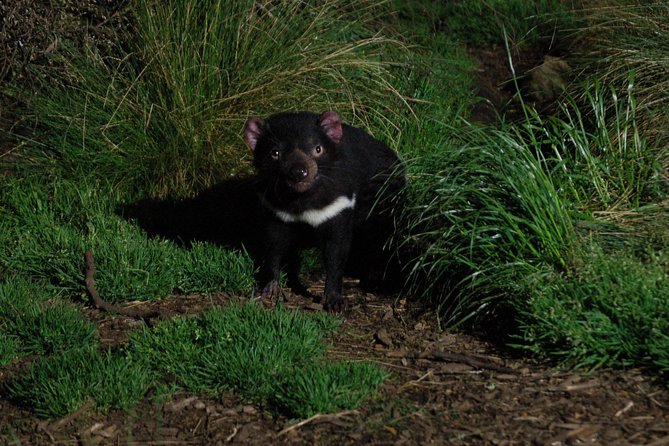
Night makes the animals bolder. At Devils@Cradle, I like the Tasmanian Devil feeding moment because it turns a shy, misunderstood marsupial into something you can actually watch and understand. I also love the guided walk setup, where a keeper talks you through what you are seeing and why conservation matters, without you burning time in ticket lines.
The main thing to plan for is comfort. The night tour can get cold fast, and there is a small amount of walking on uneven ground, plus the group can feel busy at times, which can mean you are not always right up on the enclosures.
In This Review
- Key things to know before you go
- Devils@Cradle at 5:30 pm: what the after dark timing really changes
- Price and value at this $30.48 feeding tour
- Getting there and the onsite setup at Devils@Cradle
- The start at the main viewing deck: the talk before the feeding
- The guided walk and the enclosure feeding moments
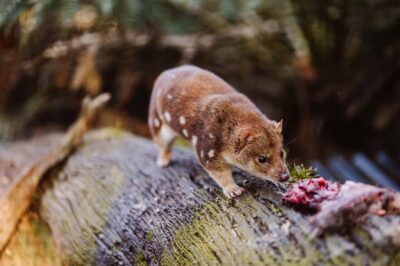
- What you will likely see: Devils plus quolls, and why that pair is so interesting
- Why the conservation talk matters (and how to use it on your trip)
- Comfort tips for a cold night: what to wear and how to prepare
- Group size, pacing, and getting the best viewing angle
- Who should book this feeding tour at Cradle Mountain?
- Should you book this After Dark Tasmanian Devil feeding tour?
- FAQ
- What time does the After Dark Tasmanian Devil Feeding Tour start?
- How long is the tour?
- Is the entrance fee included?
- Where does the tour begin?
- Is there parking?
- Do I need my own transportation?
- Is the tour outdoors and what about weather?
- Are children allowed?
- Is the group size limited?
Key things to know before you go
- Admission is included, so you can focus on the tour, not the queue.
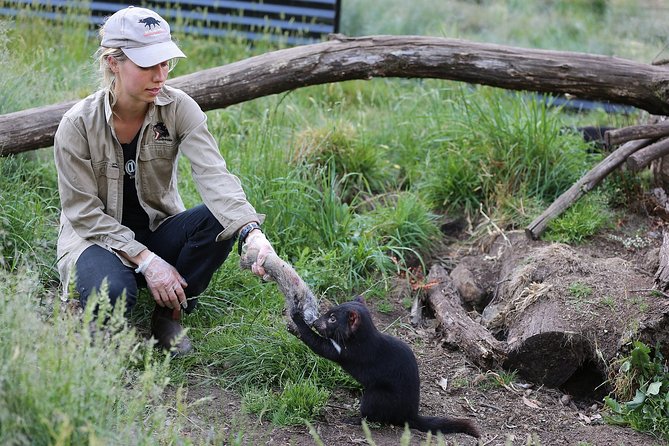
- A keeper leads the feeding, and they explain behavior while they feed the animals.
- You get more than Devils, since the sanctuary manages multiple species, including quolls.
- Arrive early for self-guided wandering, then meet up for the after dark program.
- Small group size, capped at 45 people, helps the experience feel hands-on.
- All-weather operation, so dress for real alpine conditions.
Devils@Cradle at 5:30 pm: what the after dark timing really changes
This tour runs at 5:30 pm, which is a big deal. In the daytime, lots of wildlife can feel like a distant sighting. At night, you are watching animals in their active window, and that changes your whole attention. You start to notice details like movement, sound, and how the keeper positions feeding to reduce stress.
At the same time, after dark at Cradle Mountain is not a warm stroll. Even if the day was pleasant, the sanctuary is in an alpine zone and evening temperatures can drop quickly. I strongly suggest you treat this like an outdoor winter event, not a casual nighttime activity.
One more timing perk: you can usually arrive before the start and self-guide within the sanctuary until the tour begins. That means you are not stuck waiting in one place while your brain gets bored. You can find your bearings, pick a spot on the viewing deck, and then settle in for the guide talk.
More Cradle Mountain days:
- Cradle Mountain: Day Trip from Launceston with Lunch
★ 4.7 · 540 reviews - Cradle Mountain Day Tour from Launceston Including Lunch
★ 4.5 · 360 reviews - Launceston: Cradle Mountain Guided Active Day Trip
★ 4.7 · 188 reviews
Price and value at this $30.48 feeding tour
At $30.48 per person, the question is not whether it is cheap. The question is whether you are getting your money’s worth in a way that feels fair.
Here is what you do get:
- A local guide who interprets what you are seeing during the feeding
- Admission included, so you avoid long visitor lines
- A guided walk around the sanctuary during the main part of the experience
- Free onsite parking
For me, the value is strongest when a tour avoids the common trap: pay for the headline experience, then pay again or wait in line for entry. This one includes entrance, which makes the whole evening feel smoother.
Also, the “one hour and a bit” duration is practical. You get a concentrated program, not a half-day commitment in cold air. If you are visiting Cradle Mountain for a short stay, this fits nicely alongside daylight walks.
Getting there and the onsite setup at Devils@Cradle
Devils@Cradle is at 3950 Cradle Mountain Rd, Cradle Mountain TAS 7306. There is free onsite parking, which is a huge help because you are traveling in a remote area where parking hassles can eat into your schedule.
There is no transportation provided. You will need to make your own way to the reception. Hotel pickup and drop-off are also not part of this experience, so plan to drive or arrange your own transport.
On the ground, expect a sanctuary layout with some uneven surfaces. A small amount of walking is involved. Service animals are allowed, and photography is welcome. If you bring a camera, just remember night lighting can make shots tricky, so keep your settings simple and focus on getting your eyes on the real moment first.
The start at the main viewing deck: the talk before the feeding
The tour begins with a brief introduction on the main viewing deck. This is smart programming. Before any keeper goes into an enclosure, the guide sets the context so you know what you are looking for.
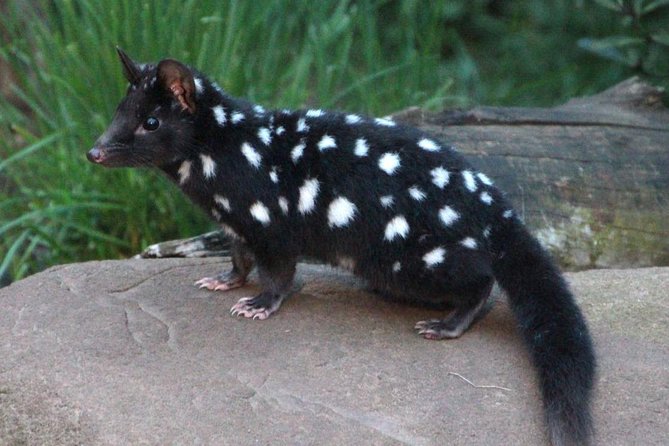
You start with an overview of the three species managed within the sanctuary. From the wider program, you can expect Tasmanian Devils plus quolls, including spotted-tailed quolls and eastern quolls, since those are specifically referenced in conservation efforts associated with the facility.
This opening portion matters because it changes how you watch the animals. Instead of just thinking, That is a wild animal, you start noticing behavior cues the guide points out: how an animal responds to proximity, what feeding behavior looks like, and how the animals’ survival depends on real-world conservation.
It is also where you can ask questions before the walk gets you closer. Many people love this part because it slows the evening down just enough that you understand what is coming next.
Same part of the map, a completely different day:
- Sydney: Opera House Guided Tour with Entrance Ticket
★ 4.8 · 8,312 reviews - All Inclusive Blue Mountain,Scenic World,Lunch,Koalas,ferry
★ 5.0 · 7,832 reviews - Great Ocean Road Small-Group Eco Tour from Melbourne
★ 5.0 · 6,607 reviews - From Melbourne: Great Ocean Road, 12 Apostles, Wildlife Tour
★ 4.7 · 6,020 reviews
The guided walk and the enclosure feeding moments
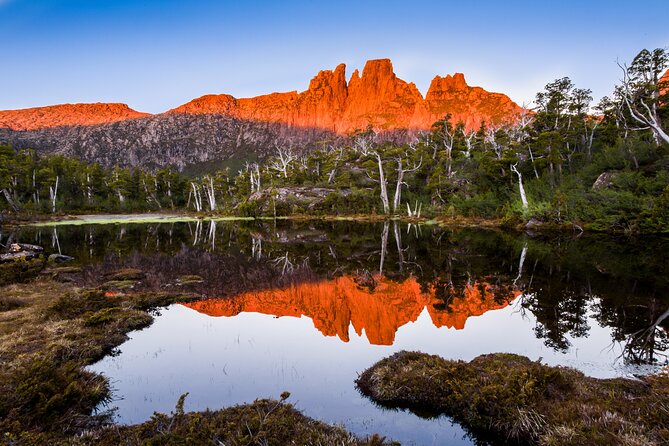
After the deck introduction, the guided portion moves outside and into the sanctuary itself. The tour is about 1 hour 15 minutes (approx.), and that time is used tightly.
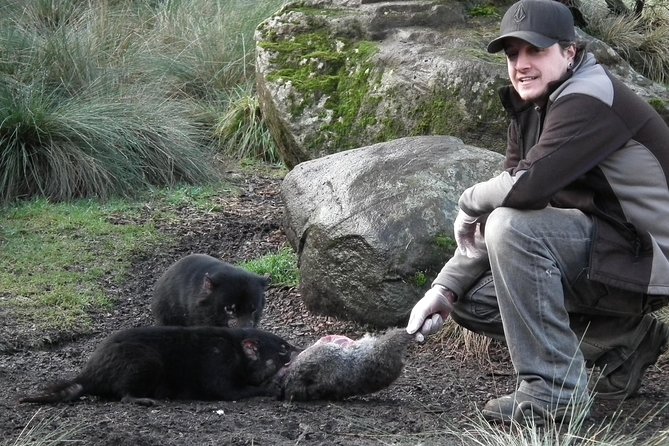
The key moment is that the guide enters the enclosures and feeds a number of the animals. As they do it, the guide interprets behavior and discusses biology, threats, and conservation. This is not just a “watch and leave” feeding. You are learning what you are seeing while you are seeing it.
A few practical details make this feel special:
- The feeding is done in a way designed to be environmentally sensitive with lighting. So it does not feel like bright floodlights take over the night.
- You are not just staring through a fence. The keeper-led explanation connects the feeding to real animal needs and real threats.
- You can ask questions as you go, and the program is set up so those questions do not feel like an interruption.
From the guide style reported in experiences at this sanctuary, the staff often bring real passion. Some nights include guides like Sarah, and other guides mentioned include Rory and Pru. The common theme is that they answer questions and talk in a way that connects animal behavior to conservation work, not just facts.
One realistic consideration: if the group is larger, you may not always get the absolute closest viewing angle. The enclosures are designed with animal welfare in mind, and with nighttime group pacing, you might have moments where you watch from a few steps back. Still, the keeper talk helps you get meaning from each feeding stop, even if your position shifts.
What you will likely see: Devils plus quolls, and why that pair is so interesting
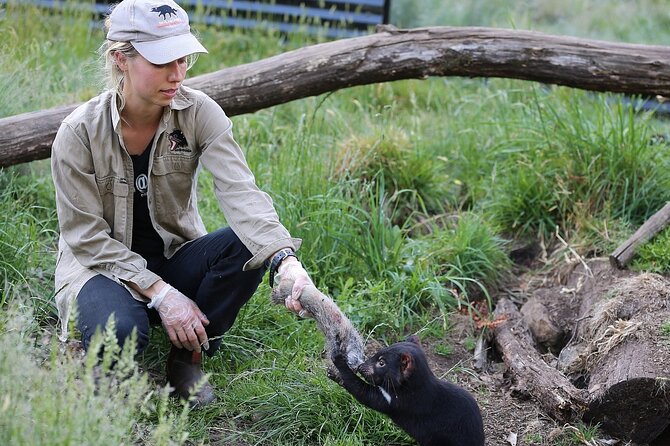
The headline is Tasmanian Devils feeding, and yes, that is the main event. You get a rare chance to watch them being fed while a keeper explains what the animal is doing and why.
But the tour is also built around quolls. That is a bonus for two reasons.
First, quolls help you understand the broader marsupial story. People often expect just one species and one style of behavior. Seeing quolls alongside Devils turns your night into more of a mini wildlife lesson than a single-species thrill.
Second, the conservation angle becomes more tangible. The facility supports programs tied to threatened wildlife. When you hear how breeding efforts and ongoing care help populations, you start to realize this feeding tour is not entertainment first. It is education and support for conservation programs, with careful handling behind the scenes.
If you come in expecting a simple feeding spectacle, you will still get the spectacle. If you come in curious, you will leave with a lot more context.
Why the conservation talk matters (and how to use it on your trip)
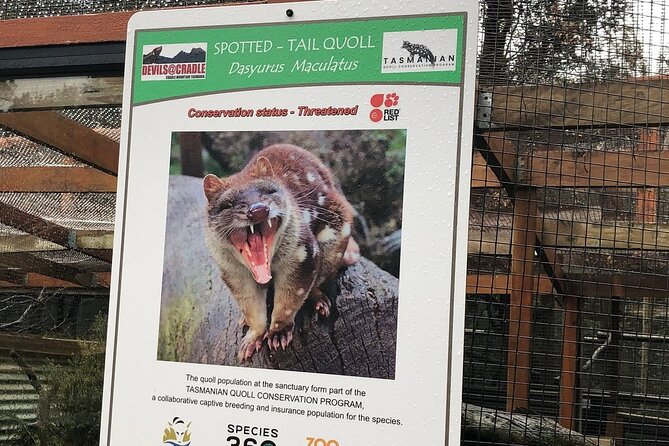
One reason people rate this tour so highly is that the guide’s explanations connect directly to conservation. You are not just learning trivia. You are learning how a species survives and what threatens it.
The tour’s talk covers:
- Tasmanian Devil behavior and what makes them distinctive
- Basic biology in plain language
- The threats these animals face
- The role the sanctuary plays in conservation
When you pair that with what you see at feeding time, it turns into a memorable mental model. For example, you might notice how the animal reacts when food appears, then later realize the guide was connecting that behavior to how they cope in the wild.
This also helps your whole Cradle Mountain trip feel more grounded. Instead of only photographing scenery, you understand how local and regional ecosystems depend on protecting specific animals.
Comfort tips for a cold night: what to wear and how to prepare
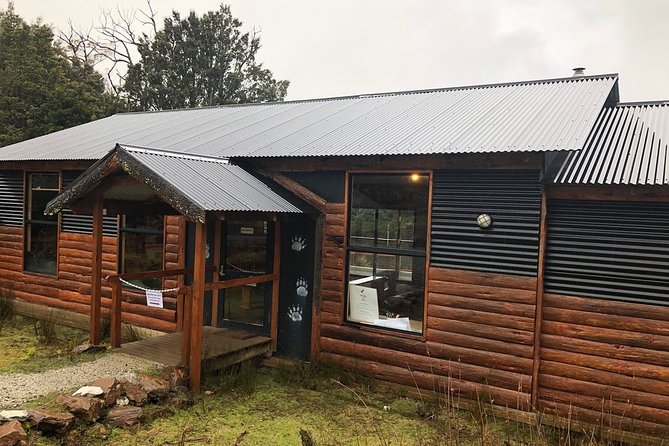
This is the practical section, because the biggest “gotcha” is temperature. Multiple people recommend bringing warm layers. The night tour can get really cold.
I suggest:
- Several warm layers you can add or peel off quickly
- A waterproof outer layer, if rain or mist rolls in
- Warm gloves and a hat, especially if you are prone to cold
- Comfortable shoes with grip, since you will do a small amount of walking on uneven ground
If you are hoping for crisp photos, keep expectations realistic. Night feeding is a moment, not a photo shoot. Your best shots often come from steady breathing and accepting that not every frame will be sharp.
Also, even though the tour is outdoors and after dark, it operates in all weather conditions. If the forecast says clouds, fog, or rain, plan as if you will be outside.
Group size, pacing, and getting the best viewing angle
The tour has a maximum of 45 travelers. That is not tiny, but it is small enough that the guide can manage feeding stops and still keep conversations flowing.
The pacing is built in two phases:
1) Deck briefing and setup
2) Guided walk with feeding and interpretation
If you want the best chance to see feeding closely, arrive a bit early for the self-guided time. This helps you know where the viewing points are before the tour starts. People also find that arriving early gives you time to explore the park and enclosures around the sanctuary before the lights and feeding begin.
During the guided walk, your position may change. That is normal. Focus on listening while you move, then look up for the feeding moments. If you try to watch everything at once, you miss what the keeper is explaining.
Who should book this feeding tour at Cradle Mountain?
This fits best for:
- Animal lovers who want more than a quick sighting
- People who enjoy guided wildlife explanations
- Visitors who want a high-value nighttime activity that does not require extra entry fees
- Families with children who can handle a short outdoor walk and adult supervision
It is also a great pick if you are short on time. One hour and a bit is enough to get a real highlight without derailing your whole day.
It may be less ideal for:
- Anyone who hates cold outdoor conditions
- People who struggle with uneven ground
- Anyone who expects lots of space or guaranteed front-row enclosure viewing, since the group can be busy at times
If you are sensitive to noise, remember you may hear animal sounds and keeper interactions during feeding. The tour is active. It is not a quiet museum experience.
Should you book this After Dark Tasmanian Devil feeding tour?
If your goal is a close, guided, after-dark wildlife experience at Cradle Mountain, I think you should book. The combination of keeper-led feeding, admission included, and free onsite parking makes it feel like a smart use of time and money. The conservation talk also gives the evening weight, so you leave with understanding, not just photos.
Book if you:
- Want a rare look at Tasmanian Devils being fed
- Appreciate guided biology and conservation explanations
- Can dress for cold alpine nights and do a short outdoor walk
Skip it if:
- You cannot handle cold weather or uneven ground
- You want a very quiet, uncrowded experience with fixed viewing angles
If you do book, my best advice is simple: arrive early, wear warm layers, and stay present during each keeper stop. This tour is at its best when you pay attention to the behavior behind the feeding.
FAQ
What time does the After Dark Tasmanian Devil Feeding Tour start?
The tour starts at 5:30 pm.
How long is the tour?
The duration is about 1 hour 15 minutes.
Is the entrance fee included?
Yes. The tour includes an admission ticket, and entrance fees are included.
Where does the tour begin?
The meeting point is Devils at Cradle, 3950 Cradle Mountain Rd, Cradle Mountain TAS 7306.
Is there parking?
Yes. there is free onsite parking.
Do I need my own transportation?
Yes. transportation to and from the attraction is not available, so you must make your own way to Devils@Cradle reception.
Is the tour outdoors and what about weather?
It operates in all weather conditions, so dress appropriately for the night and alpine conditions.
Are children allowed?
Yes, but children must be accompanied by an adult.
Is the group size limited?
Yes. the tour has a maximum of 45 travelers.
Newest Australia reviews on the site
- Airlie Coastal Beach Adventures – Dingo Beach & Cape Gloucester★ 5.0 · 27 reviews
- Airlie Waterfalls & Rainforest Bushwalk Eco Adventure★ 5.0 · 23 reviews
- Airlie Beach Sightseeing Explorer- 3 hr Snaphots & highlights★ 5.0 · 33 reviews
- Whitsundays Day Cruise: Whitehaven Beach & Hill Inlet★ 5.0 · 274 reviews
- One Way Airport Transfer: Proserpine-Airlie Beach (or vice versa)★ 4.5 · 63 reviews
- Bowen Beaches Discovery-Top of the Whitsundays★ 5.0 · 40 reviews
- British Defender 3D2N Whitsunday Snorkelling Sailing Adventure★ 5.0 · 30 reviews
- Airlie Beach Jet Ski Safari (1 Hour)★ 4.5 · 257 reviews
Cradle Mountain Tours, compared.
Cradle Mountain: Day Trip from Launceston with Lunch
Read our review →
Cradle Mountain Day Tour from Launceston Including Lunch
Read our review →
Cradle Mountain: After Dark Tasmanian Devil Feeding Tour
Read our review →
Cradle Mountain National Park by Coach from Launceston
Read our review →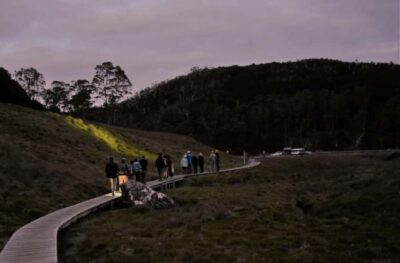
Browse the lists this tour appears in